Eight years have passed since the launch of the first-generation Nissan LEAF, a leading, environmentally friendly, affordable, and family-friendly vehicle, as its acronym suggests. Since then, its range has increased from 117 to 275 kilometers in the new generation , which we present to you today, in 2018.
The Nissan LEAF was the first mass-produced electric car and became the world's best-selling electric vehicle. This second generation, unveiled last year in Tokyo, picks up where it left off, improving on numerous aspects, such as design and range, to continue being a leading example of the shift towards electric cars.
Outside: The expected evolution

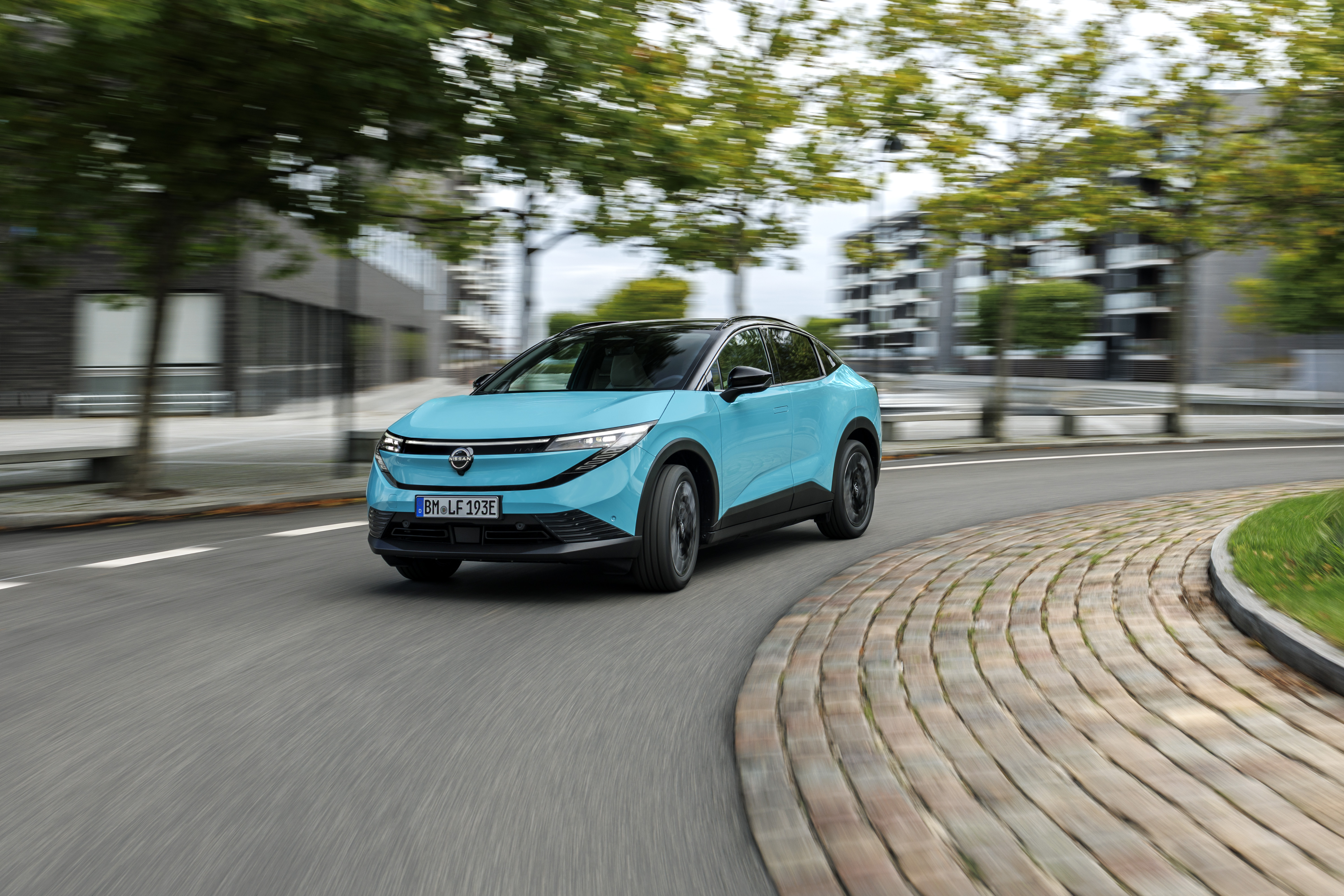
I think we can all agree. This new generation has done wonders for the Nissan LEAF in terms of design . Personally, I really dislike it when manufacturers adopt overly modern or unconventional shapes for their electric models. Owners of these vehicles don't need to draw attention to themselves with blue accents, unconventional shapes, or too many logos indicating that it's an electric vehicle. This is something the new Nissan LEAF does well.
Yes. The Nissan LEAF follows the design language of the Nissan Micra and the now-discontinued Nissan Pulsar , and I think they couldn't have done it better. The headlights and V-shaped grille are characteristic elements of the Japanese brand in these new designs, and the Nissan LEAF incorporates them into its lines. Its front end has an aggressive, sharp look, in keeping with the silhouette of the Japanese electric vehicle.

The side profile incorporates a feature that has recently become fashionable among several compact models on the market: the illusion of a floating roof . A black strip connecting the rear windows and the rear windshield creates the illusion of a longer vehicle. This design element maintains a modern and bold silhouette. Furthermore, its 17-inch wheels feature the usual aerodynamic shapes that will slightly contribute to increasing the electric vehicle's range.
The rear end… ah, the rear end! This is probably my favorite part of the Nissan LEAF. Two colors separate the area where the logos and trunk release button are located from the lower section of the rear. This design choice also allows the taillights to fit seamlessly into a cohesive whole. Honestly, it's not the typical Japanese design we're used to from the Japanese. At the bottom, there's a diffuser framed by a blue strip. The Nissan LEAF's top speed is 145 km/h, so it won't be very practical, but it adds a sporty touch that completes an otherwise exquisite design. Just as an electric vehicle should be.
Inside: Family lines within Nissan

The interior is one of those areas where, at first glance, the new Nissan LEAF has changed little compared to the first generation , but apart from the climate control panel, which is practically identical, all other elements are new. Despite this, the importance lies not in the elements themselves, but in the shape and layout of the space.
An electric vehicle doesn't need to be extremely modern in its design , and as I've already mentioned regarding the exterior, the Nissan LEAF has managed to combine electric technology with an attractive yet understated design. This is also evident in the interior. Its shape isn't far removed from a conventional compact car, and despite a somewhat unusual gearshift lever, it's striking how well-organized everything is for a Japanese vehicle.

Its steering wheel is the same as that found in other models from the Japanese manufacturer . It's flattened at the bottom and features a wide array of buttons that allow you to control everything from the multimedia system and the digital instrument cluster to ProPILOT and phone calls.
If I were Nissan, I would have taken the plunge and installed a fully digital instrument cluster . The speedometer dial looks a bit odd next to a screen that can deliver so much information at a glance. This screen has five sections, where you can see the energy delivered instantly, the sensors active at any given time, tire pressure, kWh consumption, and the ProPilot system in operation.

Moving to the dashboard , the center console houses the multimedia system projected onto a 7-inch touchscreen. It's surprising that, in such a technologically advanced vehicle, Nissan has opted for an outdated infotainment system, given its graphics and often sluggish operation. Furthermore, while the navigation system does show available charging stations, this feature is outdated, preventing us from accurately identifying all charging points. A serious oversight.
If we continue down the center console, we'll find the automatic climate control. Keep in mind when to use it, as it will reduce the vehicle's range by about 25-30 kilometers . On the other hand, it doesn't have dual-zone climate control, but both the front and rear seats are heated. A mixed bag, indeed.

The small bulge protruding from the transmission tunnel is the gear lever . It's probably the strangest-looking one I've ever seen. Even so, its operation is explained right above it, and it's easy to use.
4,5 meters go a long way

One of the advantages of electric vehicles is that, by having batteries that are usually located on the floor of the car, and having a much smaller engine than in combustion models, they usually have a large interior space. This, which is not new, also occurs in the Nissan LEAF.
Starting with the front seats, the Japanese compact has a habitability typical of a C-segment vehicle. Both the passenger and the driver will have enough space not to feel overwhelmed, both by height and width.

The same applies to the rear seats . As is typical in this segment, the width won't allow three adults to travel comfortably on long journeys, a problem exacerbated by the overly high transmission tunnel. Headroom, however, will be perfectly adequate for people around 1,85 meters tall.
The trunk is one of the areas where the Nissan LEAF undoubtedly excels. With 435 liters of space, it offers an increase of 65 liters compared to the previous generation , and is 55 liters larger than compact models like the Volkswagen Golf and the SEAT León.
Engines

Currently, there is only one powertrain option in the Nissan LEAF's lineup. The electric motor, located on the front axle, delivers 150 horsepower, 41 more than the previous generation . Its 40 kWh battery pack provides a maximum real-world range of 275 km, a figure that contrasts with the 378 km stated in the official specifications.
Furthermore, a new version with a larger battery pack capacity, specifically 60 kWh , is expected before the end of the year , which will considerably increase the range of the Japanese compact car.
| Motor | Configuration | Fuel Efficiency: | Power |
|---|---|---|---|
| Motor | Configuration | Fuel Efficiency: | Power |
| Nissan LEAF 40 kWh | Electric | Electric | 150 CV |
150 electric horsepower… how do they behave?

If I were to tell you about the smoothness of the electric motor, I wouldn't be telling you anything new . It's one of the characteristics of this type of vehicle, and honestly, driving one is like gliding among the clouds, since you'll barely hear any noise except for the road noise and a very faint whine from the electric motor.
The Nissan LEAF incorporates as a new feature in this second generation the e-Pedal , a very interesting system that will allow us to use, if we are careful, only the accelerator pedal, since the vehicle will use regenerative braking, in a more aggressive way, so, in addition to offering a deceleration of up to 0,2 G, we will produce a little energy.

On the gear selector's function diagram, you'll find the typical R and N buttons for reverse and neutral, as well as D/B. These two functions are called Drive and Braking. The first will set the car in motion like any other automatic transmission, while the second will use regenerative braking during each deceleration to generate energy , similar to the e-Pedal, but with less abruptness. Combining both will recover more energy, resulting in a slight increase in range. This is very useful in urban environments, where frequent braking and acceleration are necessary.
The Nissan LEAF's top speed is 145 km/h . This gives us an idea of the environment this Japanese compact is designed for. While it's true we can venture out of the city, the range will be drastically reduced. On the other hand, those of you who have driven an electric vehicle will be familiar with their acceleration from a standstill. While it's true the Nissan LEAF isn't a Tesla with over 300 horsepower, we will notice a good acceleration from a standstill, for example. It won't pin us to our seats, but we will definitely be aware of the electric motor located at the front.
Consumption
| Version | Autonomy |
|---|---|
| Version | Autonomy |
| Nissan LEAF 40 kWh 150 hp Measured | 275 km |
| Nissan LEAF 40 kWh 150 CV Approved | 378 km |
Designed for the city

The Nissan LEAF is a vehicle designed exclusively for urban environments . One of the things I like most about electric vehicles is their great agility. For this second-generation LEAF, Nissan has used the same platform as the first generation. This design allows the batteries to be distributed along the vehicle's floor, significantly lowering its center of gravity and improving both stability and agility—crucial factors in a vehicle's handling.
This translates directly into remarkable motorway comfort , which, thanks to the low noise generated by the electric motor located on the front axle, makes journeys comfortable and pleasant.
Focusing on the urban environment , where the Nissan LEAF is designed, it offers a turning circle of 11 meters, which is quite small. This will provide good agility in the city, for example, when parking. On the other hand, the steering is expected to offer the driver little feedback, as its feel is very filtered and assisted, precisely what is desired in this type of environment. I can't imagine anyone taking this vehicle on a rally stage.
As for the suspension , on highways it offers good ride comfort, keeping the vehicle stable, while in the city it filters out bumps excellently, without being excessively harsh, which is appreciated.
ProPILOT: The best ally in traffic jams

I believe the intelligent driving assistance system in the new Nissan LEAF deserves its own section. ProPILOT, which debuted in Europe with the Qashqai , offers a more relaxed driving experience that we can take advantage of in heavy traffic or on long journeys. The system takes over steering and cruise control, maintaining a configurable distance from the vehicle in front.
Unlike other systems, ProPILOT can be activated via a button on the steering wheel , without needing to be active while the vehicle is stationary. Its operating speed ranges from 30 to 100 km/h. Throughout the entire test period, I didn't detect any serious issues; the Nissan LEAF maintained a safe distance from the car in front.

The steering is another story. Although it's more precise than other systems I've tested, it tends to bounce between lines (when cornering), without staying centered in the lane. Furthermore, it doesn't react quickly to tighter turns, which can be problematic at certain speeds. Even though the vehicle controls the steering, the driver will need to keep their hands on the wheel and never let go, as it's more of a cruising aid than an automatic guidance system.
Rapidgate: The fast charging problem

This is how users have dubbed a problem stemming from the cooling of the battery pack in this 40 kWh Nissan LEAF . This issue, however, will be resolved in the 60 kWh version that will soon arrive on the market. Let's clarify the situation. The Nissan LEAF's batteries are not liquid-cooled like those in other electric models. Consequently, processes that heat the battery pack, such as fast charging via the CHAdeMO connector (50 kW at 400V DC and 125 A), will limit the charging speed to prevent overheating of the pack, which could result in battery degradation.
Therefore, limiting the charging speed also increases the charging time , making the 60 minutes Nissan claims for charging from 20% to 80% actually longer. This is especially true if, for example, you're driving in high ambient temperatures (30-40 degrees Celsius, typical in summer), as the heat generated by the fast charging process is compounded by the ambient temperature. This can make a journey of several hundred kilometers quite tiring, especially when you have to stop to recharge.
Anecdote: The agony of recharging

Electric vehicles are the future. Like it or not, they will inevitably make their way into the market, thanks in part to government subsidies, and the sooner we accept it, the better. They have numerous advantages, such as good acceleration, savings on charging compared to combustion engine vehicles, and they contribute to a cleaner environment. But charging can be a real ordeal if you're not in the right place.
I understand that for someone with a wallbox at home, it's all advantages, being able to leave the vehicle charging overnight at a reduced cost, but it's very different when the user doesn't have a garage , as is my case. As I mentioned before, the Nissan LEAF's infotainment system shows the locations of charging stations, but this map is outdated, so it won't be very useful.
After searching online for charging points in Madrid, the capital of Spain, I decided to go to one of the city's main shopping centers. To my surprise, I found that of the three charging stations, two were for very slow charging (220V at 3kW) and the one that was for fast charging (CHAdeMO ) was out of order. In the end, I had no choice but to give up on charging the vehicle.
After this incident, I had to reflect and think… Is Spain really ready to fill its streets with electric vehicles given our current infrastructure? And I'm talking about regular cars, not Tesla Superchargers. As I said, this is an isolated case. Obviously, no one in this situation would choose to visit a shopping mall or a subscription-based charging station every week to charge their vehicle, but it's a problem, albeit a minor one, that exists.
Nissan LEAF Equipment
emphasis
- Automatic activation headlights
- Interior mirror with manual anti-dazzle
- Leather steering wheel with audio control knobs
- Speed limiter
- smart cruise control
- 16-inch wheels
- Electrically adjustable heated mirrors
- Rear view camera
- 6 Speakers
N-Connect
Add to Accenta
- PROPILOT
- Auto-dimming interior mirror
- 17-inch wheels
- Power folding and adjusting heated mirrors
- Darkened rear windows
- C-pillar in black
- 360º vision camera with motion detection
- Parking sensors
- electric parking brake
Tekna
Add to N-Connecta
- heated leather steering wheel
- Heated front and rear seats
- Self-adjusting automatic activation LED headlights
- Bose audio system with 7 speakers
Nissan LEAF prices
| Version | Fuel Efficiency: | Power | Traction | Transmission: | Price |
|---|---|---|---|---|---|
| Version | Fuel Efficiency: | Power | Traction | Transmission: | Price |
| Nissan LEAF 40 kWh Accenta | Electric | 150 CV | Forward | Automatic | €33.300 |
| Nissan LEAF 40 kWh N-Connect | Electric | 150 CV | Forward | Automatic | €33.500 |
| Nissan LEAF 40 kWh Tekna | Electric | 150 CV | Forward | Automatic | €36.400 |
Editor's opinion

- Editor's rating
- 3.5 star rating
- Very good
- Test Nissan LEAF 40 kWh Tekna
- Review of: Alejandro Ortiz
- Posted on:
- Last modification:
- Exterior design
- interior design
- front seats
- rear seats
- Trunk
- Spring Suspension
- Consumption
- Comfort
- Price
Professionals
- Exterior design
- Trunk
- agility in the city
Cons
- Autonomy
- infotainment system
- Price