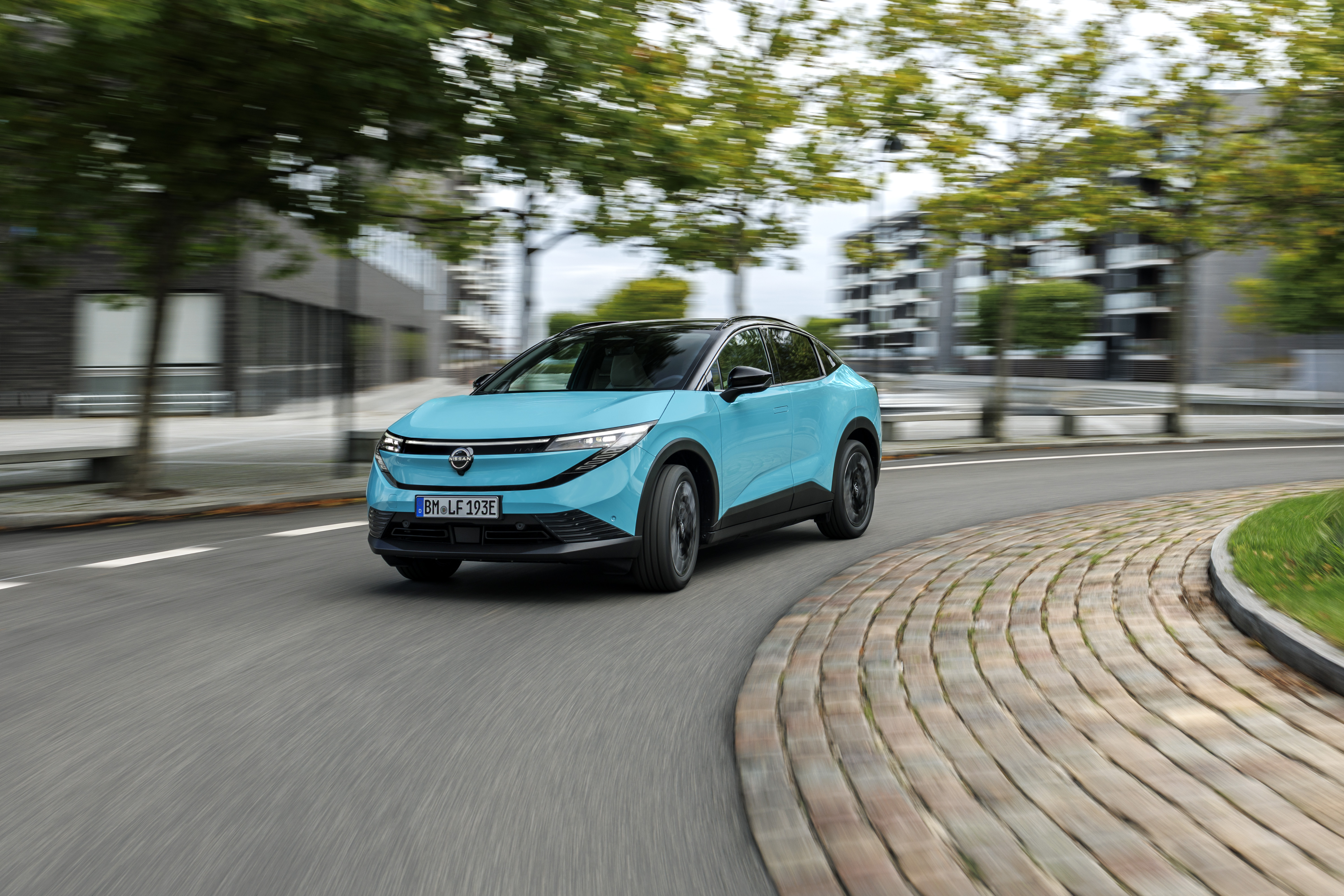
The Nissan Leaf arrived on the market just over five years ago . This compact car was the brand's first electric model and a clear statement of intent. Since then, the Japanese automaker has committed to electric vehicles, launching the Nissan e-NV200 and boosting the Leaf to over 200.000 units sold, making it the world's best-selling electric car .
Now, to mark its fifth anniversary, the Nissan Leaf 30 kWh arrives , a new version with higher-capacity batteries that will coexist with the latest 24 kWh Leaf. With this new version offering greater range , Nissan aims to reach more customers thanks to its versatility. The brand not only offers a more complete and appealing car, but also provides incentives for drivers to switch to electric mobility.
What changes does the Nissan Leaf 30 kWh bring?

The advantage of the Nissan Leaf 30 kWh is clear, offering a homologated range of 250 kilometers , compared to the 199 kilometers of the version with the simpler batteries, although in real-world driving conditions the range of this new version fluctuates between 125 and 200 km. This greater range has been achieved thanks to new batteries with higher density that can store up to 26% more energy and weigh only 21 kilos more than the 24 kWh batteries, with a total weight of 294 kilos.
The motor remains unchanged, still delivering 109 hp and 254 Nm of torque. The slight weight increase also doesn't affect its 0-100 km/h time (11,5 seconds) or its top speed of 144 km/h. What does increase is the charging time for the new batteries when using a 230V, 10-amp outlet, which will now require 13 hours. With a 32-amp outlet, the charging time can be reduced to 5 hours, while fast charging still provides 80% range in just 30 minutes.

The Nissan Leaf 30 kWh is sold in Spain with the two top trim levels, Visia and Tekna . In addition to the higher-capacity batteries, it includes a new NissanConnect EV multimedia system with a 7-inch touchscreen, allowing drivers to control various vehicle functions from their smartphone and displaying charging point locations on a map. Other notable improvements include DAB radio and 3D navigation.
Testing the Nissan Leaf 30 kWh

The Nissan Leaf is a familiar face on the pages of ActualidadMotor. A year ago we tested the Nissan Leaf 24 kWh and practically all of its impressions apply to this new model, with the exception of the improved range.
At the Nissan Leaf 30 kWh launch, we had the opportunity to drive it for an hour and a half on roads in Bizkaia on a very rainy day. Driving an electric car is truly pleasant and peaceful. It's proven that the absence of engine noise and vibrations, beyond a slight hum, makes driving more relaxing and less stressful for the driver. Although the city is the ideal environment for the Nissan Leaf, we tested it on mountain roads.

The Nissan Leaf 30 kWh has more than enough power to move with ease. On the steering wheel, you'll find the ECO button , which makes the accelerator much less responsive when activated. The difference in acceleration between ECO mode and deactivation is quite noticeable. With it active, the car will react more slowly but optimize energy consumption, while in normal mode, performance is prioritized. If you push the Leaf hard, you'll see a considerable drop in range.
Fortunately, using the kick-down function delivers maximum power , regardless of the selected driving mode. This is important because the kick-down is intended for emergency situations or when maximum acceleration is needed.

From the gear selector, we can choose the classic positions of automatic cars, such as P, R, N, and D. In addition, we have the B (Brake) option, which provides greater engine braking on descents, making greater use of regenerative braking to charge the batteries and gain a few kilometers of range.
The Nissan Leaf offers a high level of ride comfort. In addition to its quiet operation, the suspension effectively filters out road imperfections without being overly soft in corners. The low center of gravity (with the batteries in the floor) contributes to the Leaf's excellent handling.
Now yes, it's time to change

In order to make the Nissan Leaf and e-NV200 more attractive to customers, Nissan is launching a program called "Now, It's Time to Change." This campaign offers three elements that will be of vital importance for many users to take the step towards electric mobility.
- three months to change. If a Nissan electric vehicle is purchased, the customer has three months to exchange it for another Nissan model if the car does not suit him, free of charge. If you decide on a model from another brand, it is possible to return the Leaf, although you will lose a deposit of 3.000 euros.
- Long distance. The second part of the program is the most interesting, as Nissan will make long-distance Nissan combustion models available to its electric car customers. Each client, for three years, will be able to use a conventional Nissan for 15 days, in periods of no more than 7 consecutive days and without being able to exceed 500 kilometers per day. Having an electric car is not an impediment to going on vacation.
- installeasy. The last point includes the installation and management of a charging point in the customer's home or parking space at no cost up to a maximum of €1.000.
2016 Nissan Leaf Prices

| Finished | Price 24 kWh | Price 30 kWh |
|---|---|---|
| Visia | 29.170 € | - |
| Visia+ | 30.570 € | - |
| Agency | 32.970 € | 34.970 € |
| Tekna | 35.370 € | 37.370 € |
Prices do not include promotional discounts or subsidies such as the MOVEA Plan , which for the Nissan Leaf amounts to €5.300. Some autonomous communities offer additional subsidies.
Nissan Leaf battery rental price

The Nissan Leaf also offers battery leasing , which reduces the purchase price by €5.900 for all versions. Monthly payments vary depending on the contract length and annual mileage.
| 12.500km/year | 15.000km/year | 17.500km/year | 20.000km/year | 25.000km/year | ||||||
|---|---|---|---|---|---|---|---|---|---|---|
| 36 months or more | »79 | € 36 » | »86 | € 36 » | »94 | € 36 » | »102 | € 36 » | »122 | € 36 » |
| 24 months | »89 | € 36 » | »96 | € 36 » | »104 | € 36 » | »112 | € 36 » | »132 | € 36 » |
| 12 months | »89 | € 36 » | »96 | € 36 » | »104 | € 36 » | »112 | € 36 » | »132 | € 36 » |