

The electrification of the automotive sector is no longer the new paradigm; it's the present . All manufacturers are working on the technology that will power their future electric models, and this is why we're seeing such rapid changes. These changes are evident in the modifications being made to products that, in theory, should remain on the market unchanged for longer. The latest to change, a little ahead of schedule, is one of the most interesting electric city cars, the Peugeot e-208.
If you cast your mind back, you'll remember that a few days ago we told you the e-208 version would be debuting a new electric motor . Well, Peugeot's marketing team didn't want to wait much longer to announce the full range of new features, along with all the technical details. The reason for this rush? It's obvious: it's an improvement on its predecessor in every way, and now, yes, it's a bit more appealing . Thinking about an electric car? Well, take note…
The renewed Peugeot e-208 debuts the same electric motor of 115 kW/156 CV and 260 Nm of torque that already mounts the new e-308...

Before we tell you about the technical changes in the Peugeot e-208, let's look at some facts about its success . According to the brand, almost 110 units have been manufactured since its launch in 2019. Furthermore, so far in 2022, it has become the leader in the B-segment electric vehicle market in Europe and is also the best-selling electric vehicle in its home country of France, across all electric vehicle segments. That's why this evolution is so necessary…
In terms of aesthetics, don't expect major changes, as it remains fresh and attractive like its siblings. The only distinguishing features are the e-208 logo and a few unique trim pieces. However, the important changes lie under the hood, as it uses the same system as the Peugeot e-308 . That is, its electric motor's power is increased by 15% to reach 115 kW (156,4 hp) . However, the torque remains unchanged at 260 Nm.

To power itself, the updated Peugeot e-208 uses a new, more efficient high-voltage battery. In this case , the gross capacity is 51 kWh (48,1 kWh usable) and it operates at 400 volts . Thanks also to significant efficiency improvements, this translates into an average energy consumption of just 12 kWh per 100 kilometers. Thus, according to the WLTP protocol, its range increases by 10,5%, or 38 kilometers.
This is how Peugeot indicates that the e-208 offers a range of up to 400 kilometers between charges . This figure is currently undergoing homologation testing, but the company is fully confident it will achieve it. Ultimately, the gearbox's transmission ratios prioritize fuel efficiency , and the A+ class tires on 16-inch rims minimize rolling resistance, complementing the new heat pump and humidity sensor.
And does the load of the e-208 improve?

This is another area where the updated Peugeot e-208 has been improved. It features two types of onboard chargers to suit all situations. There's a 7,4 kW single-phase charger, which can be upgraded to an optional 11 kW three-phase charger. Furthermore, if more power is needed, it can perform fast charging at a 100 kW public charging point . With this, it's possible to go from 20% to 80% charge in under 25 minutes.
Finally, to optimize fuel consumption and performance, the driver can choose between several driving modes. A button on the center console allows the driver to select three modes: Eco, Normal, and Sport, to increase either range or performance . Additionally, the "Brake" mode allows the driver to regulate engine braking during deceleration, thus storing electrical energy in the battery.
However, the updated Peugeot e-208 will arrive on the market in 2023. The exact date is still unknown, but it should be in the early stages of the year. The brand will announce its official prices then, although depending on the country, customers who want one will be able to order online through the official website. For now, we don't know if this sales method will be available in Spain, but we'll find out very soon…
Source – Peugeot


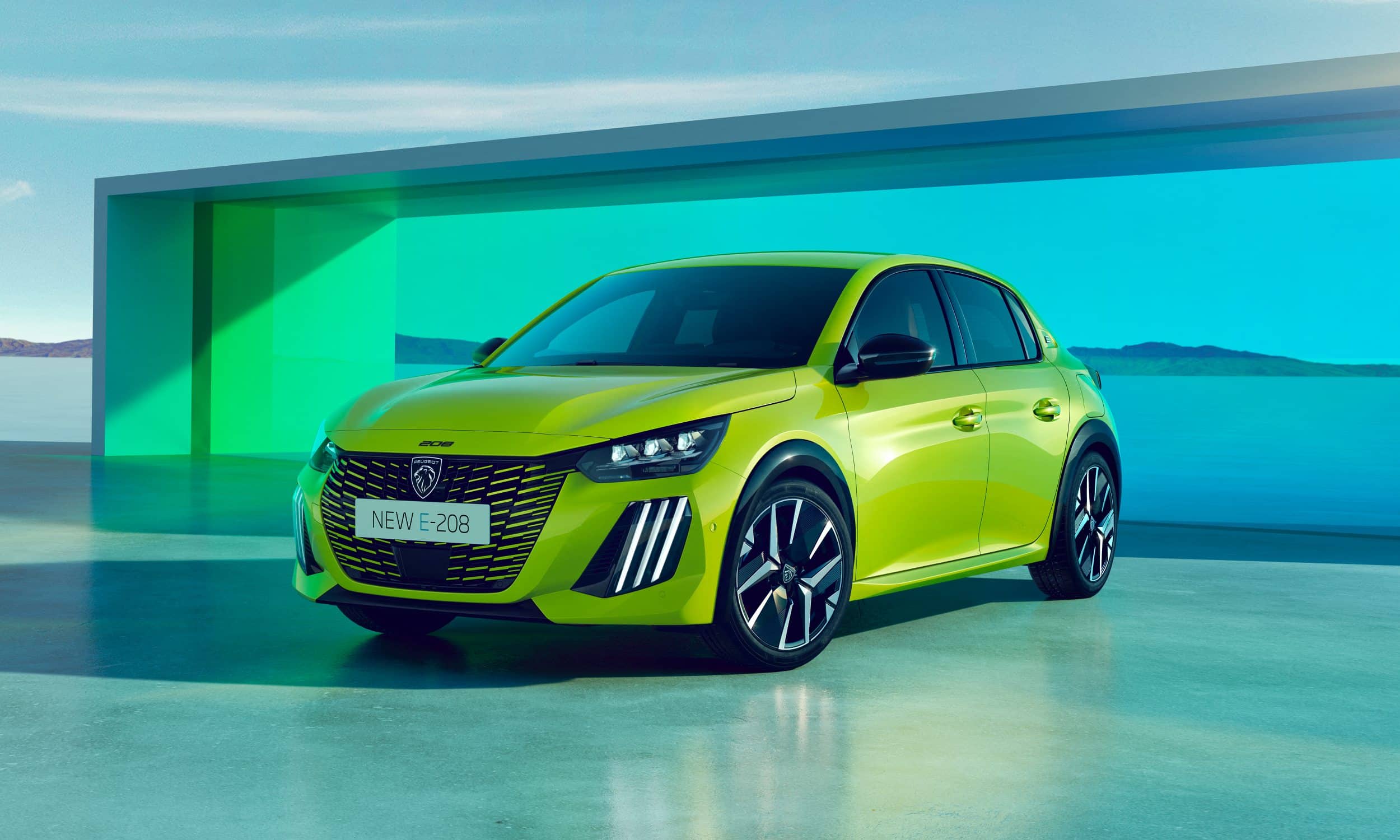
Table of Contents