

Hyundai has unveiled its roadmap for the next decade in Seoul, and the strategy is ambitious. During CEO Investor Day 2026, President and CEO José Muñoz revealed the company's plans to achieve 5,55 million global sales by 2030 , representing a 6% market share. This goal will be supported by an unprecedented product offensive, with more than 100 new launches and refreshes.
The presentation, held in the South Korean capital, made it clear that Hyundai intends to compete in all market segments. The company anticipates more than 100 model launches and updates by 2030, of which 58 will be launched in North America, 41 in Europe, 49 in Korea, 26 in India, and 22 in China. Furthermore, the firm plans to enter 18 new segments, including midsize pickups, a market dominated by American manufacturers.
An unprecedented product offensive
Product strategy is the backbone of the plan. Of the more than 100 launches, seven will arrive in the next eight months, including the new Tucson, the Tucson Hybrid, the IONIQ 3, and the first Santa Fe with extended-range electric vehicle (EREV) technology. The latter, which will be manufactured at the Alabama plant, promises a combined range of more than 600 miles (965 kilometers ), a figure that places it among the most efficient vehicles in its class. EREV technology combines an electric motor with a combustion generator that recharges the battery, reducing reliance on charging stations.
Entering new segments is another key pillar. Hyundai plans to venture into the midsize pickup truck market, a highly profitable segment in the United States, as well as light commercial vehicles and body-on-frame models. According to Muñoz, the company was not competing in nearly 30% of the global automotive market, and now wants to change that. To achieve this, it will develop a body-on-frame platform that will underpin a family of vehicles, including potential derivatives for Genesis and Kia.
The bet on hybrids and EREVs
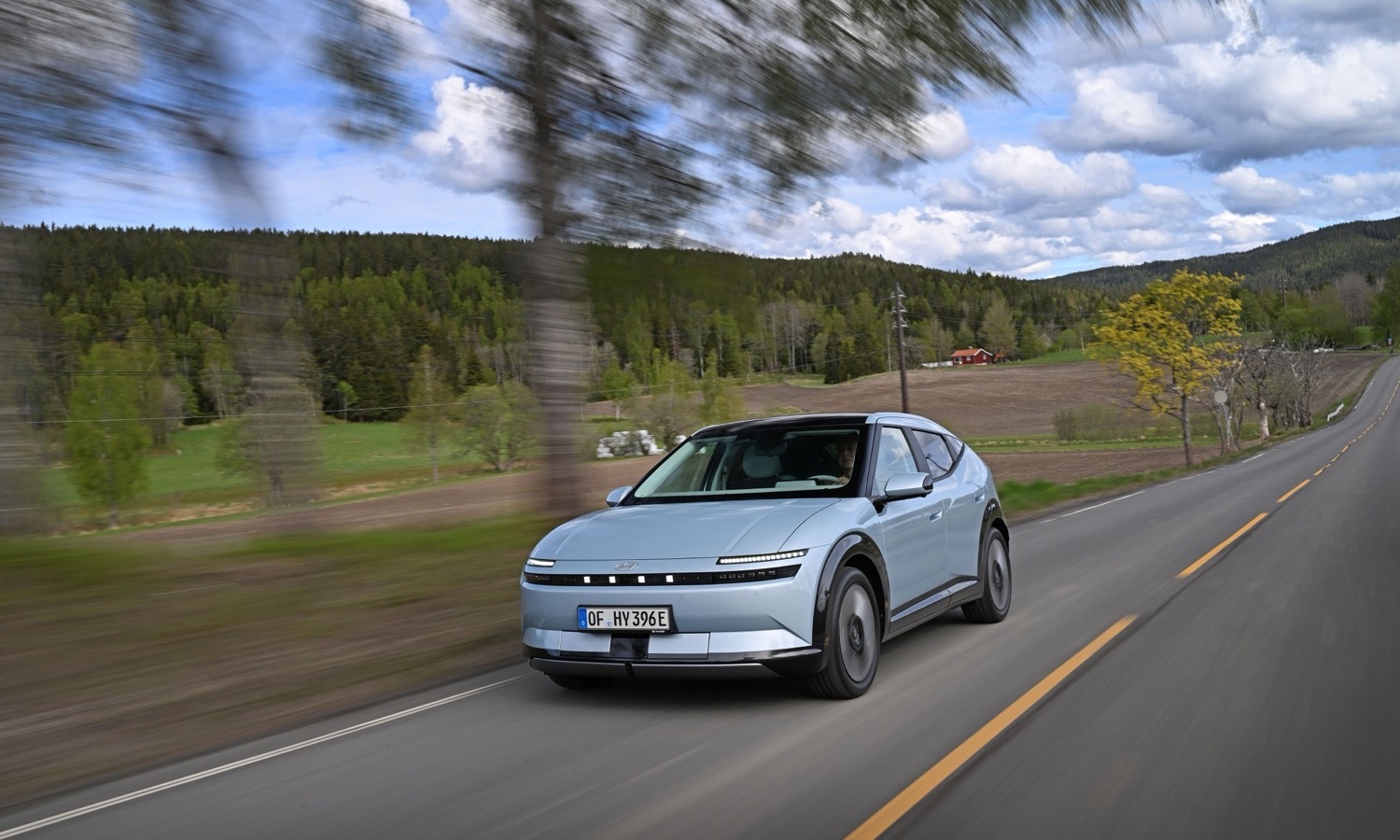
Hyundai has decided to diversify its powertrain offerings to meet demand. In North America, where hybrid sales grew by 71% in the second quarter of 2026, the company will offer more than 10 hybrid models by 2030 , representing about half of its sales in the region. This strategy aims to compete directly with Toyota, the long-standing leader in this type of technology. Furthermore, extended-range electric vehicles (EREVs) will play a key role, with the Santa Fe EREV as the first example.
On the technical side, Hyundai has announced the development of its own battery cells that double the power of previous models and allow for 40% faster charging. They have also unveiled a new thermal runaway protection technology, which will debut in the Genesis GV90. These innovations aim to improve efficiency and reduce costs, with medium-density nickel NCM cells that are 30% cheaper and a cloud-based battery management system that will increase battery lifespan by 20%.
Industrial expansion and location
To sustain this growth, Hyundai will expand its global production capacity by 1,27 million units by 2030. Of that figure, 500.000 units will be in North America , where the company will also increase local component sourcing from 60% to 80%, a measure to mitigate the impact of tariffs. The Georgia plant, known as HMGMA, will receive a 200.000-unit expansion, and robotaxis production is expected to begin in 2028 with an annual capacity of 30.000 vehicles.
Hyundai's industrial strategy isn't limited to cars. The company aims to become a mobility solutions provider and is therefore boosting its robotics division. Hyundai plans to increase its production of autonomous mobile robots tenfold by the end of the year and continues to develop its Boston Dynamics technology. Furthermore, robotaxis developed with Waymo will begin deliveries in the fourth quarter of 2026, with in-house production in the United States starting in 2028.
In short, Hyundai has outlined an ambitious plan that combines an unparalleled product offensive , a firm commitment to hybrids and EREVs, and industrial expansion focused on North America. With 100 launches, 18 new segments, and a sales target of 5,55 million, the company, led by José Muñoz, seeks to gain market share in an increasingly competitive environment. The arrival of the first models, such as the Tucson and the Santa Fe EREV, will set the pace for a transformation that promises to be highly significant.