

The Spanish Directorate General of Traffic (DGT) anticipates nearly ninety million journeys during July and August of this year . With such a high volume of vehicles on the road, it is crucial that we know what to do if we are involved in an accident or witness one.
In 2016, 1.160 people died in traffic accidents in Spain, and 2017 has not been very encouraging. In fact, from January to May 2017, 428 people died in traffic accidents in our country, compared to 443 who died in the same period of 2016. Despite these "good" figures, 116 people died in traffic accidents in June 2017, compared to 93 last year, reversing the downward trend of this tragic indicator.
Unfortunately, and to put it bluntly, the fact that drugs and/or alcohol are behind 40 percent of fatal accidents in Spain serves as an indicator of our country's low level of education. This is a very high figure, to which we should add those accidents caused by recklessness. It's assumed, or I must assume, that we all know how to reduce these numbers; whether we actually do it is another matter. But how should we react to an accident that has already occurred?
To describe our actions in the event of an accident, we must bear in mind that our position may vary depending on whether we are victims or just witnesses and, above all, on the severity of the accident.
How to act in a minor car accident
In the event of a minor accident, the first thing we must do is remain calm and polite at all times . In these situations, we won't gain anything by becoming enraged with the person who hit us, even if it's clearly their fault. Furthermore, not only will we not accomplish anything, but if we let our tongues run wild, we could even get into trouble. So, be careful with typical sexist and/or derogatory remarks, and above all, be extremely careful about any kind of physical or verbal threat.
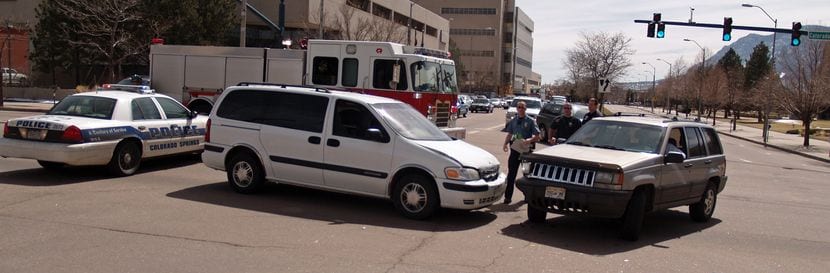
In these cases, without moving the vehicles, the first thing to do is to properly mark the accident and ensure that other road users are not in danger. Please remember that, depending on the type of road, emergency triangles must be placed at least fifty meters away and must be visible from at least one hundred meters . What do I mean by this? Well, don't place them on the car; it's useless, and fifty meters isn't exactly a short walk.
Once the area is properly marked, and we've confirmed that there are no injuries and that it's indeed a minor accident, the wisest course of action is to take several photos of all the vehicles involved and the accident site , paying particular attention to any signage, especially if a driver has run a stop or yield sign. After taking the photos, and if the parties involved are generally amicable, regardless of who is at fault, we can move the vehicles to avoid unduly obstructing other road users and proceed to fill out the accident report.
In the event of a minor and clear accident, the best thing we can do is fill out the friendly part correctly, sign it and say goodbye with an apology from the guilty party and the affected party accepting the apology. And everything else is wanting to do theater.
To me the authority!!!
At this point, it's very common for someone's ego to prevent them from thinking rationally. Normally, it's the injured party—and it must be said, this is the first person—who (in strict order) gets out of the car, assesses the damage, looks at the other driver, utters some nonsense, and calls the appropriate authorities. The detail of standing with arms akimbo between the different phases is very important. Of course, you can call the Civil Guard, but sometimes it can be a huge mistake that prevents us from noticing certain details:
- In the event of a minor accident in which it is not necessary to raise a crowd, claiming the presence of the Civil Guard requires the displacement of at least one patrol that could well be prepared or in reserve for its action in any other place where it is necessary. your participation.
- If the presence of the authority is demanded, we are prolonging something that could be resolved in five minutes.
- If the Civil Guard raises a crowd, no one dreams of being able to repair their car in at least two months.
Logically, despite what I just said, if after the accident there is some tension between the parties involved and/or no one admits guilt, then it is more than justified to request the presence of the authorities . In this case, we will call the free number 112 and wait for the Civil Guard or, depending on where we are, the regional police forces.
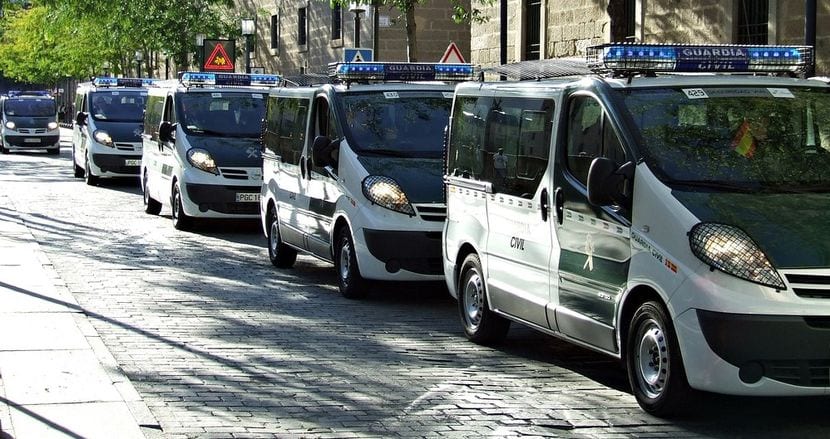
There is another scenario in which I strongly recommend requesting the presence of the authorities, and that is when, after starting to fill out the accident report, we have any doubt about the validity of the insurance policy of any of the vehicles involved . In such cases, we should avoid making any judgments and simply wait for the authorities to arrive and determine the validity of the policies.
The reason for this recommendation is that, as I mentioned in the article about the problems of driving without insurance , if we are hit by a vehicle without a valid insurance policy, the Insurance Compensation Consortium will be responsible for compensating us (in the case of a minor accident, for repairing our vehicle). As you can imagine, for the consortium to pay for the damages caused in an accident where the at-fault party didn't have a valid policy, we'll need a lot of paperwork, a lot of time, and a lot of patience. To avoid all these headaches, it's best to have the Civil Guard file the accident report . All we'll have to do is take the report to our insurance company and wait…
No sense or feeling
It may happen that we have had a minor accident, that we have correctly filled out the amicable accident report, that we have handed it in to our insurance office and that a few days later we get a call from some unknown department of our insurance company to try to sell us something and, incidentally, say that the data provided by the other insurance company is false.
It's true that most insurance policies signed in our country include what insurers sell as claims for damages and legal liability, but in my opinion, that's just part of their job. For our part, the best thing we can do is file a report with the appropriate authorities , take advantage of the fact that we took some photos at the time of the accident (because we did, right?), and then wait again.
rear window
It is frequent, not to say habitual, that in the face of an accident in which nothing serious has happened, in which the papers are already being arranged or in which the authority is already intervening, the Spanish tend to stop to “look”… the fact that? A jumble of iron? Or does anyone expect to see the spirit of a deceased depart from the body? I will never understand the reason for this widespread Spanish attitude towards the misfortunes of others, although it may be the explanation for the success of certain television channels.
Slowing down to look at an accident in which we have no intention of helping is as deplorable as it is dangerous and annoying for several logical reasons:
- We slow down the circulation even more.
- We are more aware of what has happened than of the road.
- Minor accidents occur due to absent-minded drivers.
- And above all, we can slow down the arrival of the emergency services.
The height of human stupidity comes when the accident has occurred on a high-capacity road with independent carriageways. In these cases, a traffic accident generates a tremendous traffic jam on the road where it occurred, for obvious reasons, but also on the parallel road reserved for traffic in the opposite direction. In the latter case, it is a traffic jam generated by the proliferation of onlookers who will normally circulate at reduced speed in the left lane to have greater "visibility".
In the event of a serious traffic accident
In this situation, the actions of witnesses are crucial. The first thing to do is to properly mark and make the accident area visible to prevent further accidents. We must also, if possible, completely disconnect the ignition of all the vehicles involved . Simply turning off the engine, which will have stopped after the accident, is insufficient; we must also ensure that the electrical supply is cut off.
In the event of a serious accident, it is vital to call 112 and provide as much detail as possible about the accident's location, the number of injured and/or fatalities, whether anyone needs to be extricated, and any other information that could help expedite assistance and rescue. It is estimated that improving emergency response times to traffic accidents in Europe would save approximately 2.500 lives and significantly reduce the severity of injuries.
Please, never forget that the sequence signal – turn off engines – notify emergency services can save many lives. And also please don't waste your time tweeting before at least a couple of times making sure you've done it.
What NOT to do
In case of a serious accident, it is very important not to move the injured or give them anything to eat or drink.
There is one clear exception to this: when their lives are in imminent danger , such as if a fire breaks out in one of the wrecked vehicles. In this case, we will try to remove the injured, moving them as little as possible, ideally with at least two people. We will place them on the ground in the recovery position and wait for emergency services. If necessary, the injured can also be given water, and nothing but water.
automatic call system
From March 31, 2018, all new vehicles will be equipped with the automatic call system . This "eCall" service will alert emergency services (112) if an airbag deploys, providing several parameters such as the speed of impact, the actual location, and the number of passengers. The passenger count is determined by information received regarding whether seat belts were fastened at the time of the accident. This means that if four people were traveling in a vehicle involved in an accident, but one of them was not wearing a seat belt, the automatic call system will report "only" three occupants.
However, no one should let their guard down because this “e-Call” system does not eliminate the duty to provide assistance, which is still punishable by fines and up to four years in prison , so beware of onlookers who just want to “know”…
Bad road accident
Most traffic accidents result from human error, whether due to distraction or recklessness. However, a traffic accident can also be caused by poor road conditions . In this case, the constitution clearly states that "individuals shall have the right to be compensated for any injury they suffer to any of their property or rights, except in cases of force majeure, provided that the injury is a consequence of public services."
In this sense, it can be said that in the case of a toll motorway, the claim must be submitted to the concession company, but in the rest of the roads, the claim will be submitted to the Ministry of Public Works or to the different regional administrations, depending on whether the ownership is state-owned. or autonomous.
In the case of injuries or damages due to the poor condition of public roads, we have one year to claim and we must be very scrupulous and methodical in all aspects because we already know that any formal defect in our claim will be enough for it to be denied.
The steps to follow are :
- Demand the presence of the Civil Guard or the different autonomous police forces so that they raise the report.
- Find as many witnesses as possible.
- Provide all possible documentation (invoices, reports, photos...) both for material and/or personal damage and for the measures and expenses incurred in repairing said damage.
Accidents due to negligence of public administrations
As I mentioned before, damages resulting from force majeure are completely exempt from any compensation, whether from public authorities or our own insurance, which usually includes this provision in the fine print. What I mean is that, for example, in the event of a flash flood or inundation, there's little we can do. Only if the incident receives media attention might we obtain any kind of assistance, but it's best not to get our hopes up. If a flash flood sweeps away our car, we'll have to buy another one, and if some kind of aid or compensation arrives in the future, great, but we have to be realistic.
Another issue, to continue with the same example, is that this flood may have been caused by negligence on the part of some public administration . It is very common for regional governments and municipalities, even knowing the risks involved, to fail to maintain the cleanliness of riverbanks and, moreover, to allow parking. Unfortunately, it is also common for these areas to have regulated parking (i.e., paid parking) and to display signs indicating that in the event of a flood, no compensation will be provided.
For example, to continue with objective data, despite the economic prosperity enjoyed by many Catalan politicians, during 2010 and 2011, the Catalan Water Agency (Agència Catalana de l'Aigua) did not carry out any maintenance work on the streams in the town of Terrassa due to "budgetary reasons," even though there was an action plan in place to be implemented between 2005 and 2010 "with the aim of guaranteeing their hydraulic functionality and preventing potential damage in the event of heavy rains." The budget for the entire plan was €230.000, a paltry sum compared to the kickbacks taken by the political class…
What would have happened if due to this lack of maintenance there was a flood in the town of Terrassa that left our car unusable? Well, despite being a force majeure event, the object of the complaint would be precisely the damage caused not by the flood but by the lack of maintenance in the stream.
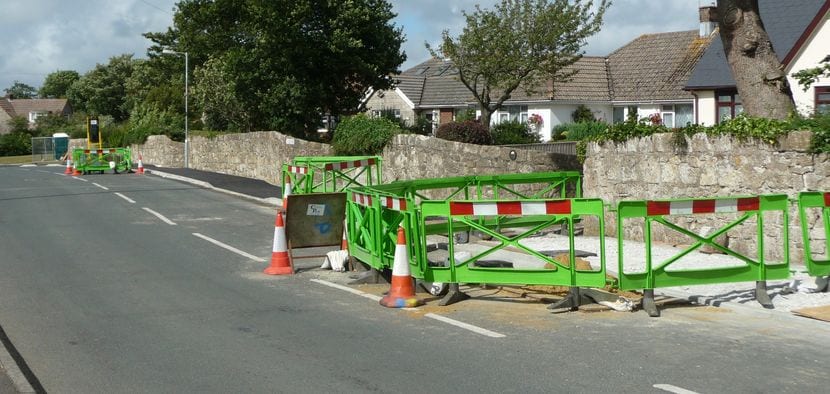
Another practical example is a sinkhole in the road caused by roadworks . If the roadworks are properly signposted, there's nothing we can do, but if there's no signage, we can file a complaint with the relevant authority.
Let's not forget the high-capacity roads either. For example, one of the reasons used by concessionaires to charge us for tolls and by the different public administrations to promote the use of motorways is precisely safety. What kind of security?
While researching this article, I discovered that kilometer 53 of the AP-68 motorway (from Zaragoza to Bilbao, with a toll of €31.70) has a danger index twelve times higher than the national average for toll motorways. Another detail is that kilometer 161 of the AP-7 (with a toll of nine cents per kilometer) is the section of motorway with the highest number of fatalities and accidents on the entire Spanish motorway network.
I give these two examples because I travel both sections of the motorway quite frequently and I would like to know what response I would get from the public authorities in case of an accident on either of these two sections where, even though they are aware of the particularly dangerous situation, they avoid any kind of improvement work on the road year after year.
Animal accident on the road
One of the most serious accidents that can happen on the roads is hitting an animal, and the latest reform of the Road Safety Law makes it very clear that the driver will always be at fault. In this regard, it seems that the Spanish justice system considers it normal to encounter an 800-kilo cow in the middle of the road while driving at 90 kilometers per hour . And let no one be mistaken: hitting an animal of this weight can be fatal.
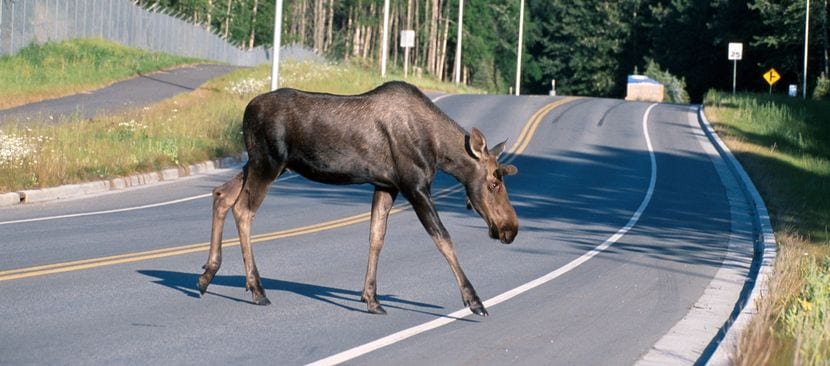
In this regard, I would like to launch a question in the air in search of some kind of reasoned answer. It is assumed that a motorway or motorway is fenced and that many of them also have surveillance cameras. So, is it acceptable for a wild animal to appear on the road all of a sudden?
In any case, all is not lost. Throughout 2016, an average of three accidents involving animals occurred daily in the Principality of Asturias . However, in June 2017, the National Court ordered the Ministry of Public Works to pay €16.000 in compensation to three young people who had hit a wild boar on the Cantabrian Highway. It should be noted, however, that the accident had occurred on November 19, 2015, nineteen months earlier.
It must also be said that, always according to the Civil Guard, between January 1, 2015 and June 9, 2016, a total of nine accidents with animals had occurred in that same area and that there was no warning sign. For its part, Fomento argued that the danger sign is placed in areas of habitual passage, but the court considered that habitual “is an indeterminate legal term […] that does not establish the degree of repetition of it.”
In any case, enjoy the holidays, do not forget that you have to return home and now that you know how, in the event of an accident, act responsibly.