

I get a strange feeling when the first message I receive on my mobile phone each day isn't from a friend or family member, but from the insurance company thanking me for renewing my car insurance policy . And I say strange because, on the one hand, in the more than fifteen years I've had car insurance in my name, my premium has never (I repeat: never) gone down from one year to the next. Currently, I'm enjoying the maximum discount I can get from my company, which is around fifty percent, but even so, the annual increases in the policy have completely wiped out the supposed good driver discount.
What can be truly unsettling is that on the very same day my bank statement is processed, it appears in various national media outlets that approximately ten percent of the vehicles on the road in Spain are driving without mandatory insurance , which equates to roughly two million drivers. I consider this a high, or even very high, percentage, and it genuinely terrifies me that I might one day have an accident and the other driver lacks mandatory insurance.
What truly worries me and gives me a lot to think about is the ineffectiveness of the measures taken by both public administrations and various insurance companies . As for insurance companies, we all know the drill: they recoup the losses from customers who don't pay their premiums by raising the rates for those of us who do pay and have a valid policy. And if there's one thing we all understand, it's that insurance companies, despite their friendly demeanor, are really only interested in money, and they'll never lose.

The measures implemented by public authorities are also scarce and slow . The latest idea was to install radars that read license plates and compare them with the databases held by the various police forces. The theory was good, but the databases weren't as up-to-date as they should have been, and more than one driver was notified that their insurance wasn't valid when in fact it was. If we add to this the fact that, for Spanish authorities, we are all guilty and it's up to us to prove our innocence, it's unnecessary to explain the bureaucratic hurdles one has to jump through to prove that one does have valid insurance.
Insurance obligation
Let's break it down step by step. Article 1902 of the Civil Code states that "whoever, through action or omission, causes harm to another, through fault or negligence, is obligated to repair the damage caused." In simpler terms, it means that you pay for what you do.
For its part, Royal Legislative Decree 8/2004, of October 29 , which approves the consolidated text of the Law on civil liability and insurance in the circulation of motor vehicles, in its latest update of September 23, 2015, states in its article 2 that “ every owner of motor vehicles that has its usual parking in Spain will be obliged to subscribe and keep in force an insurance contract for each vehicle that he owns […] the owner will be relieved of such obligation when the insurance is arranged by any person who has an interest in the insurance.”
Despite the complex vocabulary often used in both legal texts, the basic idea is very clear: all vehicles must be insured . And having a valid insurance policy requires being up-to-date with payments . The start and end dates are clearly stated on the receipts sent by banks or downloaded from the internet. If the expiration date of an insurance policy has passed and it hasn't been renewed, the insurance will no longer be valid . However, some insurance companies may "forgive" late payments from certain clients.
At this point, I don't want to alarm anyone, but it's important to clarify that the fact that your insurance policy's expiration date has passed and the premium hasn't been charged yet doesn't mean you're uninsured . The insurance company has probably already issued the invoice and it's being processed. If the renewal date has arrived and the insurance premium hasn't been deducted from your bank account, it's always best to contact your insurer and ask. They'll likely tell you not to worry and that the delay is due to administrative procedures.
Penalties for driving without insurance
Not having a valid insurance contract carries a financial penalty that can range from 601 euros to 3.005 euros , depending on the type of vehicle, whether any type of accident has occurred or how long the car has been without insurance, the authority may even immobilize the uninsured vehicle until it is proven that at least the mandatory insurance has been subscribed.
In the event of a repeat offense, the competent authority may impound the vehicle for up to three months , and the owner will be required to pay the cost of parking in municipal impound lots, which in Barcelona is €19.86 per day for passenger cars. If, after three months, the owner fails to provide proof of insurance, the vehicle will be impounded for one year, and the driver will be banned from driving any other vehicle in Spain for the same period.
In case of an accident and not having insurance
If a driver operating a vehicle without valid insurance is at fault in an accident, the Insurance Compensation Consortium is responsible for covering the damages. However, this institution will subsequently initiate a process—first amicable and then legal—to recover the costs incurred from the driver who lacked insurance.
To guarantee the functioning and solvency of the Insurance Compensation Consortium, in each car insurance policy signed in Spain there is a supplement of 3.5 euros that goes to the consortium , which, put in a selfish way, means that this consortium is financed in part by those of us who do pay our insurance policies.
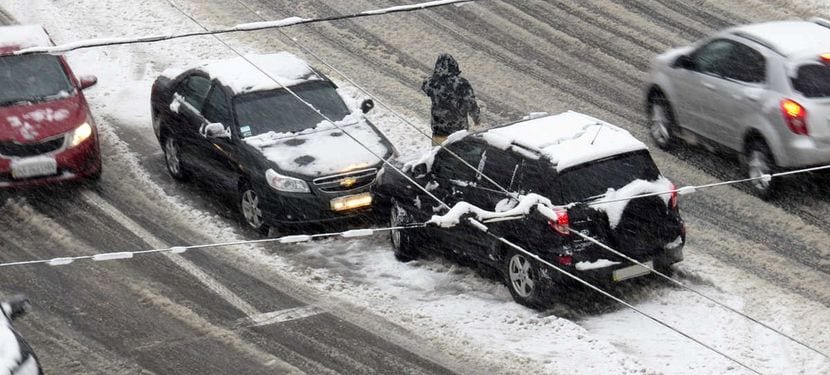
Although the theory sounds good and might reassure some, I feel obligated to be frank and remind readers that payments from the Insurance Compensation Consortium are slow , sometimes taking years. Furthermore, if any passenger has suffered any physical or psychological injury as a result of the accident, the Consortium will not begin the assessment and subsequent payment of any compensation until the injured parties have completed their rehabilitation and the full extent of their physical injuries, as well as any potential lifelong disabilities, can be determined.
Accidents with serious injuries or deaths
Even knowing that having insurance is mandatory, some people still think it's not so bad to drive without it . In fact, based on what's been said so far, it can be deduced that if a driver doesn't have the required insurance and is found guilty of an accident, the police will issue a €600 fine, and the Insurance Compensation Consortium will cover the other party's compensation. Let's not overthink it because that's the reality, but of course, things can get complicated…
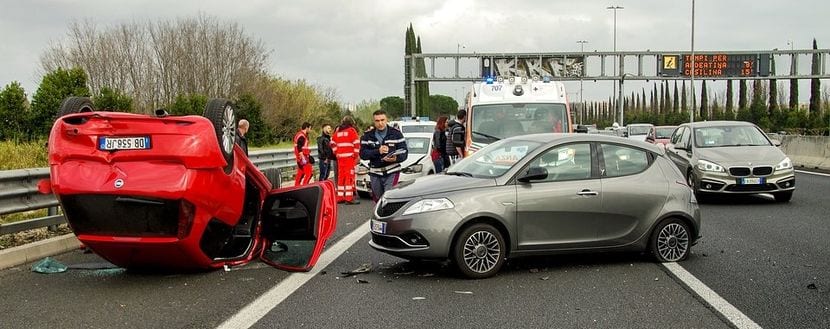
In the event of accidents in which a person is seriously injured or killed , the situation can become very complicated for the guilty driver who is traveling without valid mandatory insurance: what could be a simple civil matter would turn into a criminal offense that would most likely end in a prison sentence for homicide or for negligence resulting in homicide.
Driving without appearing as a driver in the insurance policy
This is a very common question in our country, especially when children start getting their driver's licenses and parents decide not to declare them on the insurance policy to avoid paying the young driver surcharge . At this point, and I apologize for being too blunt, I'm sorry to say that this can cause a lot of problems and is almost equivalent to driving without valid insurance.
If two of us go for coffee, it makes sense that we both pay for our drinks. If we go to the supermarket and buy two heads of lettuce, it's prudent that we both pay at the checkout. So why, if two people are driving, do we only declare one of them?

As always, as long as we don't have to use the insurance policy, nothing will happen. But the day this undeclared driver is found guilty of an accident is when things will start to go wrong, and our insurance company will make things very difficult, increasing the number of problems depending on the severity of the accident. However, it's also worth mentioning that things aren't always bad, and two things can happen, always related to the "quality" of the policy and the insurance company.
- The insurer can refuse, with every reason in the world, to pay any type of compensation either their own or someone else's. In this case it is very clear that the one who has not respected the contractual relationship has been the client and not the company, which will argue that, always according to the data provided by the owner of the vehicle, there should only be one driver of a certain age and a certain seniority with driver's license.
- It may happen that once the amount of possible compensation has been calculated, the insurer decides deal with them only in the percentage in which the client has satisfied the payment of the policy that is supposed to be the correct one. This means that if an insured saves 25 percent in the price of the insurance premium for not having his 18-year-old son declared, and he causes an accident, the insurance company can save that 25 percent at the time to pay the indemnities, which will be borne by the insured. And beware, that in the event of an accident with deceased or with victims who are left with a high motor disability, we would be talking about thousands of euros.
It's also very common in our country for cars that will be driven by people within the same age range and with similar driving experience to be insured in the name of only one driver. For example, in the case of a couple, it's normal for the car to be insured in only one person's name . Interestingly, most insurance companies don't charge any surcharge as long as all drivers meet a minimum age and driving experience threshold.
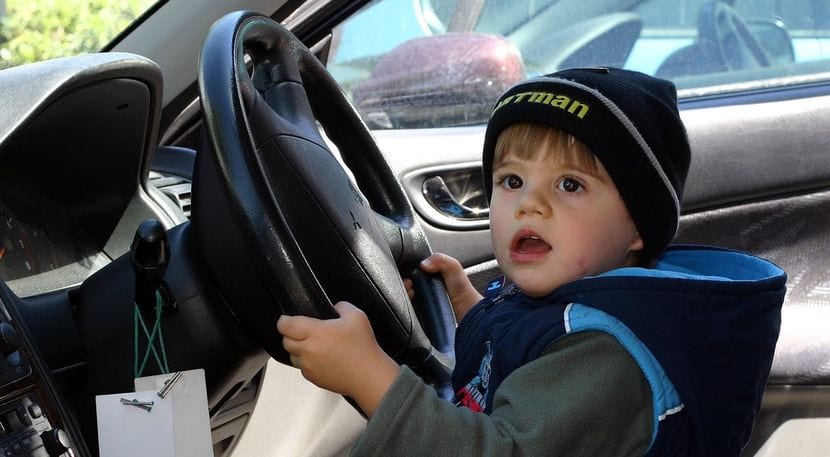
When a vehicle is regularly driven by two or more drivers, it's logical and prudent to ensure all drivers are listed on the insurance policy . If an occasional driver appears (a son, a nephew, or even a casual fling), we must be very clear about the specific terms of our insurance policy . If we have a contract stating that no driver will be under, for example, 25 years old, there's no need to overthink it: letting a 24-year-old drive our vehicle is the same as driving without a valid insurance policy.
Hiring the insurance
None of us like paying bills. It doesn't matter if we have cheap or expensive insurance; the day the payment is deducted from our bank account, we're always in a bad mood, even though insurance in Spain isn't exactly expensive compared to other European countries . These days, there are countless brokers offering the best possible deal on basic insurance. And thanks to new technologies, we shouldn't forget the online companies that offer insurance at incredibly low prices. While these companies might not offer the best coverage , many are actually low-cost divisions of large insurers or even well-known banks. Plus, almost all companies allow you to pay in installments throughout the year.
In any case, it's always better to have very basic insurance than to drive without it , both for our peace of mind and out of respect for others.
Table of Contents