

The plug-in car is no longer a token purchase for many Spanish families. It's no longer seen as a second car for short trips: in many households, it has become the vehicle used almost daily. This change in habit is accompanied by reasonable doubts about the initial outlay, the available range, and the ease of recharging.
The first study of its kind on electric vehicle use in Spain , commissioned by Mutua Madrileña and conducted by Demométrica, is based on a survey of 1.200 drivers of pure electric and plug-in hybrid vehicles . The sample reveals what happens when a battery-powered car enters a family garage and ceases to be a one-off test drive.

The plug-in hybrid car is carving out a niche as a benchmark vehicle.
In households with more than one car, nearly 80% use a plug-in hybrid as their primary mode of transportation . The exact percentage reaches 79,1%. This figure rises to 84,1% among those who own a pure electric vehicle and falls to 74,3% in the case of plug-in hybrids, a difference that reflects distinct driving habits.
For 84% of those surveyed, the car they purchased was their first model with a power outlet . Furthermore, 64% of households own another vehicle. Even so, the plug-in vehicle isn't just sitting idle: a significant portion of respondents use it for regular commutes.
53% always use it for urban journeys, and 35,4% use it regularly for all types of trips, including long ones. Among owners of pure electric vehicles, 70% have significantly or considerably changed their travel plans . 24% of them never use it for long journeys, compared to 7% of plug-in hybrid owners. 45,4% travel between 1.000 and 2.000 kilometers per month, and most take between one and five long trips per year.

Money dictates the decision
The most frequently cited reason for making the switch is not environmental, but economic: 51% mention fuel savings . This is followed by environmental awareness (32%) and the ability to drive in low-emission zones (30%). Buyers of pure electric vehicles place more emphasis on environmental impact; those who choose plug-in hybrids primarily value urban advantages.
Technology is important to 91% of respondents, design to 85%, brand to 74%, and government subsidies for electric cars to 64%. Among those who bought a pure electric vehicle, 58% received some type of subsidy, compared to 38% of those who chose a plug-in hybrid. Furthermore, 76% made their decision in less than six months from the time they began considering the purchase.
Price, autonomy and battery: pending issues
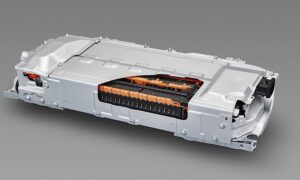
The barriers remain clear. 56,5% cite the purchase price as an obstacle , and 53,9% point to limited range. It's not just about traveling further on a single charge: drivers prioritize improving battery life over shortening charging times.
Battery lifespan is a concern for 51,1% of respondents when asked about safety and reliability. The availability of chargers while traveling comes in second place, at 17,5%. Software updates and potential cyberattacks are further behind, at 7,1%. Battery performance is a greater factor in consumer confidence than charging power.
Charging at home wins; the public network still raises doubts
Three out of four owners (75%) charge their vehicles at home, while 33% use public charging stations. The most common method is slow or home charging, chosen by 58%; only 11% report using fast charging. The garage remains the primary charging location for most.
When it comes to relying on public infrastructure, complaints arise. 46,8% find the network lacking in clear and unified information; 45,4% report availability or operational problems; and 36,5% consider the process more complicated than necessary. More than a third distrust charging station locator apps. The experience outside the home is still not uniform.
High satisfaction with tasks ahead
The car's average rating is 7,9 out of 10, with 42% giving it a 9 or 10. This score coexists with criticisms of the network and battery, painting a picture of a user satisfied with daily use but demanding in terms of what's missing . The portrait isn't of perfect technology, but rather of a formula that already works in the daily lives of many households.
The study paints a picture of plug-in mobility firmly established in everyday life, with savings as the main draw and the family car as the central focus, but still constrained by cost, range, and reliability in charging. This coexistence of progress and obstacles explains why electric vehicles are gaining ground without fully convincing all drivers.

Table of Contents