

The 2027 edition of the world's most demanding rally raid faces crucial weeks. Uncertainty surrounding its continued presence in Saudi Arabia, fueled by the conflict in the Middle East and attacks in sensitive areas of the country, has prompted Amaury Sport Organisation (ASO) to consider alternatives. The most promising option combines a start in the Iberian Peninsula with the bulk of the competition taking place in Morocco , although neither aspect is officially finalized. The idea has been discussed with teams and logistics managers, and all indications suggest that the event will attempt to maintain its demanding format despite the change of venue.
The most frequently cited draft schedule places the scrutineering in Europe, the prologue on January 9th, and the finish on January 22nd, with a rest day on the 16th. In total, it mentions twelve days of competition and a special stage distance of approximately 4.300 kilometers. This is not a watered-down Dakar : it retains a marathon-refuge stage, with no mechanical assistance between two days and overnight stays in a makeshift bivouac. The organizers want to prevent the relocation from diminishing the race and are working to ensure the route maintains the Dakar Rally 's usual challenging nature.

A transfer conditioned by the conflict
The reason for the change is none other than security. Several participants have expressed concern about competing in Saudi territory following the Houthi attacks and incidents near strategic infrastructure, such as Riyadh airport and facilities linked to Aramco. The organizers are studying the logistical feasibility of a backup plan while holding talks with the parties involved. Sources familiar with the discussions indicate that the final decision depends on security, the route, and the brand, but also on the timeline: the teams need to know the race location as soon as possible to finalize registrations and prepare their equipment.
Dates and itinerary on the table

On the sporting front, the proposed schedule sets the start on January 9th and the finish on the 22nd, with a rest day on the 16th. It is expected to consist of twelve stages and approximately 4.300 kilometers of special stages, a figure slightly lower than the recent Saudi Arabian Dakar rallies but sufficient to maintain the challenge. The route would primarily be in Morocco , with Merzouga as the main reference point, and the possibility of heading south, into areas near the edge of the Sahara, if the organizers need to extend the course. The marathon-refuge stage would remain one of the highlights of the program.

The European start
The most novel aspect would be the start. ASO wants the scrutineering, the prologue, and even the first day of competition to be held in a European city. Spain and Portugal are among the candidate countries , and there is no shortage of precedents: Barcelona, Lisbon, and Granada already hosted starts when the Dakar was held in Africa, while Santa Susanna has been the venue for presentations and pre-race procedures. No city has been chosen yet, nor has there been official confirmation, but the idea of a prologue on the Iberian Peninsula aligns with the desire to raise the event's profile in Europe and facilitate travel for teams and fans.
Morocco as a base
Morocco would be the perfect sporting stage. The country has ample experience in rally raid, as the Rally of Morocco has been held for years and is part of the World Rally Raid Championship. Merzouga and the dunes of southeastern Morocco offer terrain familiar to both drivers and organizers, allowing for varied stages without sacrificing navigation or challenging terrain. The Moroccan organizers have expressed their willingness to facilitate the event, and the director of the Rally of Morocco, Marc Coma, has indicated that the area could provide a great spectacle for a Dakar Rally.
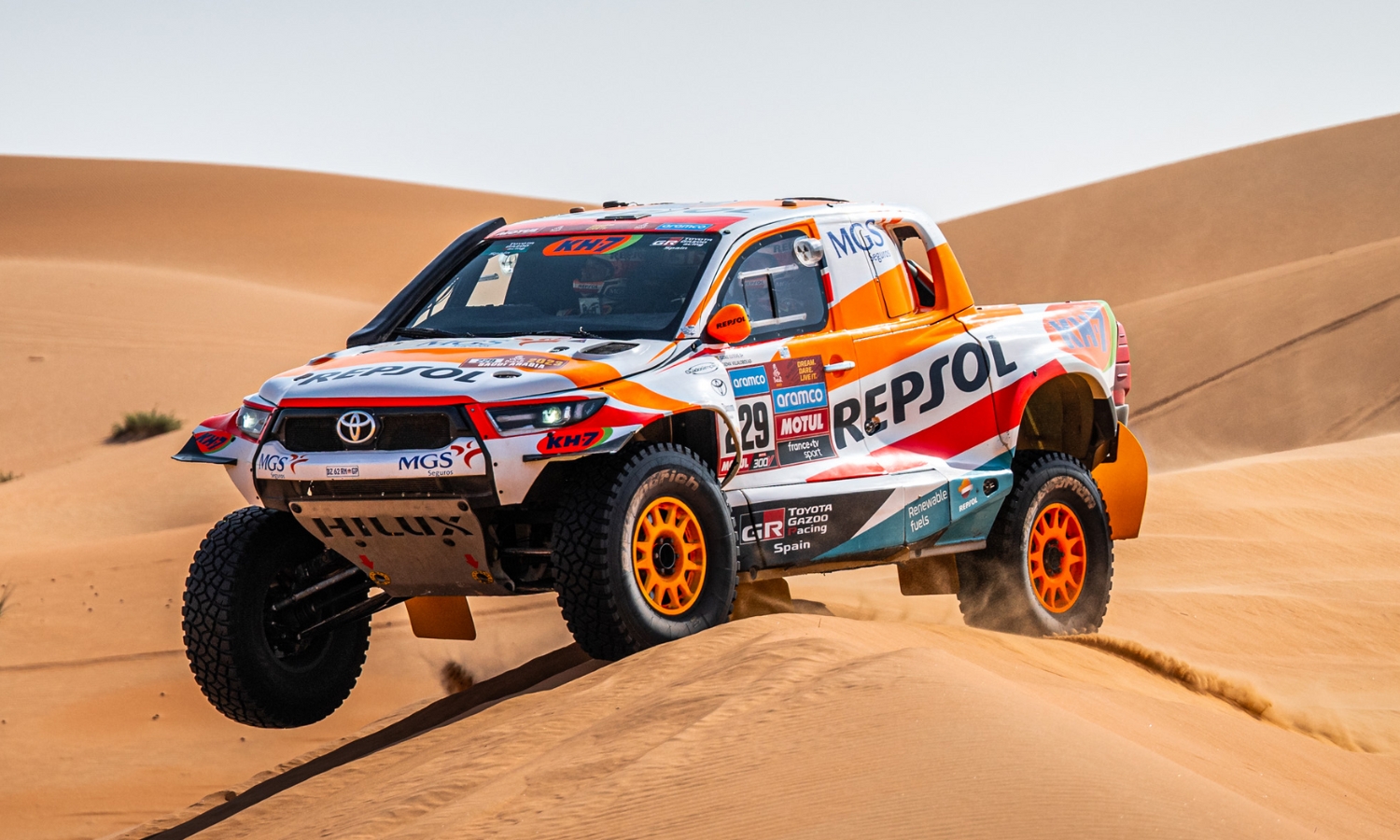
The experience gained at the Rally of Morocco serves as a guarantee. That event has become a kind of preseason for the top Dakar contenders, allowing them to test cars, tires, and strategies in an environment similar to what they would encounter in North Africa. Moroccan logistics are not starting from scratch : there are bivouacs, routes, and personnel accustomed to moving a huge convoy through the desert. Even so, organizing a full Dakar requires much more than a week-long rally, which is why ASO is meticulously refining the details before announcing the final route.

Alonso and Coma, glimpses of the desert
Meanwhile, the news surrounding the 2027 Dakar Rally has been dominated by one name: Fernando Alonso. The Asturian driver was spotted testing a Prodrive prototype in Morocco, linked to the Dacia Sanrider , the car he is rumored to be competing with. Alongside him was Marc Coma , his co-driver in his 2020 debut, and the test took place in the dunes with safety measures in place, including helicopter surveillance. The images have fueled rumors about a possible return, although Alonso himself has insisted that nothing has been announced.
The technical project points to a Prodrive vehicle that could adopt the Aston Martin livery, the brand with which Alonso maintains his connection in Formula 1. The deal is not confirmed , and the driver has distanced himself from it: he has stated that he doesn't see the Dakar Rally as physically compatible with the demands of F1 and that, when he takes on such a challenge, he will announce it himself. His contract with Aston Martin and the Formula 1 calendar leave little room for maneuver, although the gap between some races has allowed for this first contact in the desert.
What remains to be finalized
Several loose ends remain. Official confirmation of the route, the exact start and finish cities, the final kilometer allocation, and the race's official name are still pending. The teams need certainty as soon as possible , because at this stage of the calendar, registrations and logistical preparations can't afford too many delays. It also remains to be seen how the relationship with Saudi Arabia will be resolved and whether the Dakar brand can be used without issues if the race is held outside the country. In this context, the option of a Dakar with a European prologue and a Moroccan base appears to be the most viable, but not yet the final decision.
With this backdrop, the 2027 Dakar Rally is shaping up to be an atypical edition: a prologue and scrutineering in Spain or Portugal, twelve stages concluding on January 22nd, some 4.300 kilometers of special stages, and the bulk of the competition in Morocco, with Merzouga as a key location and a marathon refuge stage. Uncertainty surrounding Saudi Arabia remains , and official confirmation is still pending, while Fernando Alonso tests equipment in the desert and maintains his unannounced return. The organizers aim to preserve the rally's challenging nature while simultaneously resolving logistics, branding, and the route in time so that teams and drivers know what to expect.
Table of Contents