

Citroën has decided to revive one of its most recognizable names and bring it into the electric realm. The 2CV will return as a zero-emissions city car , with a prototype to be unveiled at the Paris Motor Show and a production version that, according to the roadmap revealed by the brand, should appear in 2028. The idea is not only to stir the emotions of those feeling nostalgic, but also to recapture the philosophy of a simple, practical, and affordable car that made the original so popular.
The French firm frames this project within its offensive of small and affordable electric vehicles for Europe . That's why price has become the most frequently mentioned detail: the goal is for the entry-level version to be priced below €15.000 before subsidies. Official figures for battery capacity, power, range, and charging speed are not yet available, so much of the technical information remains uncertain.

A comeback with a date and a venue
Citroën has chosen the Paris Motor Show to unveil its concept car. The prototype's presentation is scheduled for October 11, and the show will be open to the public from October 12 to 18. The brand emphasizes that what will be seen in the French capital is a preview, not the final production model.
The timeline indicates that the electric 2CV will arrive in 2028. Its production has been linked to the Italian plant in Pomigliano d'Arco, where Stellantis plans to concentrate production of several affordable electric city cars. This plan also includes a future Fiat, successor to the Panda, which would share the same approach and solutions as the Citroën.

Design with nods to the classic
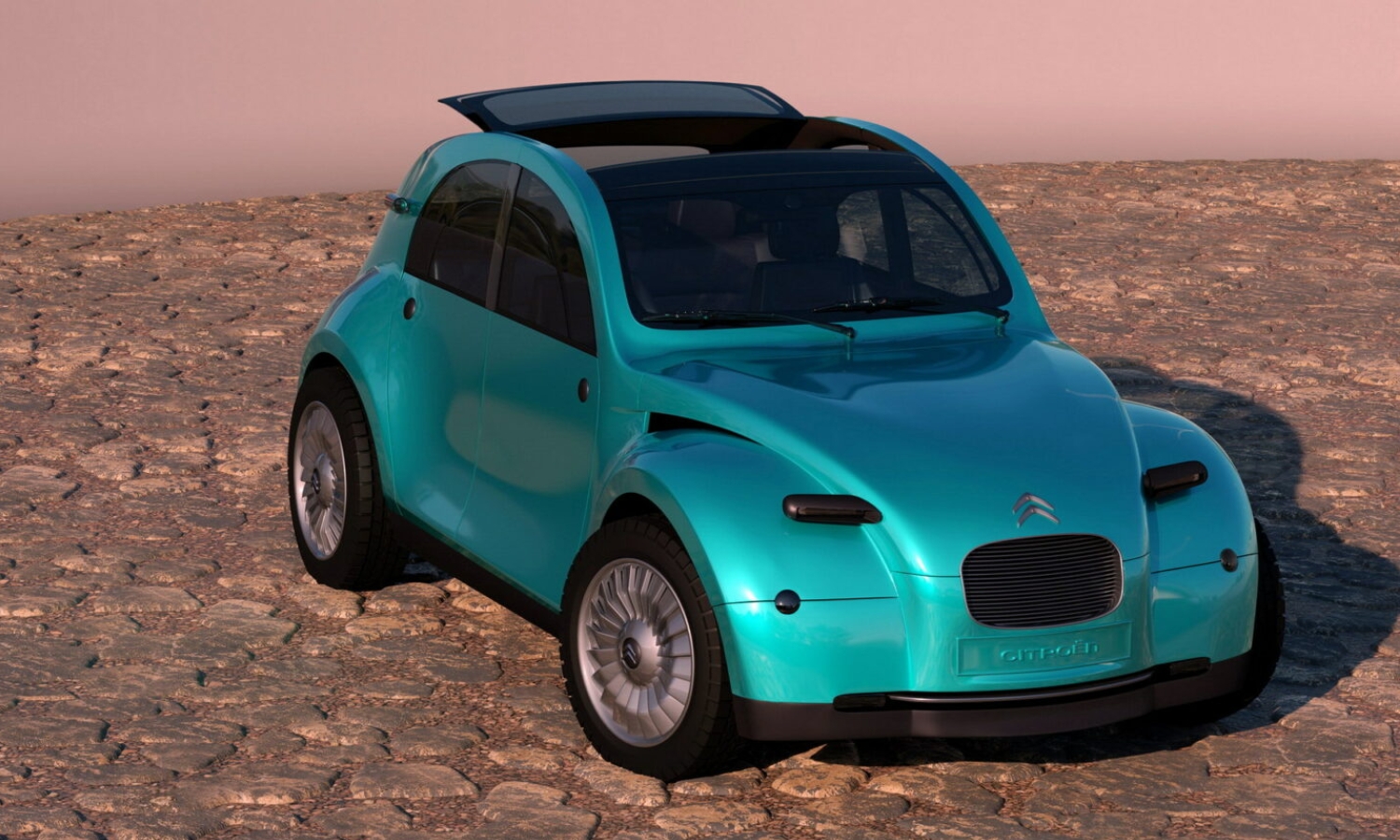
The released previews reveal a car that makes no secret of its post-war roots. It features round LED headlights , a hood with longitudinal creases, metallic-looking door handles, steel wheels, and tires with Michelin branding. The prototype's bodywork sports an orange hue reminiscent of some versions from the 1970s.
Details such as taillights and turn signals positioned high on the rear and bulging wheel arches are also noticeable. Citroën reiterates that these features belong to the concept car and not necessarily the final production model , although it would be unusual for them to abandon them: that retro feel is precisely what has sparked interest and what has proven successful for rivals like the electric Renault 5.
Less than 15.000 euros as a goal
The biggest challenge isn't just aesthetic. The brand wants to position the 2CV at the lower end of its electric range , below the C3 and above the Ami quadricycle. If it maintains the planned price, it will compete with models like the Dacia Spring, the Renault Twingo Electric, the BYD Dolphin Surf, and other affordable city cars that are arriving or will arrive on the European market.
To approach that price point, Stellantis intends to leverage its E-Car program , a family of small vehicles for several of the group's brands. Industrial scale, shared components, and an architecture designed to reduce costs will be key. The European Union is also working on a lower category, known as M1E, which would lower requirements to facilitate more affordable electric vehicles.
The legacy of the original 2CV still holds considerable weight. That car was unveiled at the 1948 Paris Motor Show and remained in production for 42 years, until 1990. It was conceived to motorize rural areas with a robust, lightweight, and easy-to-maintain vehicle, and it ultimately became a cultural icon. Now, Citroën aims to bring that same vision of broad access to mobility, but with an electric powertrain.
What remains to be confirmed
The brand hasn't revealed the final platform, battery capacity, official range, power, or charging speed. Everything points to an urban focus , with sufficient performance for daily use and no aspirations for long journeys. This technical restraint aligns with a competitive price and a primary use in the city.
It also remains to be seen how much of the prototype will make it to production and whether the 2CV will ultimately share more parts than anticipated with the future Fiat. The October presentation will help clarify some of the questions, but it won't answer them all: the production version isn't expected until 2028 , so the brand still has time to fine-tune some details.
Citroën's strategy, in practice, involves reviving a name with enormous emotional weight and using it to sell a simple and affordable electric car. Its success will depend on whether the promised price remains just a headline and whether the final car retains the design elements that are currently attracting attention. If both of these conditions are met, the 2CV could once again occupy a role similar to that of the original: a car designed for a wide audience, albeit now with a battery instead of a gasoline engine.

Table of Contents