

The Spanish plug-in hybrid vehicle market closed July with figures that inspire optimism. According to data compiled by the main industry associations, 14.314 units were registered, representing a 16,2% increase compared to the same period last year. If vans with this technology are also included, the figure rises to 15.198 units, 17,8% more than in July 2025. So far this year, the cumulative total has reached 97.475 units, 36,2% more than in the first seven months of the previous year.
This growth is not an isolated event. The total number of electrified vehicles—both pure electric and plug-in hybrid—reached 27.550 registrations in July, a 20,3% increase, and now represents 22,3% of the total market share. Within this segment, plug-in hybrid vehicles are consolidating their position as the preferred option for drivers seeking a gradual transition to zero-emission mobility, with a monthly market share of 12,5%.

BYD Atto 2, the undisputed king of the PHEV segment
The BYD Atto 2 DM-i became the best-selling plug-in hybrid in Spain during July , with 1.088 units registered. This result doesn't surprise analysts, as the model had already topped the rankings in June with 1.673 units, dethroning its sibling, the Seal U, which had held the top spot for many months. The Atto 2 is available in two versions: the Active, with a 7,8 kWh Blade battery and 166 hp of combined power, offering 40 kilometers of electric range and 930 kilometers of total range; and the Boost, which increases the battery capacity to 18 kWh and the power to 212 hp, allowing for 90 kilometers of electric-only range and up to 1.000 kilometers combining both motors.

The second position in the monthly ranking goes to the Geely Starray EM-i, an SUV that arrived on the Spanish market in March and has already accumulated 907 registrations , representing a 6,25% share within the PHEV segment. This model, 4,74 meters long with a 528-liter trunk, combines a 1.5-liter 100 hp gasoline engine with a 218 hp electric motor, developing a combined output of 262 hp. Buyers can choose between two batteries, 18,4 kWh and 29,8 kWh, which allow for electric-only ranges of up to 83 or 136 kilometers, respectively, with a total range exceeding 1.000 kilometers.
The podium is completed by the BYD Seal U DM-i, with 839 units registered in July . This SUV, which for months was the undisputed market leader, now occupies second place in the year-to-date figures with 6.864 units. Its range comprises three versions—Boost, Comfort, and Design—with power outputs ranging from 218 to 324 hp, front-wheel or all-wheel drive, and 18,3 and 26,6 kWh batteries. Depending on the configuration, it can travel up to 125 kilometers in zero-emissions mode and achieve a combined range of 1.100 kilometers.

Chinese dominance extends across Europe
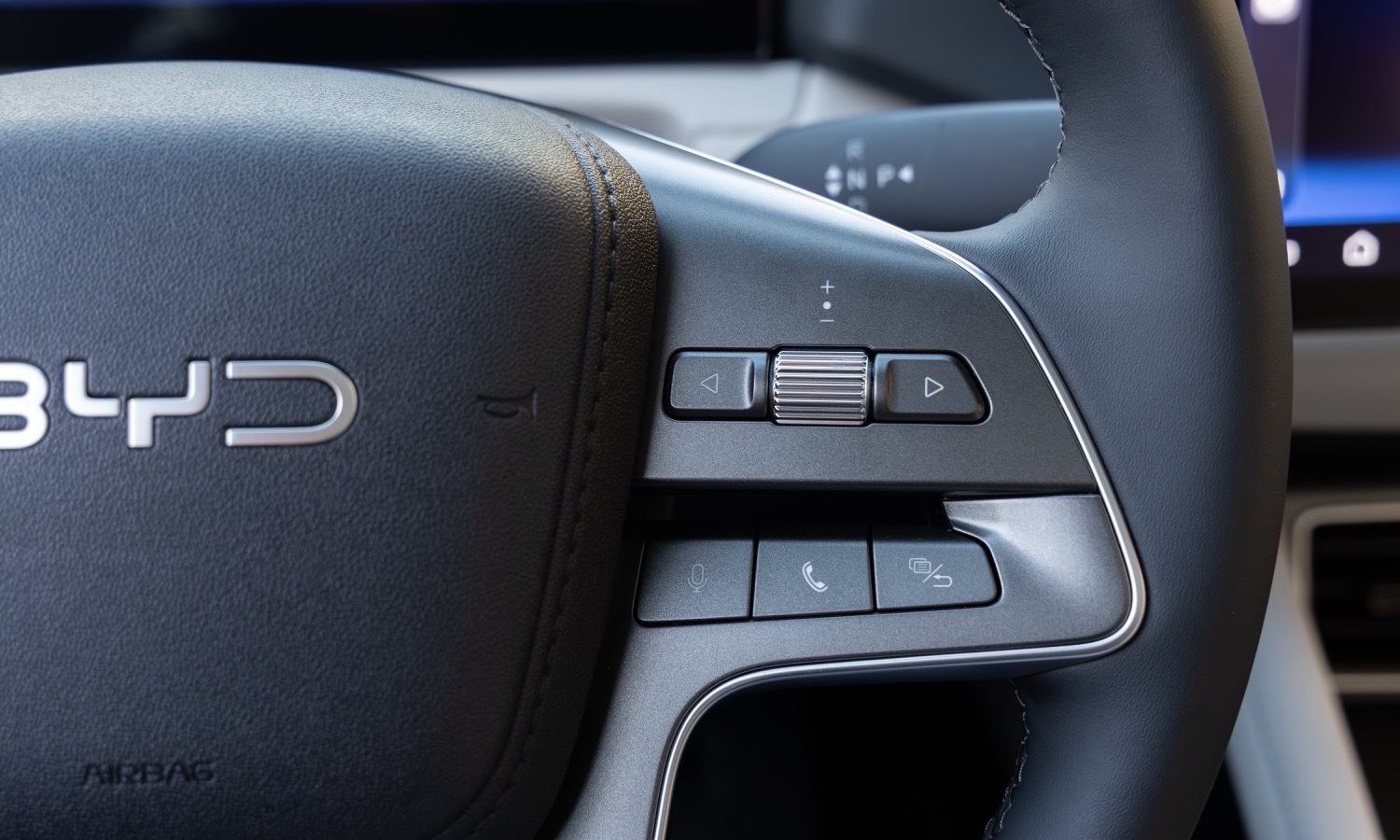
The success of BYD and Geely is not exclusively a Spanish phenomenon. Chinese manufacturers registered 208.368 plug-in hybrids in Europe during the first half of 2026, reaching a 27,3% market share . This growth, a 101% increase compared to the previous year, has been fueled by a tariff loophole: the European Union imposed additional tariffs on pure electric cars manufactured in China, but excluded plug-in hybrids, an opening that Asian manufacturers have quickly exploited.
The BYD Seal U, BYD Atto 2, and Jaecoo 7 now occupy the top three spots in the European PHEV segment, displacing the Volkswagen Tiguan to fourth place. In response, the Volkswagen Group has requested that Brussels impose tariffs of between 20% and 30% on plug-in hybrids manufactured in China. However, other European manufacturers such as Ford and Stellantis have opted for a different strategy: partnering with Chinese manufacturers to produce in Spain. Ford will manufacture models alongside Geely in Almussafes (Valencia) starting in 2028, while Stellantis already produces the Leapmotor in Figueruelas (Zaragoza), a route that allows them to circumvent tariffs and maintain local employment.
The Auto+ Plan and aid for plug-in hybrids

In the area of subsidies, the new Auto+ Plan has come into effect with a budget of 400 million euros and offers aid of up to 3.375 euros for plug-in hybrid passenger cars that meet the requirements . The program, which requires the DGT's Zero Emissions label, calculates the subsidy based on several criteria: technological (25% of the maximum for PHEVs), economic (25% if the price before taxes is less than 35.000 euros, or 15% if it exceeds that figure but does not surpass 45.000 euros), and European (15% for final assembly in the EU and an additional 10% if the battery is manufactured in Europe).
In the case of BYD, the brand has specified that all its DM-i hybrid models receive a subsidy of €2.250, equivalent to 50% of the maximum grant , plus a sales contribution of €1.210. This allows access to particularly competitive prices, such as the BYD Atto 2 Active starting at €18.739 with financing or the Seal U DM-i Boost starting at €29.990. The Chinese brand leads the Spanish plug-in hybrid market with 16.171 units registered in the first seven months of the year, a market share of 17,6%.
Behind BYD, Toyota remains the second best-selling brand in the PHEV segment with 1.465 units, thanks mainly to the strong performance of the C-HR and RAV4. Mercedes holds third place with 1.211 units, closely followed by Ford, Volkswagen, and Ebro. Rounding out the top 10 most registered models in July are the Toyota C-HR (774 units), the Toyota RAV4 (691), the Ebro S700 (685), the Mercedes GLC-Class (572), the Ford Kuga (443), the Volkswagen Tiguan (342), and the BYD Dolphin G (317).

The growth of the PHEV segment is not limited to Spain. Across Europe, plug-in hybrids already represent a significant portion of electrified vehicle sales, and Chinese manufacturers are gaining ground at a rate that has surprised the European industry. The EU's decision on tariffs for Chinese PHEVs will be key in determining whether this trend continues or slows in the coming months. Meanwhile, Spanish buyers are benefiting from an increasingly broad and competitive range, with models that combine sufficient electric range for daily driving with the peace of mind of a combustion engine for longer journeys.

Despite everything, the plug-in hybrid market in Spain is currently booming. July's figures confirm that this technology has established itself as a viable alternative to combustion engine vehicles, and the arrival of the Auto+ Plan, along with the growing range of models from Chinese and European manufacturers, promises to maintain this upward trend for the rest of the year. The key will be whether the government subsidies arrive on time and how the EU resolves the tariff issue—two factors that will determine the growth rate of a segment that is no longer a niche option, but rather one of the main drivers of electrification for the Spanish vehicle fleet.
