

The upcoming MotoGP season boasts a packed calendar with plenty at stake after a year in which Marc Márquez once again proved his dominance . The premier class faces a new season combining classic circuits, highly anticipated returns, and changes in the order of the grid that could influence the title fight.
In this scenario, the focus on Europe, and particularly on Spain, will remain very strong, as the country will once again be one of the championship's major epicenters with several key stops. At the same time, international expansion is reinforced with events in Asia, the Americas, and Oceania , maintaining a balance between historic circuits and new challenges for riders and manufacturers.
Sporting context before the new calendar
The championship enters this new season after a year in which Marc Márquez dominated with unprecedented superiority , stringing together victories and securing the title with several races to spare. His definitive adaptation to the Ducati Lenovo bike made all the difference against a grid where only Álex Márquez managed to come close, achieving three wins.
However, the end of last year left a more open feeling. An injury to Márquez when the title was already decided allowed Aprilia to show its full potential, winning several races and demonstrating that the gap with Ducati had narrowed. At the same time, KTM continued to make progress, so the Italian brand's status as favorite no longer seems so clear.
In this context, the new calendar is also interpreted as a competitive barometer: certain circuits favor some manufacturers over others , and the order in which the races are held can influence the championship standings. The long tours away from Europe and the back-to-back Grand Prix weekends will test both drivers and teams.
Winter break and return to the slopes
MotoGP is currently in its usual winter break, which prohibits all track activity for factory riders until the restriction is lifted. During these weeks, work shifts to the factories and simulators, with the aim of being fully prepared for the start of the preseason.
The break ends at the end of January, at which point the premier class bikes can return to testing according to the preseason schedule and under certain conditions. First, the Shakedown takes place, a session primarily for rookies, test riders, and manufacturers with regulatory concessions, such as Yamaha.
Following that initial contact, the entire grid will meet for two official test sessions prior to the start of the championship . The first will take place at the Sepang circuit in Malaysia, with three days of intensive work focused on testing upgrades, new setups, and race pace. The second will be held in Thailand, at the Buriram circuit, just one week before the first Grand Prix of the year.
Team presentations and grand official launch
As is customary at the start of each year, before training begins, the MotoGP team presentations take place . These events serve to unveil the final liveries of the bikes, announce sponsors, and, in many cases, mark the first public appearance of riders and team managers in their new colors.
Pramac Racing is usually one of the first teams to kick off the presentation calendar, holding its event in Italy, in the heart of Tuscany. This is followed by the unveilings of other prominent teams: VR46, the official Aprilia squad, and later the factory teams of Ducati and Yamaha , among others.
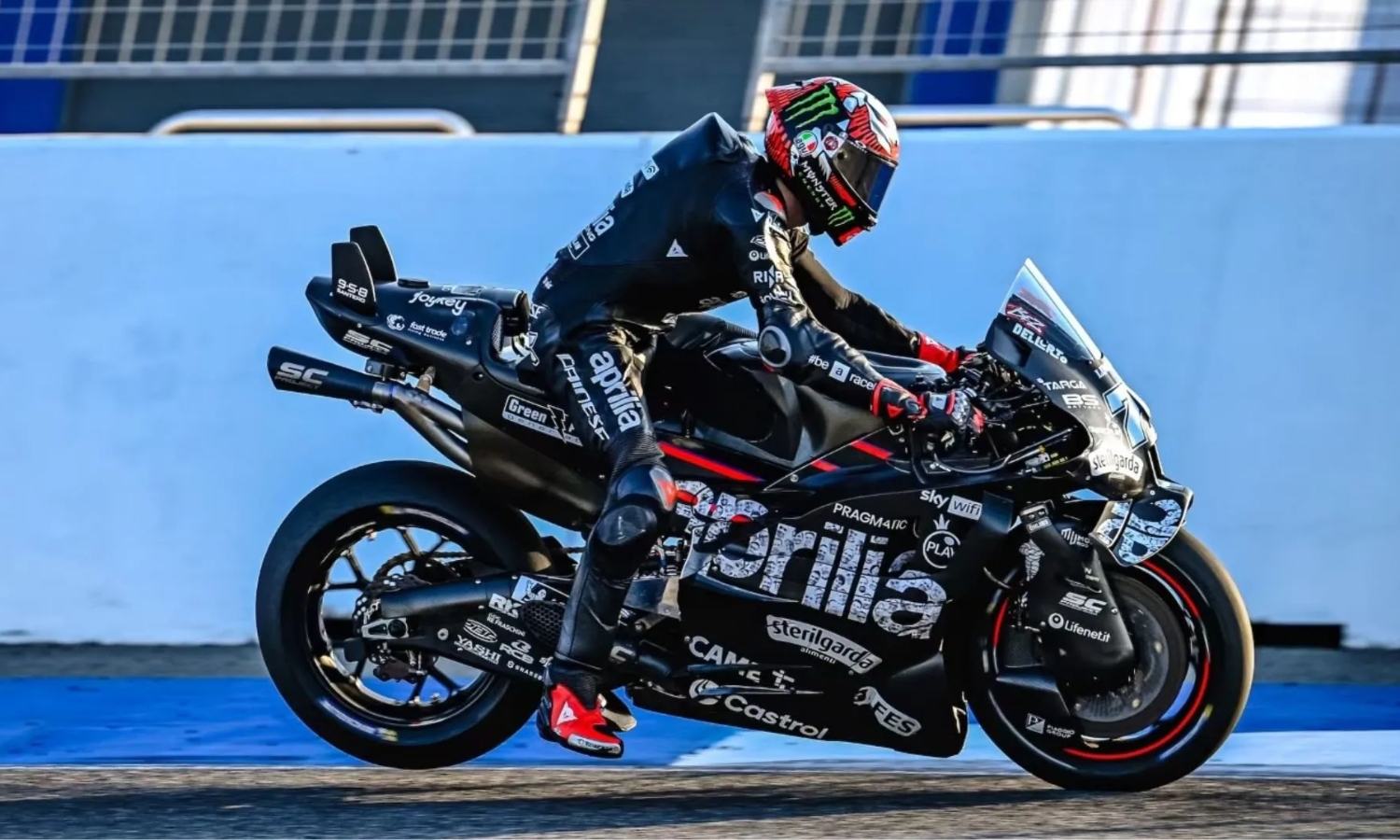
In addition to these individual events, the championship holds a major joint season launch event , where all the teams come together. This event takes place in the Malaysian capital in early February and has a more institutional and media-driven character, with all the key players on the grid in attendance.
A calendar with 22 Grand Prix races
The season will consist of 22 races, maintaining the long calendar format that has become established in recent years. The general pattern seen previously is repeated: a start in Asia, a move to the Americas, and a return to Europe for the bulk of the championship, before the final leg across other continents and the closing race in Spain.
The first Grand Prix takes place in Thailand, specifically at the Chang International Circuit in Buriram, between February 27th and March 1st. It will be the first time that all the unknowns of the preseason are put to the test in a race , with the paddock still adjusting to the new technical developments and potential changes in driver lineups.
Once the season gets underway, the championship crosses the ocean to the Americas. Brazil returns to the calendar with a race in Goiania from March 20-22, replacing Argentina, while the traditional Grand Prix of the Americas in Austin, Texas, takes place a week later, from March 27-29.
From there, the World Championship heads to Qatar, where the Lusail Grand Prix takes place from April 10th to 12th. This event maintains its position as one of the first serious tests of performance in nighttime conditions , with temperatures and grip levels different from those of European circuits. After the Middle East, the paddock arrives in Jerez, where the continental leg of the season begins.
European prominence and Spain's weight
Europe once again takes center stage on the calendar, with a concentration of races that will largely determine the title fight . Spain plays a crucial role, hosting four Grand Prix on very diverse circuits, making the country a true competitive laboratory.
The first European Grand Prix takes place from April 24th to 26th at the Jerez-Ángel Nieto Circuit, home of the Spanish Grand Prix . This event is usually a benchmark for measuring the level of each project, as it is a well-known track that is demanding on both chassis and tires.
A few weeks later, the championship visits the Circuit de Barcelona-Catalunya, from May 15th to 17th , for the Catalan Grand Prix. There, the combination of fast corners and long straights tests both aerodynamics and top speed, areas in which Ducati has excelled in recent seasons, although improvements from Aprilia and KTM have closed the gap.
In the heart of the European summer, the Aragon Grand Prix takes place at MotorLand, from August 28th to 30th . This circuit, with its steep elevation changes and changes of direction, typically offers highly tactical races, where tire management and braking performance make a significant difference. It's one of the tracks where Marc Márquez has traditionally performed at a high level.
The final Spanish stop is reserved for the Ricardo Tormo Circuit in Cheste, Valencia, from November 20th to 22nd . There, the championship finale will be held on a short, twisty track that has often been the scene of decisive season finales, although last year the title was decided well in advance.
A route through the great European classics
Besides Spain, the European calendar includes several legendary circuits that maintain their status as essential stops on the world championship calendar . From May 8-10, the French Grand Prix takes place at Le Mans, a track where the weather often plays a significant role, with frequent rain that can affect both practice and the race.
From May 29th to 31st, the championship moves to Mugello for the Italian Grand Prix , one of the weekends with the most vibrant atmosphere in the stands. Next up is Hungary from June 5th to 7th, at the Balaton Park circuit, which has established itself as one of the recent additions to the European calendar.
The continental tour continues in the Czech Republic, with a race in Brno from June 19-21, followed by the Netherlands (Assen) from June 26-28 , considered the "cathedral" of motorcycling. At the beginning of July, from the 10th to the 12th, the series visits the Sachsenring in Germany, a track where the strongest riders have traditionally shone in linked corners and rapid changes of direction.
The summer leg of the season concludes with the British Grand Prix at Silverstone, from August 7th to 9th , before moving on to Aragón. Later, from September 11th to 13th, the San Marino Grand Prix takes place at Misano , followed by the Austrian Grand Prix at Spielberg from September 18th to 20th, a very fast circuit where engine performance and braking are crucial.
Final stretch: Asia and Oceania before the closure on the peninsula
After the European leg and before the final race in Valencia, the calendar moves to Asia and Oceania for an intense end to the season . From October 2nd to 4th, the race takes place at Motegi (Japan), a circuit that combines sections of high acceleration with very technical braking zones, making it particularly demanding on tire wear.
Next, from October 9th to 11th, MotoGP visits the Mandalika street circuit in Indonesia , one of the newest tracks on the calendar, which often offers unpredictable races due to track conditions and weather. Shortly after, from October 23rd to 25th, the championship heads to Phillip Island in Australia, one of the fastest and most spectacular circuits on the calendar.
From there, the tour travels to Malaysia, where the Sepang Grand Prix takes place from October 30th to November 1st . This circuit is known for its high temperatures and extreme humidity, factors that make the race a true physical test for the drivers. The penultimate stop will be at the Algarve International Circuit in Portimão, Portugal, from November 13th to 15th, characterized by its constant elevation changes and blind corners.
Once the European leg of the season is over, all eyes will turn to Valencia for the championship finale. If the title fight is still alive in Cheste, the atmosphere at the Ricardo Tormo circuit could be decisive , with packed stands and a very attentive Spanish crowd, especially focused on what Marc Márquez can do against Aprilia, KTM, and the other contenders.
Detailed Grand Prix Calendar
The following is a complete list of scheduled races for the season, with the dates and circuits set for each Grand Prix :
- February 27 – March 1: Thailand Grand Prix, Chang International Circuit (Buriram), Thailand
- March 20 – 22: Brazilian Grand Prix, Goiania Circuit, Brazil
- March 27-29: Grand Prix of the Americas, Circuit of the Americas (Austin), United States
- April 10-12: Qatar Grand Prix, Lusail Circuit, Qatar
- April 24-26: Spanish Grand Prix, Jerez-Ángel Nieto Circuit, Spain
- May 8-10: French Grand Prix, Le Mans Circuit, France
- May 15-17: Catalan Grand Prix, Circuit de Barcelona-Catalunya, Spain
- May 29-31: Italian Grand Prix, Mugello Circuit, Italy
- June 5-7: Hungarian Grand Prix, Balaton Park Circuit, Hungary
- June 19-21: Czech Republic Grand Prix, Brno Circuit, Czech Republic
- June 26-28: Dutch Grand Prix, TT Circuit Assen, Netherlands
- July 10-12: German Grand Prix, Sachsenring, Germany
- August 7-9: British Grand Prix, Silverstone Circuit, England
- August 28-30: Aragon Grand Prix, MotorLand Aragon, Spain
- September 11 – 13: San Marino Grand Prix, Misano World Circuit Marco Simoncelli, Italy
- September 18-20: Austrian Grand Prix, Red Bull Ring (Spielberg), Austria
- October 2-4: Japanese Grand Prix, Twin Ring Motegi, Japan
- October 9-11: Indonesian Grand Prix, Mandalika Street Circuit, Indonesia
- October 23-25: Australian Grand Prix, Phillip Island Grand Prix Circuit, Australia
- October 30 – November 1: Malaysian Grand Prix, Sepang International Circuit, Malaysia
- November 13 – 15: Portuguese Grand Prix, Autódromo Internacional del Algarve (Portimão), Portugal
- November 20-22: Valencian Community Grand Prix, Circuit Ricardo Tormo (Cheste), Spain
With such a long and varied calendar, the new MotoGP season is shaping up to be a key year to determine whether Ducati maintains its lead after Marc Márquez's dominance, or whether Aprilia, KTM, and the other manufacturers consolidate the progress they made in the final stretch of last season. The weight of the European calendar, the importance of the four Spanish rounds, and the demanding Asian and Oceanian tours create a scenario where consistency will be almost as important as pure speed when it comes to fighting for the championship.

Table of Contents
- 1 Sporting context before the new calendar
- 2 Winter break and return to the slopes
- 3 Team presentations and grand official launch
- 4 A calendar with 22 Grand Prix races
- 5 European prominence and Spain's weight
- 6 A route through the great European classics
- 7 Final stretch: Asia and Oceania before the closure on the peninsula
- 8 Detailed Grand Prix Calendar