

You've probably experienced it, or you're afraid it will: turning the key and the engine simply won't respond or will make a strange noise. The battery is, essentially, the electrical heart of our vehicle, and although we tend to forget about it until it leaves us stranded, checking its health regularly is the only way to avoid a nasty surprise at the worst possible moment, whether on a long trip or a cold Monday in January.
The best part is that you don't need to be a mechanical expert or spend a fortune on professional equipment to know if your battery is on its last legs. With a little attention to detail and a simple tool like a multimeter, you can perform a fairly reliable diagnosis in your own garage . Below, we'll tell you everything you need to know so your car doesn't leave you stranded.
Clear signs that your battery needs replacing
Before you even need to get out any tools, the car itself usually gives you a warning. The most obvious symptom is a slow or difficult start ; if you notice the engine turning over less than usual or the starting process taking longer, that's a red flag. In more serious cases, you might hear a repetitive clicking sound , which indicates there isn't enough power to activate the starter motor.
You should also check the overall electrical system. If you notice dimmer headlights, flickering dashboard lights, or slower power windows, the electrical voltage is likely insufficient . Even unusual problems, such as the radio restarting on its own or the climate control working intermittently, can indicate a weak battery.
Don't ignore the warnings on your instrument panel. A battery light illuminated while driving is a critical alert, as it could mean the charging system has failed. Similarly, if you notice a rotten egg smell (sulfur) near the hood, you could have an acid leak or a serious sulfation problem that requires immediate attention.
Visual inspection: what you can detect with the naked eye
Sometimes, the answer is right in front of you. Open the hood and look at the battery. If you see a kind of whitish or greenish powder on the terminals , you're dealing with corrosion, which hinders the flow of current and can prevent the car from starting even if the battery is healthy. Cleaning these terminals with baking soda and water often helps a lot.
Another key point is the battery's shape. If the casing appears swollen, deformed, or cracked , it indicates that it has been subjected to extreme temperatures or overcharging. If you detect any traces of spilled fluid, be very careful, as acid is corrosive and dangerous. In short, a battery that no longer maintains its original shape is internally damaged and should be replaced immediately.
How to measure voltage with a multimeter step by step
If you want to stop guessing and get accurate readings, a multimeter is your best friend. For a correct measurement, ideally the car should have been at rest for at least 30 minutes after a trip. Set the device to DC voltage at a range of 20 volts.
- Resting measurement: With the engine off, place the red probe on the positive (+) terminal and the black probe on the negative (-) terminal. A value between 12,4V and 12,7V This indicates that the battery is charged. If the reading drops below 12,2V, it is discharged, and if it falls below 12V, it likely needs urgent recharging or has reached the end of its life.
- Startup test: Ask someone to start the car while you watch the multimeter. It's normal for the voltage to drop, but if it falls below 10 VThe battery has lost its current delivery capacity and it's time to replace it.
- Alternator check: With the engine running, measure the voltage again. It should range between 13,5V and 14,5VIf it reads lower, the alternator is not charging the battery; if it exceeds 14,7V, you could have a problem with the regulator that could burn out the battery.
Types of batteries and their characteristics
Not all batteries are the same, and this affects how they perform. Conventional lead-acid batteries are the most common and cheapest, but some require topping up the electrolyte level with distilled water. On the other hand, calcium batteries are more resistant to corrosion and last longer.
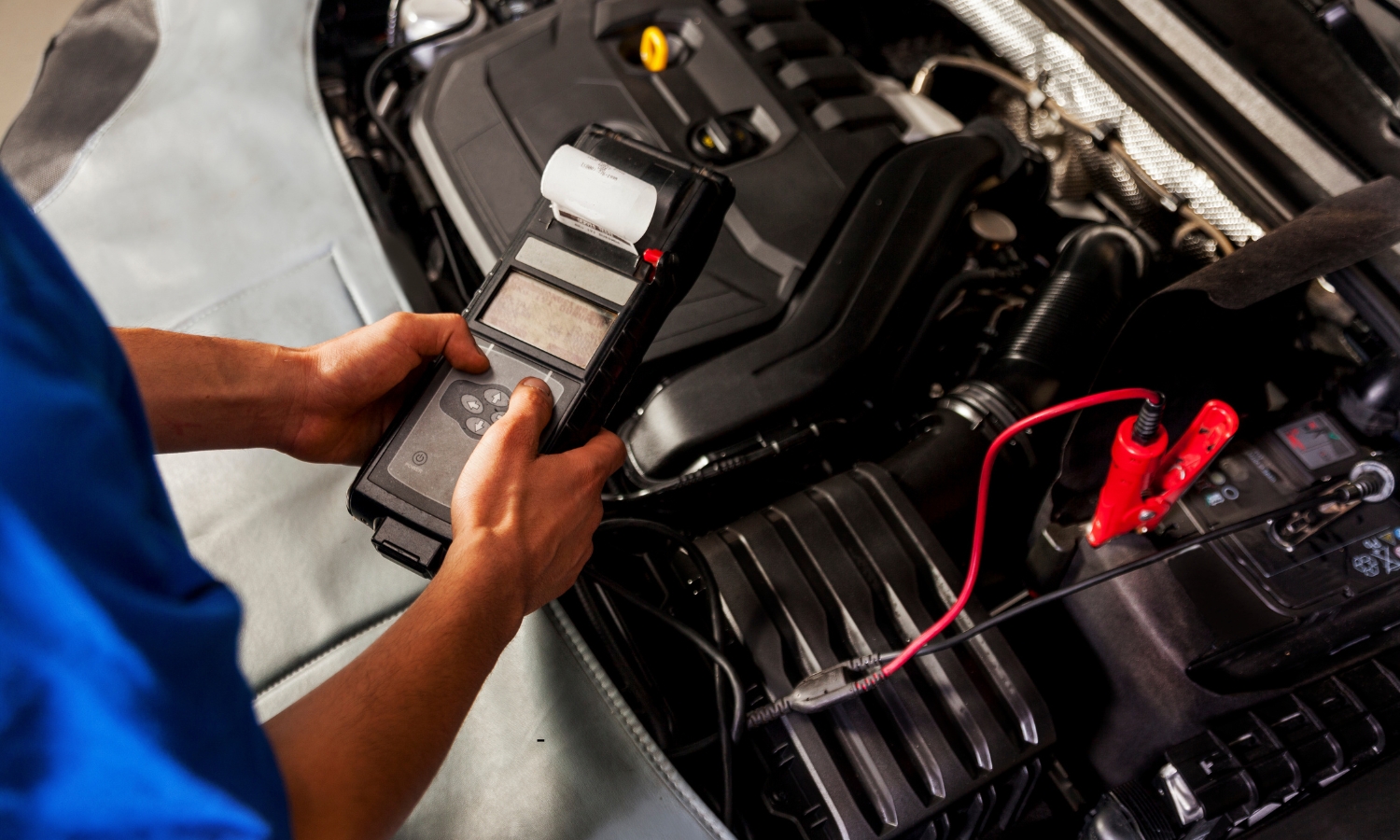
If you have a modern car with a Start-Stop system, you probably have an AGM or EFB battery . These are sealed and much more robust, designed to withstand constant charge and discharge cycles. A word of caution: in these batteries, the voltage may appear normal even when they are internally worn, so home tests are less accurate , and it's best to consult a professional with a conductivity tester.
Tips to make your battery last longer
The average lifespan of a battery is usually between 3 and 5 years, but you can extend it by taking certain precautions. Avoid leaving lights or accessories on with the engine off, and avoid excessively short trips , as the alternator doesn't have enough time to recover the energy used during startup.
Weather is the worst enemy of electricity. Extreme cold thickens engine oil and reduces the battery's chemical capacity, while heat accelerates the evaporation of the internal fluid . If you're going to leave your car parked for weeks, consider using a smart battery maintainer or disconnecting the negative terminal to prevent parasitic drains (like the alarm or clock) from completely depleting the battery.
Differentiating the battery from other electrical faults
It's very common to mistake a dead battery for other problems. For example, if you hear a single loud click when you turn the key but the dashboard lights are bright, the culprit is usually the starter motor , not the battery. On the other hand, if the car starts fine but the battery warning light comes on while you're driving, the problem is almost certainly with the alternator.
There are also so-called parasitic drains. If you buy a new battery and it discharges again after just a few days for no apparent reason, it could be that a poorly installed accessory, such as a non-original radio, is continuously drawing power . In these cases, a professional check is the only way to locate the short circuit.
Maintaining your battery in good condition involves a combination of observing your car's symptoms, performing quick visual checks, and taking regular voltage readings. Regularly maintaining the battery terminals and adjusting your vehicle's usage to the season helps prevent costly breakdowns and ensures your car always starts on the first turn of the key, thus guaranteeing the reliability of the overall electrical system.
Table of Contents
- 1 Clear signs that your battery needs replacing
- 2 Visual inspection: what you can detect with the naked eye
- 3 How to measure voltage with a multimeter step by step
- 4 Types of batteries and their characteristics
- 5 Tips to make your battery last longer
- 6 Differentiating the battery from other electrical faults