

Rising gasoline and diesel prices have become one of the most pressing issues for households and businesses across Europe. A combination of geopolitical tension, tight refining capacity, and nervous demand has driven prices to levels that force many drivers to carefully consider every penny before filling up. Brent crude has approached $100 , and this price increase is quickly being passed on to consumers at the pump.
In Spain, gasoline prices have risen for several consecutive weeks, and diesel has become more expensive again, reducing the relief provided by tax cuts. Meanwhile, in France, long queues and signs indicating product shortages at some stations have raised concerns. There is no widespread shortage , but there are localized incidents affecting parts of the network.

Rising prices and international pressure
Data from the sector shows a market strained by the conflict in the Middle East, the Strait of Hormuz, and production and refining problems in various regions. In Spain, the price of diesel was around €1,834 per liter and gasoline around €1,866 per liter, according to the European bulletin. Gasoline had been rising for eleven consecutive weeks , and diesel absorbed a significant portion of the 20-cent tax discount.
Brent crude was trading near $97,86, although at times it approached the psychological barrier of $100. This benchmark influences final prices and explains why governments are considering measures to mitigate the impact. The pressure isn't limited to Spain : in the UK, diesel reached a record high, and in Italy, tolls on highways hit record highs.

France: localized breakups and a request to Brussels
The French government is monitoring approximately 9.900 service stations. Around September 22, 14% were experiencing difficulties obtaining gasoline or diesel, although this percentage had decreased from 17% a few days earlier. Most of these cases were concentrated at TotalEnergies stations , which were maintaining maximum prices and attracting more customers than usual.
This concentration of demand, coupled with logistical problems, meant that some pumps ran out of fuel before the next tanker arrived. The French government insisted that there was no shortage of product nationwide, but acknowledged occasional shortages. France imports about half of the diesel it consumes, and between 20% and 30% of that comes from the Middle East—a dependence that is a cause for concern if the conflict continues.
To alleviate the situation, Macron asked Brussels to temporarily relax regulations on fuels and refining. The letter to Von der Leyen proposed allowing increased refinery output, raising the biodiesel content in some blends to 10%, and postponing the timetable for methane emissions. The aim was to gain refining margins and curb rising prices.

Italy makes its move with price caps
Italy has opted for a different approach. The state-controlled oil company Eni announced a maximum price for gasoline and diesel at its roadside stations: €1,99 per liter of gasoline and €2,19 per liter of diesel. The measure began with an initial duration of 30 days and could be extended until the end of the year.
The IP gas stations, owned by Socar, joined the initiative. The Italian government had been implementing tax breaks for months, but the last general extension ended on September 17. Rome is thus seeking to contain prices that, on highways, exceeded €2,45 for diesel.
Spain: aid, transport and risk of shortages
In Spain, the supply structure is less vulnerable than France's in some respects. The country has eight refineries, five of which belong to Repsol, and only 5,5% of imported crude oil came from the Middle East. Diesel imports covered 18,7% of consumption in July and 23,3% year-to-date, while gasoline was less dependent on foreign sources.
This increased refining capacity does not prevent price increases. Transport companies have asked the government to raise the subsidy for professional diesel from 20 to 40 cents per liter and extend it until December 31st. They are also requesting the inclusion of vans up to 3.500 kilos or a direct subsidy of 500 euros per vehicle. Industry associations warn of increasingly narrow profit margins and delays in receiving some subsidies.
The Spanish Confederation of Freight Transport has also proposed a 50% reduction in employer social security contributions. UNO Logística is calling for the acceleration of outstanding payments, the reactivation of the road maintenance plan, and the modernization of customs facilities. The agricultural sector is also preparing protests : UPA has called for a tractor demonstration on October 8th in Puertollano.
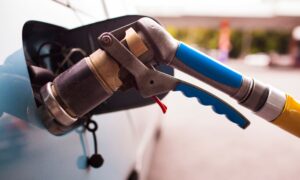
There is another line of aid available for professionals who are not eligible for the professional diesel fuel refund. The application period, open from September 1st to October 30th, is aimed at self-employed individuals and companies with transport licenses. The amounts reach up to €1.350 for heavy trucks running on LPG, CNG, LNG , or diesel in the Canary Islands, Ceuta, and Melilla; there are also €499 for light trucks, €225 for vans, €731 for buses, and €150 for taxis and ride-hailing vehicles.
The application is submitted electronically to the Tax Agency, except in the Basque Country and Navarre, where it is handled by the regional tax authorities. Payment is made by bank transfer once the application has been processed and approved, within a maximum of three months from the closing date of the application period. This benefit is incompatible with the refund of the hydrocarbon tax for professional diesel fuel.
European response and protests
National measures are multiplying while Brussels watches closely. The Slovak prime minister has called for an extraordinary EU meeting on fuels, and Macron is preparing a G7 summit to discuss the release of strategic oil reserves. There are also calls for coordinated gas purchases before winter.
In Portugal, hundreds of truck drivers from the earthmoving sector marched slowly between Lordelo and Coimbra, with protests reaching Lisbon. The Portuguese government announced aid of €25 per butane gas cylinder for vulnerable families and compensation of up to 70% of extraordinary costs for public transport and goods. The social discontent is reminiscent of the unrest that erupted in France in 2018 , although the French government insists there will be no general tax cuts.
The situation remains delicate: expensive crude oil, limited refining capacity, dependence on foreign imports in some countries, and a demand that reacts nervously to every headline. Spain starts with less exposure than France, but prices are already putting pressure on drivers, transporters, and farmers, and subsidies have become a necessary stopgap measure while the storm lasts. The key will be whether the international conflict continues and Europe's ability to coordinate without violating its environmental standards.
