

In Spain, the arrival of electric scooters on the streets has been accompanied by an increasingly stringent regulatory framework. Since October 1st , the new regulations for electric scooters have made it clear that these vehicles are not toys and cannot be used indiscriminately: there is a minimum age requirement, helmets are mandatory, insurance is required, and there are a series of limits that affect the daily lives of those who ride them.
The state law is being supplemented by local ordinances, information campaigns, and police checks. City councils are adjusting their regulations , and officers have moved from issuing warnings to issuing fines in many cases, especially when riding on sidewalks, carrying a passenger, or ignoring traffic signals. Anyone using these vehicles to commute to work, school, or get around town should be clear about what they can and can face for an infraction.

Age, helmet and documentation: what is no longer optional
The most frequently mentioned requirement in recent weeks is the minimum age of 15 to drive an electric scooter. In addition, riders are required to wear an approved or certified helmet, properly fastened; failure to do so is considered a serious offense and can result in a €200 fine. Mandatory civil liability insurance , registration with the Directorate General of Traffic, and a clearly visible identification sticker are also required.
It's not enough to just buy any old device and start driving. The vehicle must meet technical requirements, have lights and reflectors, and cannot be modified to increase power or speed . In the case of professionals, such as delivery drivers, a high-visibility reflective vest is required on all roads, not just at night.
Where can you drive and at what speed?
The basic rule is simple: scooters must be ridden on the road or bike lanes, never on the sidewalk. Sidewalks and pedestrian areas are reserved for pedestrians, unless a municipal ordinance expressly permits their use in specific spaces, and always with pedestrian priority. Furthermore, only one person is allowed per scooter, and the general speed limit is 25 km/h. Scooters are also prohibited on highways, expressways, urban tunnels, and, generally, intercity roads.

In shared spaces, pedestrians have priority, and local ordinances may impose stricter limits. Using a mobile phone and headphones while driving is prohibited, as is driving under the influence of alcohol or drugs; if requested by the police, drivers must submit to drug and alcohol testing.
Lights, reflectors and visibility
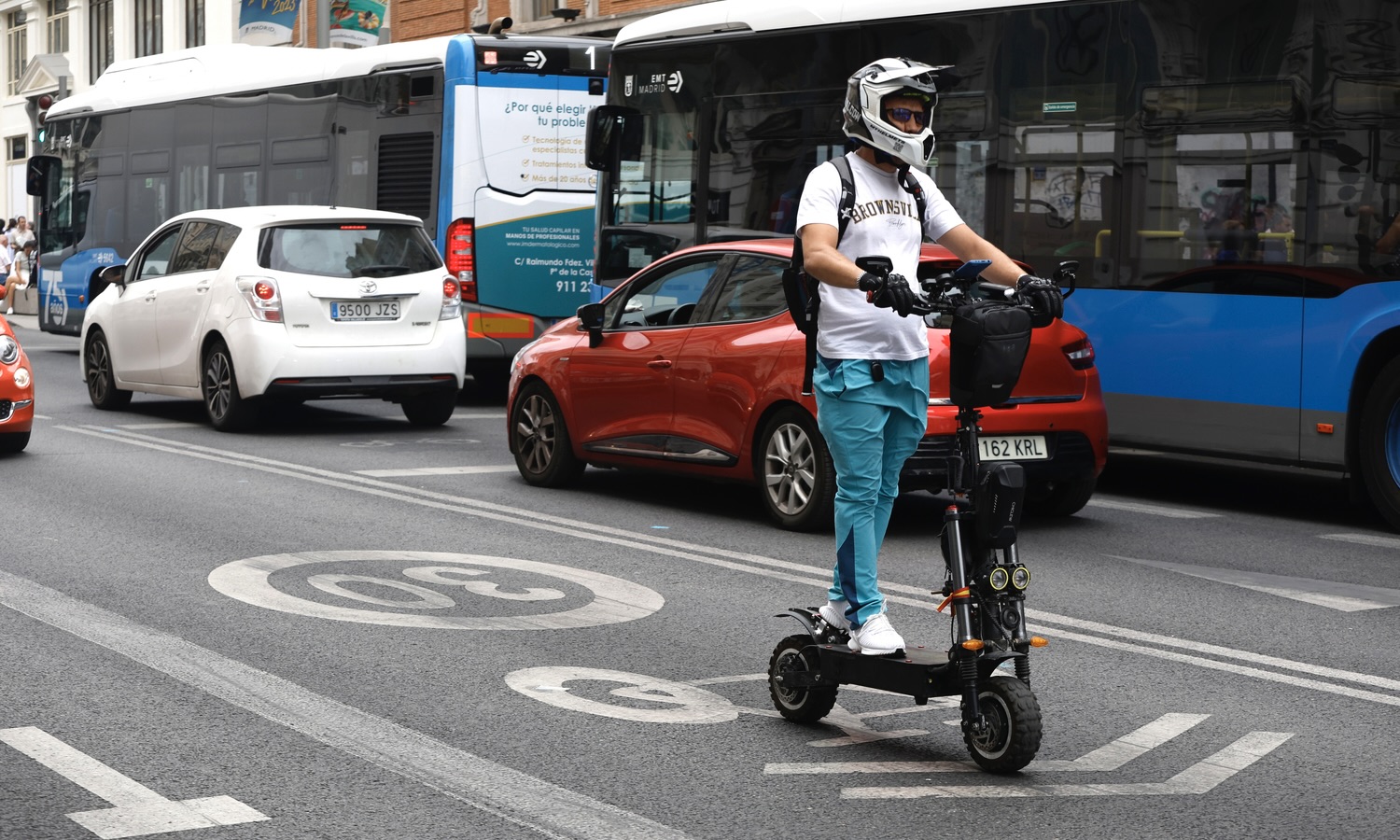
At night or in low visibility, riders must use lights and wear reflective clothing to ensure they are clearly visible. Front and rear lights are also part of the vehicle's technical specifications, and it is emphasized that simply riding in the rain, fog, or at dusk is not sufficient. For those who use scooters for work, a high-visibility vest must be worn throughout the workday.
Safety depends not only on seeing well, but also on being seen. Reflective elements help drivers and pedestrians spot the scooter in advance, especially at intersections and in poorly lit areas. Municipal campaigns have reminded people of these conditions to prevent accidents and improve coexistence on busy streets.

Controls, campaigns and sanctions
The implementation of the new regulation has been accompanied by information campaigns in various locations. First, users were informed about the changes, and then fines began to be issued to electric scooter riders when violations are detected. The most frequently monitored infractions are riding on sidewalks and pedestrian areas, carrying more than one person, running red lights, using headphones, and disobeying police officers' instructions.
The fines depend on the type of infraction and the applicable ordinance, but some common factors are: not wearing a helmet can be penalized with a €200 fine; driving in prohibited areas, without insurance, or without the required documentation also falls under the penalty system. Some municipalities have warned that fines can increase in particularly serious cases, such as driving under the influence of alcohol or refusing to take a breathalyzer test.
The officers emphasize that preventative work remains important, but that the warning phase is coming to an end in many areas. The goal is not to raise revenue, but to reduce close calls and accidents on streets increasingly crowded with bicycles, motorcycles, cars, and pedestrians. Therefore, they urge common sense: if you're in a hurry, riding a scooter doesn't exempt you from stopping at intersections or yielding the right of way.
Registration, insurance and the future of regulations

Looking ahead, authorities have set a grace period for users to adapt to the certification and registration requirements. This transition period ends on January 22nd, after which scooters that do not meet the requirements will be banned from public spaces. Signage and local ordinances are also being reviewed to ensure these rules align with the daily life of each municipality.
The electric scooter has become a popular mobility alternative, but not just any use is acceptable: helmets, insurance, registration, and respect for pedestrians form the core of regulations being enforced through campaigns, checks, and penalties. Anyone riding on the road or in a bike lane must ensure the vehicle is in good working order, refrain from tampering with it, and understand that sidewalks are not a speedway. Information and prevention remain the primary barrier, although the warning phase is giving way to fines in many cities.

Table of Contents