

EBRO , the historic automotive brand with Spanish roots, has experienced remarkable growth in the Spanish passenger car market since 2024. Following its recent relaunch, the Barcelona-based company has carved out a niche for itself among leading manufacturers, achieving significant sales volume in just seven months . EBRO's strength lies both in its new model launch strategy and in the distinctive positioning it has achieved among Spanish drivers.
Since the beginning of the year, EBRO has registered more than 5.000 vehicles in Spain , an achievement that places it 20th in sales within the sector and ahead of international manufacturers such as Tesla , Volvo , and Mazda . In July, the Catalan brand registered 1.392 units, doubling Tesla's figures for the same period. This significant increase comes amidst market growth, as passenger car registrations rose by 17% compared to the previous year.
Featured models and prices in the EBRO range…

EBRO's recent surge is explained by the success of its SUV range, comprised of the s700, s800, and s400 models . The s700 , available from €24.990 , has been the benchmark, accumulating 3.533 deliveries, most of which are for the gasoline version and the remainder for the plug-in hybrid. Meanwhile, the s800 starts at €31.500, with 1.295 sales so far this year, split between gasoline and PHEV powertrains.
The s400 represents EBRO's entry-level segment. Recently launched, it has attracted new customers thanks to a combination of competitive pricing (€23.490), hybrid powertrain, and an ECO label . In its first few months, this model has already registered over 260 units.

The brand also stands out for its competitive pricing policy, positioning EBRO as a rational alternative to high-end models without compromising on perceived quality. Plug-in hybrid models, such as the s700 PHEV and s800 PHEV, are available from €28.260 and €32.050 respectively , offering competitive electric range and advanced features.
Sales channels and market share…

The private customer channel has emerged as EBRO's main growth driver. More than 60% of sales are to private individuals, compared to businesses or rentals , a proportion that reached 75% in July. This figure is particularly relevant given the higher profitability of this channel for dealerships.

With a market share of approximately 1,4% overall and 2,1% in the SUV segment during July , EBRO has managed to surpass brands such as Omoda, Mazda, Volvo, and Fiat in the monthly rankings. The dynamic market, the surge in interest in SUVs, and the rapid expansion of its dealer network have all worked in the brand's favor, which now boasts more than 50 sales points in Spain.
Industrial production and implementation in Barcelona…

EBRO operates from its plant located in the Barcelona Free Trade Zone , where it currently assembles vehicles based on the DKD platform, a process that involves assembling semi-assembled cars manufactured outside of Spain. The company plans to move towards full production—including welding and painting—starting in March 2026 , following a delay from the initial implementation date of October 2025.
Management has announced that the goal is to assemble around 40.000 EBRO brand vehicles by 2026 , a figure that does not include models that may be produced for Omoda or Jaecoo, other brands associated with the factory. Simultaneously, the new M1 production line will progressively increase its manufacturing rate, reaching 135-150 cars per shift once the launch phase is complete in the spring of that year.

To address its growth, the company also plans to strengthen the night shift starting in September, adding more workers and adjusting schedules to balance the workforce across different lines of work. Once the production process is consolidated, both shifts—morning and afternoon—are expected to operate simultaneously at the Barcelona plant.
Strategic agreements and technological development…
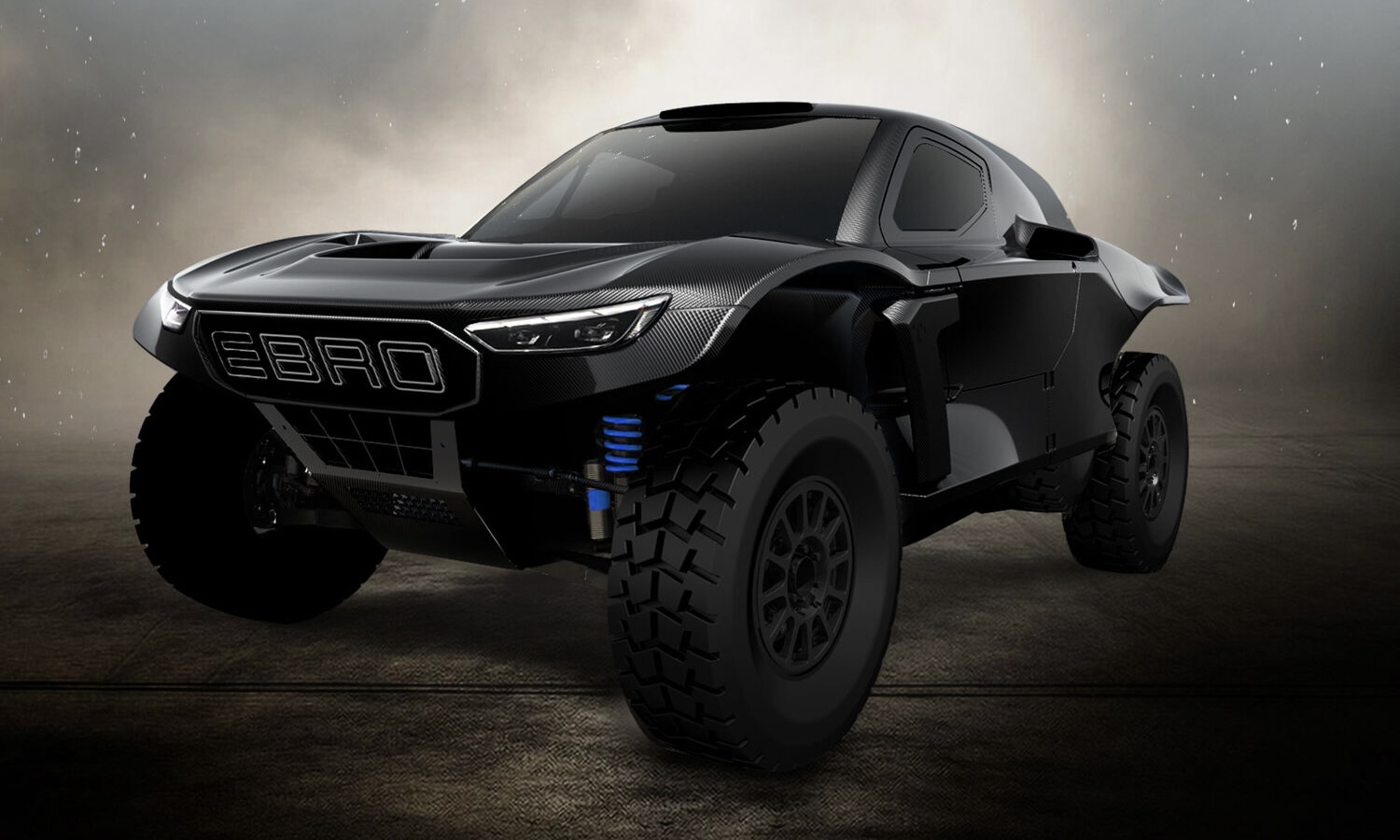
EBRO's momentum is further strengthened by sponsorship agreements, such as its alliance with the Royal Spanish Football Federation , as well as its intention to compete in the 2026 Dakar Rally. Furthermore, the industrial cooperation with Chery is not only focused on assembling Omoda and JAECOO models at the same plant but also encompasses the establishment of a 2.000 m² R&D center in Cornellà de Llobregat , led by technicians from the Chinese company and designed to adapt vehicles to European preferences.
Furthermore, the Catalan government has encouraged Chery to centralize its European headquarters in the region, leveraging existing industrial synergies and Spain's role as the leading market on the continent for these brands. All of this contributes to the continued growth of Catalonia's industrial sector and its ability to attract investment.
History, identity and positioning…

The EBRO brand, relaunched in 2023 after its origins in 1954 by Motor Ibérica, is leveraging collective memory and national identity to position itself against fierce competition, especially from Asian countries and China. Its previous experience in the production of commercial and industrial vehicles, agricultural machinery, and industrial equipment lends strength and confidence to its new focus on the private car market.

This journey allows EBRO, far from being just another startup, to have a solid foundation and industrial backing that facilitates growth. For consumers, the differentiation lies in offering SUV models with a good level of equipment, advanced technology, and affordable prices . These elements have won over buyers in a dynamic context of demand for alternatives to the traditional engine. Congratulations!
Source – EBRO by Newspress Spain
Images | EBRO

Table of Contents