The Polestar 6 is the most aspirational launch from the young Swedish firm: a 100% electric 2+2 roadster that brings to the road, almost unfiltered, the design language and advanced engineering of the Polestar O2 concept and the Precept brand manifesto. Conceived as a halo car, its mission is not only to thrill, but also to set the technological and aesthetic bar for future Polestars, with a bonded aluminum platform, an 800-volt electrical architecture, and a high-performance approach that coexists with sustainable materials and a minimalist interior governed by Google software.
The brand has confirmed that production of the Polestar 6 will begin in 2026 , with an initial commemorative series of 500 "LA Concept Edition" units that sold out in just one week. Given the demand, Polestar has indicated it may expand production beyond this initial run. Meanwhile, official information outlines a retractable hardtop convertible with two doors and four seats (2+2), designed to combine the instant responsiveness of an electric vehicle with the thrill of open-air driving.
On the technical side, the Polestar 6 shares its platform with the Polestar 5: a new bonded and oven-cured aluminum platform, developed to maximize rigidity while keeping weight down and to accommodate 800V electronics for high-power charging. The announced powertrain is a twin-motor system (one motor per axle) with all-wheel drive, producing 650 kW (884 hp) and 900 Nm of torque. These figures translate to a 0-100 km/h time of 3,2 seconds and a target top speed of 250 km/h. The target range exceeds 500 km under the WLTP cycle, with international media estimates placing it around 300 miles, pending final homologation.
Polestar 6 design

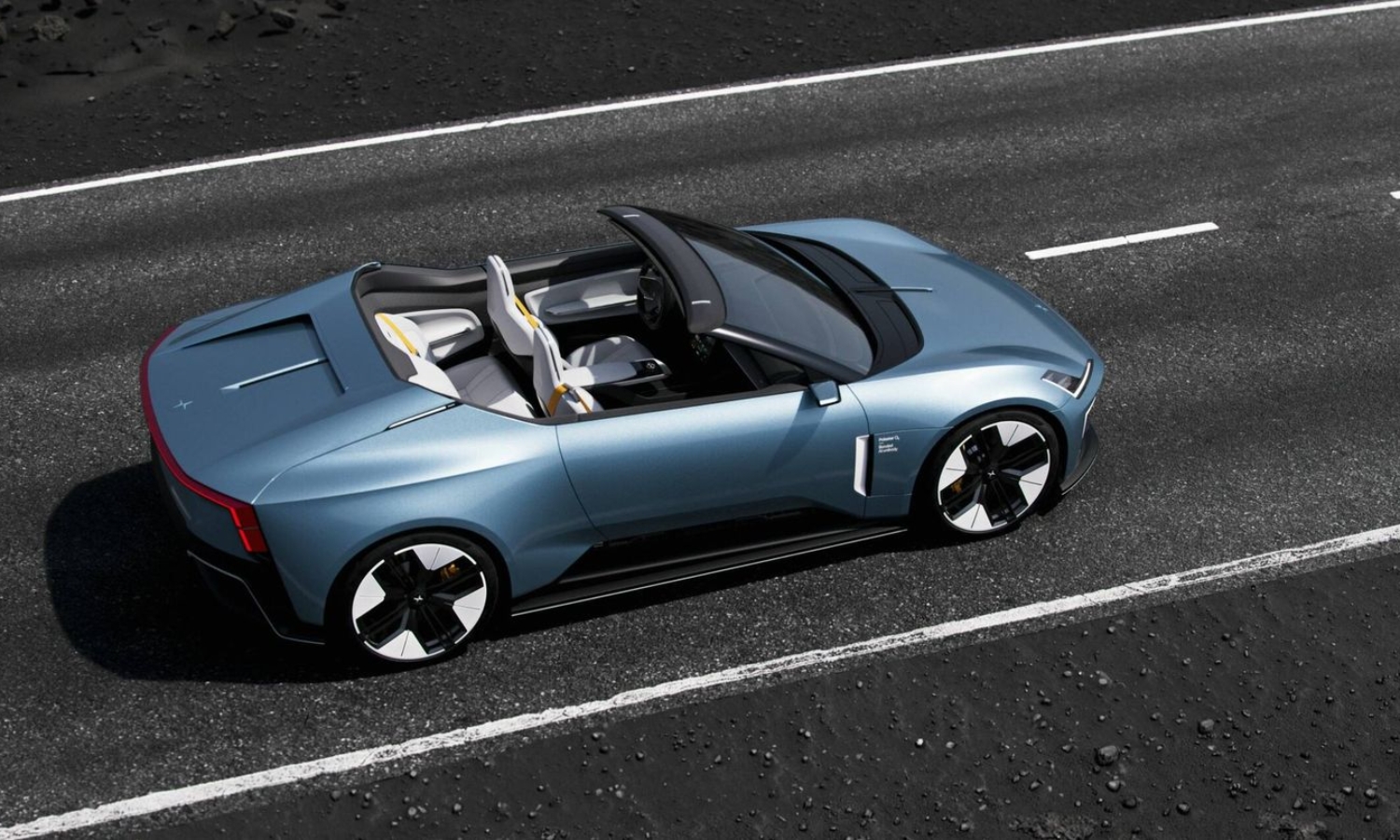
The Polestar 6's design takes the language pioneered by the Precept and embodied in the Polestar O2 a step further . It is unmistakably Polestar: pure proportions, taut surfaces, and a distinctive lighting treatment with a double-T signature at the front. The two-door body with a retractable hardtop embraces a clean aesthetic where aerodynamics are integrated into the form without resorting to exaggerated appendages. In fact, the taillights act as "aero blades" that channel airflow to reduce turbulence, a solution already seen on the roadster concept.
The low, wide silhouette emphasizes its sporty character. The long hood and set-back cabin help define a driving position very close to the rear axle, while the windshield and beltline maintain a low profile to reinforce the feeling of speed. The air intakes and outlets, including those located behind the front wheels, are surgically precise to optimize airflow and cooling without sacrificing the clean lines.
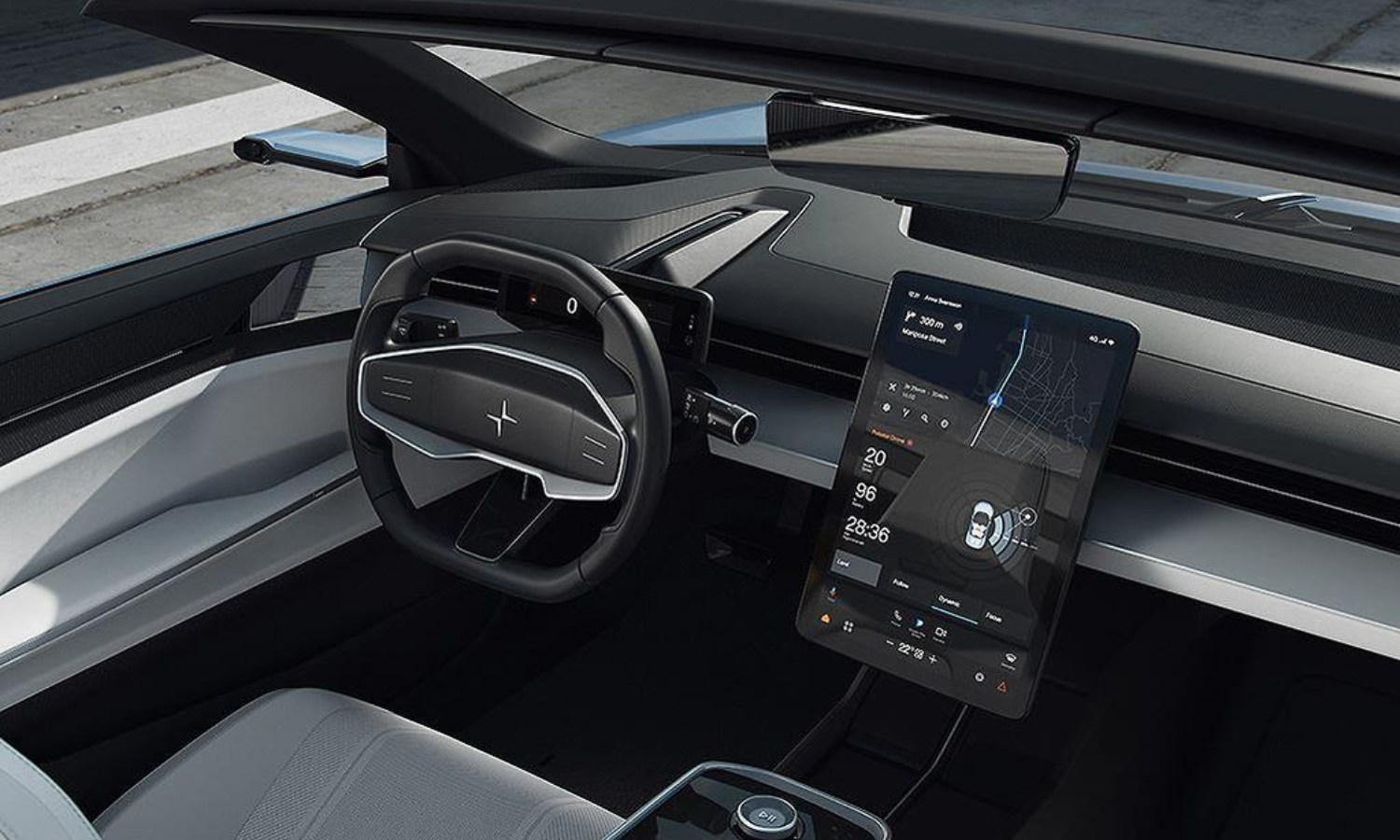
Inside, Scandinavian minimalism takes center stage once again. The dashboard features clean, horizontal lines, with a compact digital instrument cluster in front of the driver and a central vertical touchscreen that houses most of the controls. Polestar has showcased extensive use of sustainable materials in the prototypes—such as Amplitex composite panels—along with carefully curated upholstery and color schemes to create an atmosphere that is both technically advanced and inviting. The 2+2 offers four seats, although the rear seats, by their very nature as roadsters, are intended for occasional use.
The functional details, from the lighting to the flush door handles, reflect a pursuit of precision and clean lines. The folding hardtop promises the insulation and refinement of a grand tourer, while preserving the car's pure proportions when closed. The overall impression is of a high-performance technological marvel, designed to last and to excite.
Technical characteristics of the Polestar 6
Platform and structure: The 6 uses a bonded aluminum base , with parts of varying alloy grades joined by adhesives and heat curing. This method allows for a very favorable stiffness-to-weight ratio and high dimensional accuracy, as well as providing design flexibility for engineers and designers. The result is a very rigid frame that promotes immediate chassis response and precise handling.
Electrical architecture: It employs an 800-volt system , key to reducing losses, allowing lower currents at the same power output, and, above all, enabling ultra-fast charging at high-power chargers. Although Polestar hasn't released official times, we can expect competitive charging sessions from 10% to 80% in just a few minutes, in line with the best market benchmarks and what we've seen in other models from the brand that share this architecture.
Powertrain: dual electric motors (one per axle), all-wheel drive, and a combined target output of 650 kW (884 hp), with a maximum torque of 900 Nm. With these figures, the manufacturer claims a 0-100 km/h time of 3,2 seconds and a target top speed of 250 km/h . The calibration is performed by Polestar's own R&D team in Sweden.
Battery and range: Lithium-ion battery with advanced cells and thermal management; target range exceeding 500 km WLTP. International estimates suggest around 300 miles per charge, which aligns with the WLTP figure announced by the manufacturer. The exact capacity has not been disclosed at the time of writing.
Dimensions: Figures published by various sources place the Polestar 6 at around 4,6 meters long, 1,9 meters wide, and 1,4 meters high, with a wheelbase of approximately 2,8 meters. It is, therefore, a compact sports car that falls between the C and D segments, with proportions typical of a two-seater grand tourer but with the versatility of a 2+2.
Chassis, brakes, and tires: Polestar hasn't finalized the setup, although a high-performance suspension and high-capacity brakes are expected, along with high-grip sport tires. Chassis rigidity will be the foundation for precise handling, with direct steering and highly refined body control. Concept versions have showcased specific large-diameter wheels and a performance-oriented focus.
Production: The Polestar 6 will be manufactured in China, at Geely Group facilities in Chongqing, sharing a factory with the Polestar 5.
Polestar 6 mechanical range
The range announced by the brand starts with a dual-motor configuration (front and rear) with permanent all-wheel drive and 650 kW (884 hp). This powertrain shares its architecture with the Polestar 5, featuring 800V electronics and a high-performance lithium-ion battery. Polestar has hinted at more focused variants, such as the BST concept presented at Goodwood, which suggests a potentially more radical tuning of the chassis, brakes, and aerodynamics, although there is no confirmation of additional production versions at this time.
Target performance figures for the launch version: 0-100 km/h in 3,2 seconds, a top speed of 250 km/h, and a range exceeding 500 km WLTP. Beyond these figures, the emphasis is on instantaneous response and precise torque delivery thanks to torque vectoring between axles, inherent to the twin-motor system.
Polestar 6 Equipment
Infotainment and connectivity: Polestar will integrate its Android Automotive-based system with native Google services (Assistant, Maps, and Play) and over-the-air updates. The interface is structured around a large, vertical touchscreen and a compact digital instrument cluster in front of the driver. The minimalist design prioritizes visual clarity and reduces the number of physical controls, with a rotary dial for key functions and intuitive menu navigation.
Ergonomics and interior: supportive sport seats, a low driving position, and well-aligned controls. Sustainable materials—including composites like Amplitex—and high-quality upholstery are complemented by a carefully curated color palette. Given its 2+2 configuration, the rear seats are primarily for occasional use, prioritizing versatility over long journeys for adults.
Driving assistance and safety: the brand's latest driver assistance systems are expected—adaptive cruise control, lane keeping assist, automatic emergency braking with pedestrian and cyclist detection, blind spot monitoring, and surround-view cameras—although the final specifications for each market will be confirmed closer to the start of sales. As is typical for Polestar, the integration of sensors and radar will be discreet within the exterior design.
Other features include climate control with thermal management to maximize range in real-world conditions, Polestar signature full LED lighting, large-diameter wheel options, and a retractable hardtop that prioritizes insulation and durability over soft-top solutions. Cameras have been seen replacing mirrors in the prototypes, but their inclusion in the production version is uncertain due to regulatory issues.
Polestar 6 Rivals
The Polestar 6 will compete in a still relatively uncrowded niche of high-performance electric convertibles. Its direct rivals include:
- MG CybersterA two-seater/2+2 electric vehicle with a sporty focus, a more accessible positioning, and a youthful appeal. It offers an attractive alternative in terms of price and design, with high power outputs in its top-of-the-line versions.
- Porsche 718 Boxsters Electric (next generation): still to be revealed in its final version, it aims to be a benchmark in dynamism and chassis tuning, backed by Porsche. It will be a very serious rival to the 6 in terms of feel and precision.
- Tesla Roadster (Announced): A high-performance, long-range project announced in 2017, with an uncertain arrival timeline. If it finally materializes, it will be a contender with a global image and very ambitious figures.
In contrast, the Polestar 6 plays the card of a very refined design, a minimalist interior with great software integration and an aluminum platform typical of a modern GT, in addition to an 800V architecture that aligns it with the most advanced electric vehicles in terms of charging and efficiency.
Key points (list of 3 advantages)
- 800V electrical architecture with potential for ultra-fast charging and high efficiency.
- Bonded aluminum platform: high structural rigidity and guiding precision with low weight.
- Top-level target performance (0-100 km/h in 3,2 s) with twin-motor all-wheel drive and over 500 km WLTP estimated range.
Areas for improvement (list of 3 disadvantages)
- Rear seats are very cramped due to their 2+2 configuration and the trunk is pending confirmation.
- High price typical of a halo car with cutting-edge technology.
- Schedule and final specifications subject to change until the start of production.
Polestar 6 Prices
For the Spanish market, estimates place the price between €125.000 and €150.000 depending on the version and equipment, in line with its positioning above the Polestar 5. The initial "LA Concept Edition," limited to 500 units, was announced internationally at around $200.000 and sold out in a week. Due to high demand, Polestar has opened the possibility of expanding production of the 6 beyond that initial run.
It's important to remember that these prices are indicative and may vary depending on the final configuration, taxes, and availability in each market. The brand will announce the final range, equipment, and pricing closer to the sales launch.