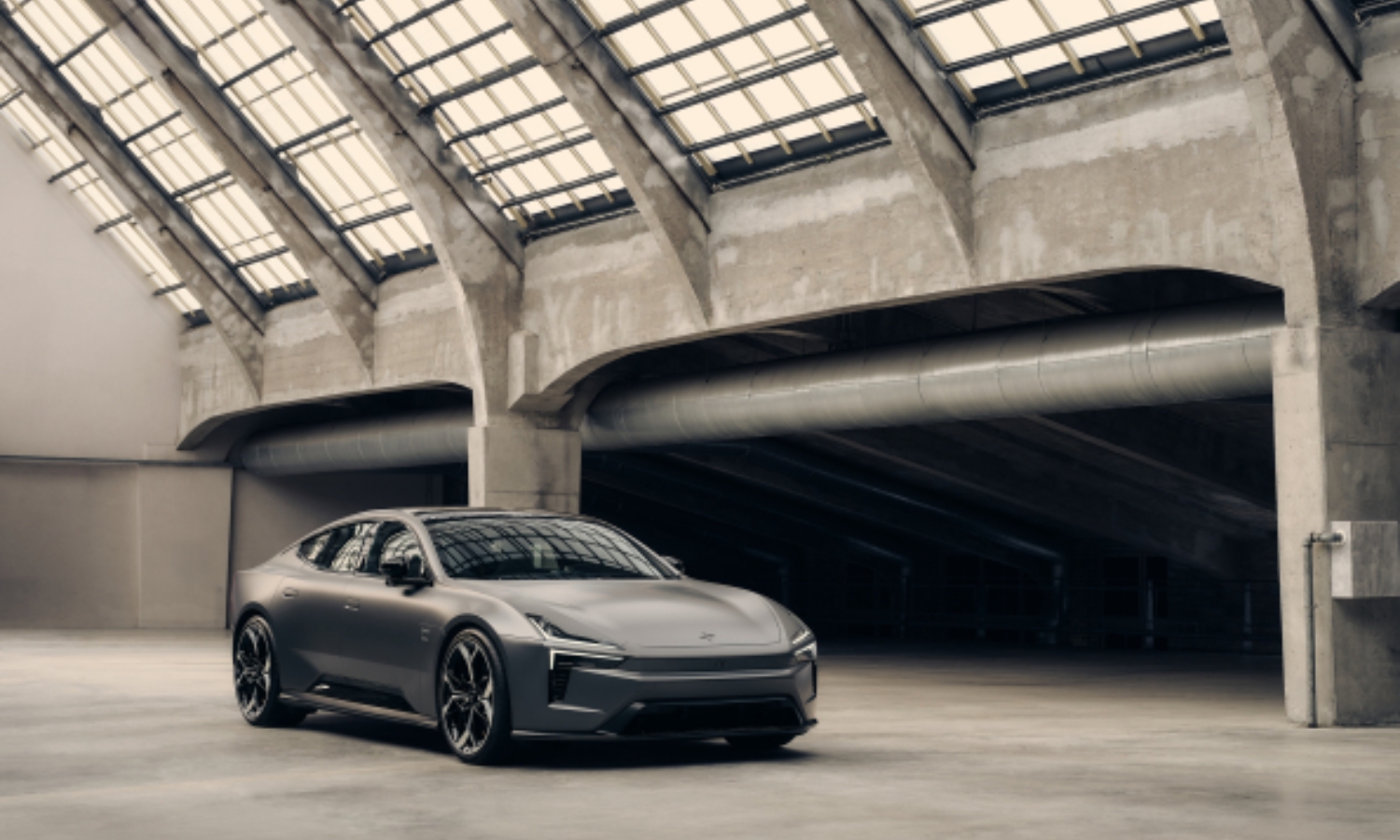
The Polestar 5 arrives as the high-performance electric grand tourer that consolidates the technical and design maturity of the Scandinavian brand, Volvo 's performance division . Having evolved from the Precept prototype, this model was developed in-house in Sweden and the UK, and it shows: it combines a lightweight aluminum architecture with an 800V propulsion system and a genuine grand tourer approach, capable of traveling fast, far, and with a high degree of comfort.
With five doors and a distinctly coupé-like silhouette , the Polestar 5 boasts powerful proportions and a low, sleek roofline. It's a large car—over five meters long—but its clean lines, flush windows and door handles, and sharp rear end with a full-width light bar demonstrate meticulous aerodynamic design. Inside, Polestar applies its minimalist philosophy: few physical controls, next-generation materials, and a high-quality ambiance that doesn't compromise on practicality, offering ample space for five adults and two trunks (front and rear).
Technically, it relies on the Polestar Performance Architecture (PPA) : a bonded and heat-cured aluminum monocoque that prioritizes lightness and torsional rigidity. This is complemented by the latest 112 kWh, 800 V NMC battery, a twin-motor powertrain with the Polestar-developed PX2 rear motor, and a GT-tuned chassis that balances precision, high-speed stability, and long-distance comfort. All of this translates into supercar-level performance, competitive charging times, and finely tuned dynamics.
Polestar 5 design
The Polestar 5's exterior design is the purest expression of the brand's aesthetic language. The front end dispenses with ornamental grilles and adopts the Dual Blade headlight motif with a split light signature, while the "SmartZone" integrates sensors and radar seamlessly into the surfaces. The low body, the elongated roofline (around 142 cm in height overall), the streamlined wheel arches, and the wide stance reinforce its presence. Flush door handles and frameless windows help reduce turbulence; it also features active grilles that modulate airflow according to speed, temperature, and cooling demand.
Viewed from the side, the GT's proportions are clear : a relatively low hood, a set-back cabin, and a flowing roofline that culminates in a very distinctive rear end, lacking a traditional rear window and featuring a continuous light bar that creates sharp corners. This element, besides being distinctive, improves airflow at high speeds, keeping the car firmly planted on the road. The drag coefficient, as reported by industry sources, is around 0,24, which helps explain its efficiency on the open road.
The dimensions confirm its grand tourer positioning: 5.087 mm long, with a 3.054 mm wheelbase, a 1.716 mm front track, and a 1.684 mm rear track. The maximum width with mirrors extended reaches 2.063 mm (2.015 mm folded). The height varies slightly depending on the version: 1.425 mm in the Dual Motor and 1.419 mm in the Performance. It offers 365 liters of rear trunk space (with 52 liters under the floor) and an additional 62 liters in the front trunk, which can reach 1.128 liters with the seats folded down. It is, therefore, a very capable GT for traveling with luggage.
The color catalog includes shades like Snow, Space, Storm, and Magnesium , as well as matte options (Storm Matte and Magnesium Matte). Wheel designs are available in 20, 21, and 22-inch sizes, with forged and high-gloss finishes, and a staggered configuration that provides greater width on the rear axle for improved grip and handling.
Inside, the approach is Nordic-minimalist. Materials such as bio-attributed MicroTech (vegan, with a recycled polyester backing) and Bridge of Weir leather (chrome-free and fully traceable) coexist with Black Ash wood inlays and recycled aluminum, 80% of which is made from post-industrial waste. The RECARO GT seats offer firm support and can be equipped with ventilation and massage functions, while the MicroSuede headliner—containing over 35% recycled PET—enhances the sense of refinement. The panoramic glass roof extends beyond the rear heads, improving light and headroom; it also filters 99,5% of UV radiation and reduces heat gain.
Technical characteristics of the Polestar 5
The technical foundation is the Polestar Performance Architecture (PPA), a bonded and heat-cured aluminum monocoque structure that combines lightness with high torsional rigidity . This solution, traditionally reserved for limited-production sports cars, allows for superior body control and precise energy absorption. The battery is an NMC lithium-ion unit with an 800V architecture, 112 kWh total capacity, 8 modules, and 192 cells. The thermal system uses vulcanized thermoplastic tubes, 40% lighter than traditional tubes, to optimize cooling and, consequently, range and sustained performance.
The powertrain is always a twin-motor, all-wheel-drive system, with the rear-mounted PX2 motor developed in-house by Polestar . In both trims, the maximum 30-minute power output is rated at 294 kW, indicating its ability to sustain performance under demanding use. The target weight distribution is 50:50, with a particularly low center of gravity thanks to the battery's integration into the structure. The declared curb weight is 2.500 kg, and the towing capacity reaches 1.800 kg. The turning radius (curb to curb) is 12,33 m.
In terms of chassis, the Polestar 5 Dual features high-capacity passive dampers with coil springs and hydraulic bump stops, while the Polestar 5 Performance adds electromagnetically controlled MagneRide adaptive dampers with three modes (Firm, Agile, and Standard). The braking system is provided by Brembo with two-piece ventilated discs and four-piston front calipers; the Performance version features calipers with a Swedish Gold finish. The steering is electrically assisted with three levels of resistance (light, standard, and firm), with an electrically adjustable column and a front rack for maximum precision.
The top speed is limited to 250 km/h, and the 0-100 km/h acceleration time ranges from 3,9 seconds (Dual Motor) to 3,2 seconds (Performance). The advertised WLTP range is 678 km for the Dual Motor version and 558 km for the Performance version. Energy consumption figures for the Performance version range from 17,8–18,3 kWh/100 km (Dual Motor) to 21,2 kWh/100 km (Performance). For charging, it supports DC fast chargers up to 350 kW (10–80% in 22 minutes, preliminary data) and AC chargers at homes or public charging points up to 11 kW (0–100% in 11 hours). The external charge indicator, located behind the rear side windows, displays the real-time charging status.
The technology package is very comprehensive: a 9-inch digital instrument cluster, a 14,5-inch central touchscreen with Android Automotive OS (Google Maps, Google Assistant, Google Play, and third-party apps with Connected Services Plus), an 8,9-inch digital rearview mirror with an HD camera, and a graphic Head-Up Display projected onto the windshield with infrared technology (available depending on the trim level/package). Standard features include a 300W, 10-speaker High Performance audio system; as an option (and included with the Performance trim), a Bowers & Wilkins for Polestar system with 1.610W and 21 speakers, active road noise cancellation, and a 250mm fresh-air subwoofer is available. Connectivity options include 5G, Bluetooth, over-the-air updates, and digital keys (including future Apple CarKey compatibility on Apple devices and wireless CarPlay via an update).
In terms of safety and assistance , the Polestar 5 integrates 12 ultrasonic sensors, four short-range cameras for a 360° 3D view with rear camera cleaning, one rear HD camera with a hydrophobic coating, two front HD cameras, and four side HD cameras; in addition to a front medium-range radar in the SmartZone and a driver monitoring camera. It features logical understeer control, electronic stability control, direct traction control (faster than a conventional TCS), collision mitigation with braking and steering, front and rear collision warning, lane keeping assist, blind spot monitoring with steering assist, cross traffic alert with braking, lane change assist (depending on the package), and adaptive cruise control with Pilot Assist. The structure utilizes high-strength steels and optimized crumple zones; it is equipped with eight airbags, ISOFIX anchors in the outer rear seats, and automatic unlocking after a collision.
In terms of sustainability, Polestar declares a cradle-to-door carbon footprint of 23,8 tCO₂e for the Polestar 5 Dual Motor. 83% of the aluminum comes from foundries powered by renewable electricity, and 13% is recycled, resulting in a reduction of over 14 tCO₂e compared to standard aluminum available in China. The interior features ampliTex fabric, partially bio-based (linen and polypropylene), in the rear seat shells, as well as a single-material frunk design to facilitate recycling.
Polestar 5 mechanical range
- Polestar 5 Dual motor (all-wheel drive)550 kW (748 hp) and 812 Nm. 0–100 km/h in 3,9 s. Top speed 250 km/h. Target WLTP range: 678 km. WLTP consumption: 17,8–18,3 kWh/100 km. Peak power for 30 minutes: 294 kW.
- Polestar 5 Performance (all-wheel drive)650 kW (884 hp) and 1.015 Nm. 0–100 km/h in 3,2 s. Top speed 250 km/h. Target WLTP range: 558 km. WLTP consumption: 21,2 kWh/100 km. Maximum power for 30 minutes: 294 kW.
Both versions share a 112 kWh, 800 V NMC battery, the Polestar-developed PX2 rear motor, and DC fast charging capability up to 350 kW (10–80% in 22 minutes, preliminary data). The Performance chassis adds MagneRide adaptive dampers and a specific suspension setup, along with 21- or 22-inch wheel options and Swedish Gold brakes.
Polestar 5 Equipment
Equipment may vary by market, but the planned features are extensive from launch:
Exterior and chassis
- 5-door body with soft-close electric tailgate and roof hinges.
- Frameless mirrors with electric adjustment and folding and automatic dimming; flush windows; retractable handles.
- Panoramic glass roof with infrared coating and 99,5% UV protection.
- Pixel LED headlights with 12 segments per headlight, automatic leveling, and welcome and farewell animations. Courtesy lighting under door handles.
- Active grilles in the grille to optimize cooling and efficiency.
- 20, 21 and 22 inch wheels (depending on the version), with forged options and high-gloss finishes; custom-developed Michelin tires.
- Brembo brakes with two-piece ventilated discs and 4-piston front calipers (Swedish Gold finish in Performance).
- Power steering with three modes; advanced passive or adaptive MagneRide suspension (Performance).
- Optional semi-electric tow hitch; towing capacity 1.800 kg.
Interior, comfort and practicality
- Upholstery: Bio-attributed MicroTech in Charcoal or Bridge of Weir leather (includes Nappa variants in Zinc or Charcoal), with inserts in Black Ash or recycled aluminum.
- Front sport seats with 12-way electric adjustment (14 with Nappa option), optional ventilation and massage; heated rear seats (Climate pack) and with lumbar support (with Nappa).
- RECARO GT seats with ampliTex backrest as an option; rear center console with climate and comfort controls.
- 4-zone electronic climate control and programmable preconditioning from the app or the central screen; fixed temperature mode for up to 8 hours with the car parked.
- Wireless smartphone charging (15W), 4 USB-C sockets (2 front and 2 rear), 4 cup holders.
- Rear trunk of 365 liters (52 liters under floor) and front trunk of 62 liters; 60/40 electric folding rear seats; 12V socket in the trunk.
Infotainment and connectivity
- 9-inch digital instrument cluster; 14,5-inch central display with anti-glare coating; optional graphic Head-Up Display (included in Launch edition).
- 8,9-inch digital interior rearview mirror with alternating traditional view.
- Android Automotive OS with Connected Services, apps like Google Maps, Assistant, Play, Waze, YouTube, Chrome (beta), and EasyPark. Wireless Apple CarPlay and Apple Digital Key with future OTA update.
- 300W High Performance Audio with 10 speakers; 1.610W Bowers & Wilkins for Polestar with 21 speakers and active noise cancellation (optional, standard on Performance).
Assistance and security
- 360 3D view, 12 ultrasonic sensors, front, side and rear HD cameras with cleaning and hydrophobic coating.
- Advanced ADAS: Adaptive Cruise Control, Pilot Assist, Lane Change Assist, Collision Mitigation with Braking and Steering, Front and Rear Collision Warnings, Lane Keeping and Lane Departure Alert, Cross Traffic Alert with Braking, Blind Spot Monitoring with Assist, Rapid Response Stability and Traction Control, and Direct Tire Pressure Monitoring.
- Structure with high-strength steels, 8 airbags, ISOFIX anchors, retractable steering column and automatic unlocking after impact.
Guarantees and maintenance
- Vehicle warranty: 3 years.
- Battery warranty: 8 years or 160.000 km (replacement if the SoH drops below 70%).
- Anti-corrosion warranty: 12 years.
- Maintenance: up to 2 years or 30.000 km without scheduled service, with on-board diagnostics and OTA updates.
- Roadside assistance: 3 years, 24/7.
Polestar 5 Rivals
Based on positioning, performance, and electric GT concept, the Polestar 5's direct rivals are:
- Porsche Taycan (including high-performance variants).
- Tesla Model S (Long Range and Plaid, for performance and fast grand touring focus).
- The Audi e-tron GT (and RS e-tron GT, for its power and grand touring approach).
- mercedes eqe 53 4MATIC+ (for power, perceived quality and technology).
Points to mark
- Outstanding performance with 800V architecture, great acceleration and very fast charging up to 350 kW.
- Interior quality and benchmark technology: sustainable materials, Bowers & Wilkins available, Android Automotive OS with OTA.
- High-rigidity aluminum chassis with a GT setup that is very well balanced between comfort and dynamism.
Points to improve
- High weight (2,5 tons), unavoidable due to size, battery and equipment.
- High entry price compared to mainstream electric sedans.
- Rear visibility limited by the absence of a rear window (mitigated by the digital rearview mirror).
Polestar 5 Prices
Range and indicative prices at the time of launch:
- Polestar 5 Dual engine (550 kW, 748 HP): €121.900.
- Polestar 5 Performance (650 kW, 884 HP): €145.300.
Both versions come with a very comprehensive standard equipment package, with the option to add features such as the Bowers & Wilkins sound system, MicroSuede roof, 21- and 22-inch forged wheels, Nappa leather upholstery with ventilation and massage functions, and a semi-electric tow hitch. Equipment and package availability may vary by market.


