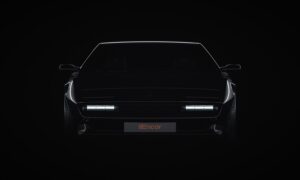
They say great things come in small packages. The same is often true of sportiness. The Lotus Elise is a prime example. A true sports car in the smallest version imaginable. A British classic that serves as the entry-level model in the Lotus range.
The Elise first hit the roads in 1997, although it was unveiled a year earlier. Its name honors the granddaughter of Romano Artioli, then director of Lotus. To this day, the Elise remains the company's best-selling model, thanks to the numerous editions released over the years.
The Lotus Elise is currently in its third generation, launched in 2011. Since then, it has undergone few updates, although Lotus has released a multitude of different versions. The range currently consists of two models, both with a removable roof and a two-seater cabin.
Technical characteristics of the Lotus Elise

The platform on which the Elise is built is made of extruded aluminum, bonded with epoxy resin and riveted to provide greater rigidity to the assembly. Thanks to these elements and the way they are combined, its weight is significantly reduced. The chassis weighs a mere 70 kilograms, and the total weight of the vehicle is always below 1.000 kilograms.
Externally, it's one of the smallest models on the market, measuring 3,78 meters long, 1,71 meters wide, and 1,14 meters high . Add to that a wheelbase of 2,3 meters, and you have a cramped cabin suitable for just two people. It's a small space where luxuries are hard to come by.
The Elise's configuration is sporty in all its versions. Its mid-mounted engine reduces cargo space. In fact, Lotus doesn't consider the Elise suitable for long journeys, and therefore its cargo capacity is minimal. The tiny trunk is located directly behind the engine and has a maximum capacity of 115 liters— enough for a backpack and little else.
Mechanical range and gearboxes of the Lotus Elise

At Lotus, they remain true to the philosophy that prioritizes weight over power. Weighing less than a ton, the Elise doesn't need impressive figures or large, heavy engines to be considered a sports car. The engine range consists of two models: the Sport 220 and the Cup 250. Both use a gasoline engine, without any electric components.
The engine is the same for both editions. It's a 1.796cc four-cylinder aluminum block with a supercharger and double overhead camshafts . It's paired with a six-speed manual gearbox that sends all the power to the rear axle via 225/45 R17 tires.
As we've already mentioned, there are two power levels. The Sport 220 delivers 220 horsepower at 6.800 rpm and 250 Nm of torque at 4.600 rpm. Meanwhile, the Cup 250 boosts performance to 248 horsepower at 7.200 rpm and 250 Nm of torque between 3.500 and 5.550 rpm. That might not seem like much, but it boasts a 0-100 km/h acceleration time of 4,3 seconds and a top speed of 248 km/h.
Equipment of the Lotus Elise

The Lotus Elise is a model that eschews trends and gimmicks designed to attract customers. Its concept is based on the philosophy of less is more. Sportiness is its sole purpose, and this is achieved by lacking much, if not all, modern equipment . The cabin is small and unpretentious, but this isn't a problem for customers who simply seek the driving experience.
As such, the Elise doesn't have trim levels. The two engine versions serve as a tiered system of finishes. Externally, the Cup 250 is distinguished by its unique aerodynamic features , primarily the fixed rear wing and the front lip spoiler. When it comes to customizing the Elise, there are few options available.
Although the Elise is a roadster, you can choose from various roof closures, as well as different carbon fiber components. Much of the optional equipment focuses on performance enhancements , such as the titanium exhaust and ventilated brake discs. As for standard equipment, there isn't much to mention: climate control, leather upholstery, cruise control, and a Bluetooth radio are the only comfort features available.
The Lotus Elise on video
The Lotus Elise of Km 0 and second hand
The Lotus Elise is one of the most exclusive cars in our country. Its handcrafted production is more limited than that of a Ferrari , which means there are very few units for sale. Its high desirability means that the few units that do appear on the used and pre-owned markets sell quickly.
There's no market for nearly new cars to turn to, so the only option is the used car market. There are very few units for sale there. All of them date from between 2000 and 2006. Their prices have remained relatively constant over time, ranging from approximately €20,000 to €30,000 . The price depends on the version, mileage, and year.
Rivals of the Lotus Elise

Sportiness comes in many forms, but few compare to the Lotus Elise. It's a difficult car to compare because there aren't many similar rivals on the market. Those closest in size offer more power or a lower price, while those similar in performance are more expensive and larger, so it's not easy to find true rivals for the Elise . However, we can highlight a few, such as the Porsche 718 Boxster , the Mazda MX-5 , the BMW Z4 , and the Audi TT , but not many others. In fact, its most natural competitor is its sibling, the Lotus Exige.
Highlight
- Timeless design
- Benefits
- Sportsmanship
To improve
- Spartan interior
- Maneuverability
- ride comfort
Lotus Elise prices
Despite its size and modest power, the Elise's price tag reflects its exclusivity. Lotus only produces a handful of units per year, which drives up the final cost. The starting price for the Lotus Elise is €53.507 for the Sport 220 version . The most expensive in the family is the Cup 250, with a minimum price of €60.701. From there, the price depends on your budget, as there are numerous customization options available.
Lotus Elise photo gallery


Table of Contents
The latest on Lotus Elise
-

-
-
-
-
-
-
-
-

-
-
-