In the not-too-distant future, we will all end up driving cars that are electrified in one way or another, to varying degrees. Tesla broke the electric car barrier a few years ago, and since then, battery-powered vehicles have become commonplace. Little by little, revolutionary cars are appearing on the market, cars that represent a radical change and set trends. The Honda e is one of those cars. Unfortunately, its low sales have forced Honda to discontinue it in January 2024 without a successor.
We have tested this car:
We tested the Honda e Advance 113 kW (154 CV), the most chic electricThis is the first electric vehicle from Honda to be launched in Europe. The Honda e is 100% electric , and its range reflects this, with no combustion engine options. This is a necessary step for manufacturers due to growing environmental awareness and regulations that require reducing pollution and harmful emissions in cities. With this goal in mind, the small Honda has been certified with the ZERO emissions label, allowing it to move freely in cities and enjoy other benefits such as tax breaks.
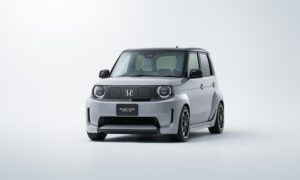
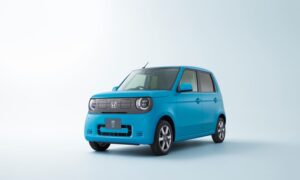
But the Honda e isn't just attractive because of its electric mobility; its appearance is equally appealing. With a distinctly Japanese touch and a manga-inspired style, its design is incredibly endearing . It's a completely different look from what we see in other Honda models, further highlighting the car's unique character. And if you think the exterior is the best part, you haven't seen the interior, because that's where it truly takes your breath away. Not one, not two, not three screens—up to five, even six, digital panels are crammed into the e's interior.
Technical characteristics of the Honda e

The Honda e enters the B segment, a very urban segment. Due to its compact dimensions and electric nature, Honda had to develop a platform from scratch . It is the first model from the brand to be developed on this structure. Using lightweight materials and a perfect 50/50 weight distribution, the structure guarantees maximum interior space as well as a low center of gravity that improves dynamic capabilities.
Although it's based on a platform, the Honda e boasts very compact dimensions, perfect for navigating city streets. It measures 3,89 meters long, 1,75 meters wide, and 1,51 meters high . Add to that a 2,53-meter wheelbase, allowing up to four passengers to fit comfortably inside. Cargo space is somewhat more limited, with a maximum capacity of just 171 liters and a maximum capacity of 861 liters when the second row of seats is folded down completely, rather than in the usual 60:40 split.
Despite being made of lightweight materials, the Honda e isn't a particularly light car. Being powered by lithium-ion batteries significantly increases its overall weight. According to its specifications, the e weighs in at 1.514 kilograms . A considerable weight given the vehicle's compact dimensions.
Mechanical range of the Honda e

Honda hasn't overcomplicated things when it comes to powering the e. The range consists of two versions: Base and Advance . The main difference between them lies in the power the electric system can deliver. The available options are 136 or 154 horsepower . This power is generated by a rear synchronous electric motor that sends all the power to the rear axle.
Paired with that 315 Nm torque motor is a water-cooled lithium-ion battery with a capacity of 35,5 kWh . The Japanese brand has certified a maximum electric range of 222 kilometers in the WLTP cycle for both versions. This translates to a combined energy consumption of 18 kWh per 100 kilometers. Charging times range from 18 hours using a standard household outlet to 30 minutes to reach 80% charge at a fast charging station up to 55 kW.
An automatic transmission manages the system, including the different regenerative braking modes. Steering wheel paddles allow you to control the amount of regenerative braking applied, increasing it with the left paddle and decreasing it with the right. Additionally, there's a single-pedal mode that allows you to manage everything using the accelerator pedal. When lifting off the accelerator, the regenerative braking is so powerful that it can bring the vehicle to a complete stop without needing to press the brake pedal.
Equipment of the Honda and

As we've already mentioned, one of the most captivating aspects of the Honda e is its spectacular interior. Nothing like it has ever been seen before, especially in such a small segment . The e comes standard with an array of interior screens. Two display the images captured by the exterior cameras that act as rearview mirrors. Two are for the multimedia system, one for the driver and one for the passenger. And a final screen for the instrument cluster.
These panels will range in size from six to 12,3 inches . They are operated via touchscreen and also by voice control, responding to the command "Hey Honda." The different trim levels, Base and Advance, don't involve significant changes in equipment, except for park assist and a heated steering wheel. Both trims come with very similar and comprehensive equipment.
Among the list, it is worth highlighting not only the digital display of the dashboard, but also a multitude of functions such as the navigation system, the sunroof, wireless connectivity for Apple CarPlay and Android Auto , 360º camera, LED headlights, remote systems, on-board WiFi, and of course a long list of active safety features and driving assistance systems that guarantee great safety for occupants and pedestrians.
The Honda e on video
The Honda e according to Euro NCAP
Safety is a key factor in every vehicle, electric or not. In 2020, Euro NCAP tested the Honda e in its renowned safety tests, awarding it a four-star rating . The results were: 7,6 for adult occupant protection, 8,2 for child occupant protection, 6,2 for pedestrian vulnerability, and 6,5 for driver assistance systems.
The Honda e of Km 0 and second hand
Given that we're talking about such a new car, used and nearly new (low mileage) dealerships don't yet have any units for sale. Currently, Honda's UK factory is accumulating over 40.000 orders and stockpiled units to begin the market rollout. The first countries to enjoy this small electric vehicle will be England, Germany, France, and Norway —countries where the EV market is more widespread than in Spain.
Rivals of the Honda e

Given its urban focus, price, and range, the Honda e currently faces relatively few rivals . However, the Japanese car will soon have to contend with some serious competition. The most significant models it will have to compete against are the BMW i3 , MINI Electric , Smart EQ Forfour , and Peugeot e-208 . In the not-too-distant future, more will be added to the mix, such as the FIAT 500e.
Highlight
- Design
- Technology
- Unlimited
To improve
- High price
- small trunk
- Autonomy
Honda prices and
To be honest, we're not talking about a particularly cheap car. Although Honda has an impressive waiting list for its Honda e, the reality is that the price is high for a B-segment electric vehicle with a range of 222 kilometers. At best, the Honda e costs €33.900, without any offers or promotions . This price is the main reason for its discontinuation in January 2024.
Image gallery


Table of Contents
The latest on Honda e
-

-
-
-
-
-
-
-
-
-
-
-