

The trade battle between the US and Chinese electric vehicle manufacturers has taken an unexpected turn, moving from political offices to the courts. Four subsidiaries of BYD , the world's largest seller of electric cars, have decided to challenge the US government with a lawsuit that fundamentally questions the tariffs blocking their access to the North American market.
This is an unprecedented move: it's the first time a Chinese automaker has directly appealed to the US courts to challenge tariffs imposed on its products. Beyond the power struggle between Washington and Beijing, the case could redefine the legal framework governing the erection of trade barriers on electric vehicles and other technological equipment from China, with potential repercussions for Europe and Spain as well.
A landmark lawsuit against tariffs on Chinese electric vehicles…
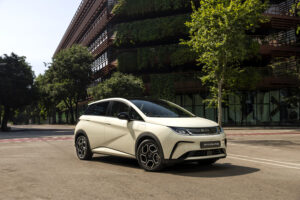
At the end of January, four US-based subsidiaries of BYD filed a lawsuit with the Court of International Trade (CIT). The companies involved are BYD America LLC (distribution and service in North America), BYD Coach & Bus LLC (commercial electric buses), BYD Energy LLC (batteries and storage solutions), and BYD Motors LLC (import and sales).

The legal action is directed not only against the U.S. federal government , but also against high-ranking officials and key agencies, including the Department of Homeland Security, Customs and Border Protection, the Office of the U.S. Trade Representative, and the Department of the Treasury. BYD maintains that the web of executive orders used to raise tariffs on a wide range of foreign products, including electric vehicles, has been abused.
The legal key: the International Emergency Economic Powers Act

The core of the lawsuit lies in the interpretation of the International Emergency Economic Powers Act (IEEPA) , a law designed to manage emergency situations and threats to national security. According to BYD, Washington has gone far beyond what this legal text allows by turning it into a tool for imposing structural border taxes.
In documents filed with the CIT, BYD subsidiaries argue that the IEEPA never uses the word “tariff” or equivalent terms and therefore cannot serve as a basis for imposing permanent tariffs on imports from countries such as China, Mexico, Canada, or Brazil. The lawsuit seeks to invalidate up to nine executive orders and their amendments issued since February 2025, which include measures against Chinese products, but also adjustments to tariffs on regional partners.
In addition to requesting that these orders be overturned, BYD is seeking a refund of all tariffs paid since April , plus interest, and recognition of its right to recover any amounts collected in what it considers an illegal manner. The company claims it was forced to file its own lawsuit to avoid losing the opportunity to claim these amounts, despite thousands of similar cases already being brought by importers in other sectors.
A case framed within years of tariff tension…

The tariff conflict between the US and China in the electric vehicle sector has a long history. Under the Trump administration, a widespread offensive was launched against products manufactured outside the US, with tariff increases on both Chinese goods and certain trade flows with Mexico and Canada. These measures affected all types of vehicles, whether electric or combustion-engine.
Subsequently, with Joe Biden in the White House , the approach of protecting American industry from Chinese competition in strategic technologies was reinforced. In this context, 100% tariffs were imposed on electric vehicles from China, a barrier that was later raised to 135% after further increases and adjustments. In effect, these tariffs have made it virtually impossible for electric cars manufactured in China to compete on price in the American market.
Meanwhile, according to Chinese industry sources, BYD's lawsuit adds to a wave of legal challenges from international companies against the use of the IEEPA as a basis for these types of tariffs. One particularly cited case is that of wine importer VOS Selections, which obtained a favorable ruling from the Federal Circuit Court of Appeals, which concluded that the president lacked the authority to impose certain tariffs under that law.
BYD's position: more than cars, an electric ecosystem…
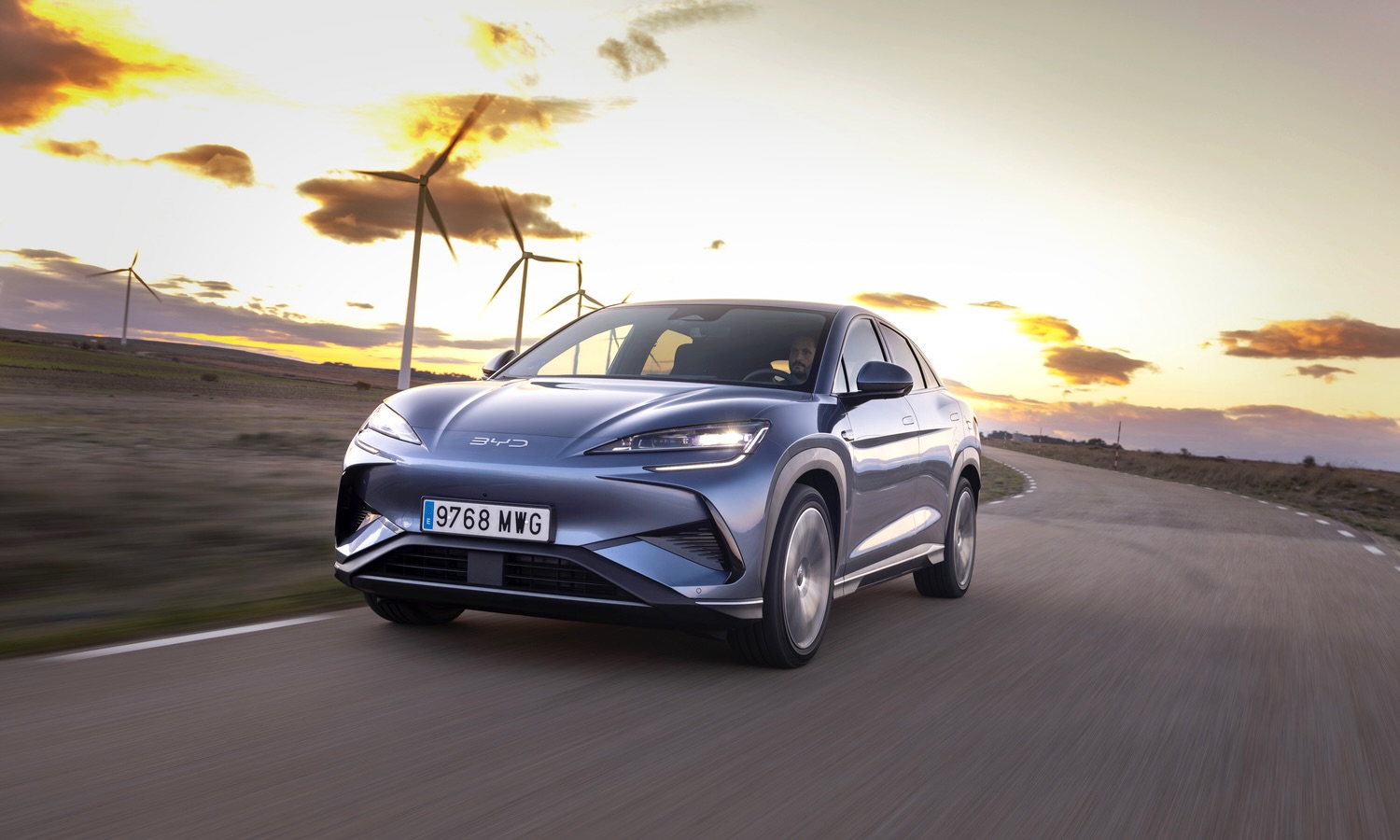
It's worth noting that BYD, despite its position as a global leader in electric vehicles , does not currently sell passenger cars in the US. Its business in that country focuses primarily on electric buses, commercial vehicles, batteries, energy storage systems, and solar panels. Through BYD North America, the group operates a plant in Lancaster, California, with hundreds of employees dedicated to manufacturing electric buses and trucks.
The contested tariffs, however, directly impact BYD's imports of components and equipment for these business lines, increasing costs and limiting its capacity for industrial expansion in the United States. From BYD's perspective, the litigation seeks not only immediate tariff relief but also to establish a legal framework that will allow it to develop its current operations more effectively and, eventually, enter the electric vehicle market.
Analysts cited by Chinese state media outlets such as the Global Times point out that this legal offensive reflects the growing maturity of Chinese companies in using international legal channels to defend their interests. In their view, BYD's move "sets a precedent" that other Chinese companies could follow to challenge measures they consider discriminatory in key markets.
A precedent that could shake up the global electric car sector…
Sun Xiaohong, head of the automotive division at the China Chamber of Commerce for Import and Export of Machinery and Electronic Products, warns that the impact of these tariffs extends far beyond the directly affected companies . In his analysis, he argues that the tariffs pose a serious challenge to the stability of global supply chains by increasing the cost of components, adding regulatory uncertainty, and discouraging long-term investments.
Sun acknowledges that BYD's lawsuit faces significant legal challenges and an uncertain outcome , but insists that the case has already become a benchmark for other Chinese companies interested in initiating similar proceedings. If the US courts were to rule in favor of BYD and the other plaintiffs, it would bring about a substantial change in tariff policy applied to Chinese products, with direct implications for the automotive industry globally.
In fact, the matter has reached the U.S. Supreme Court , which must rule on the legality of the tariffs imposed under the IEEPA. U.S. Trade Representative Jamieson Greer has acknowledged that the high court is taking its time due to the “enormous” significance of the case, aware that its ruling will set a precedent for a large number of pending lawsuits, including BYD's.
Doors ajar to Brazil, Mexico and, by extension, to other markets
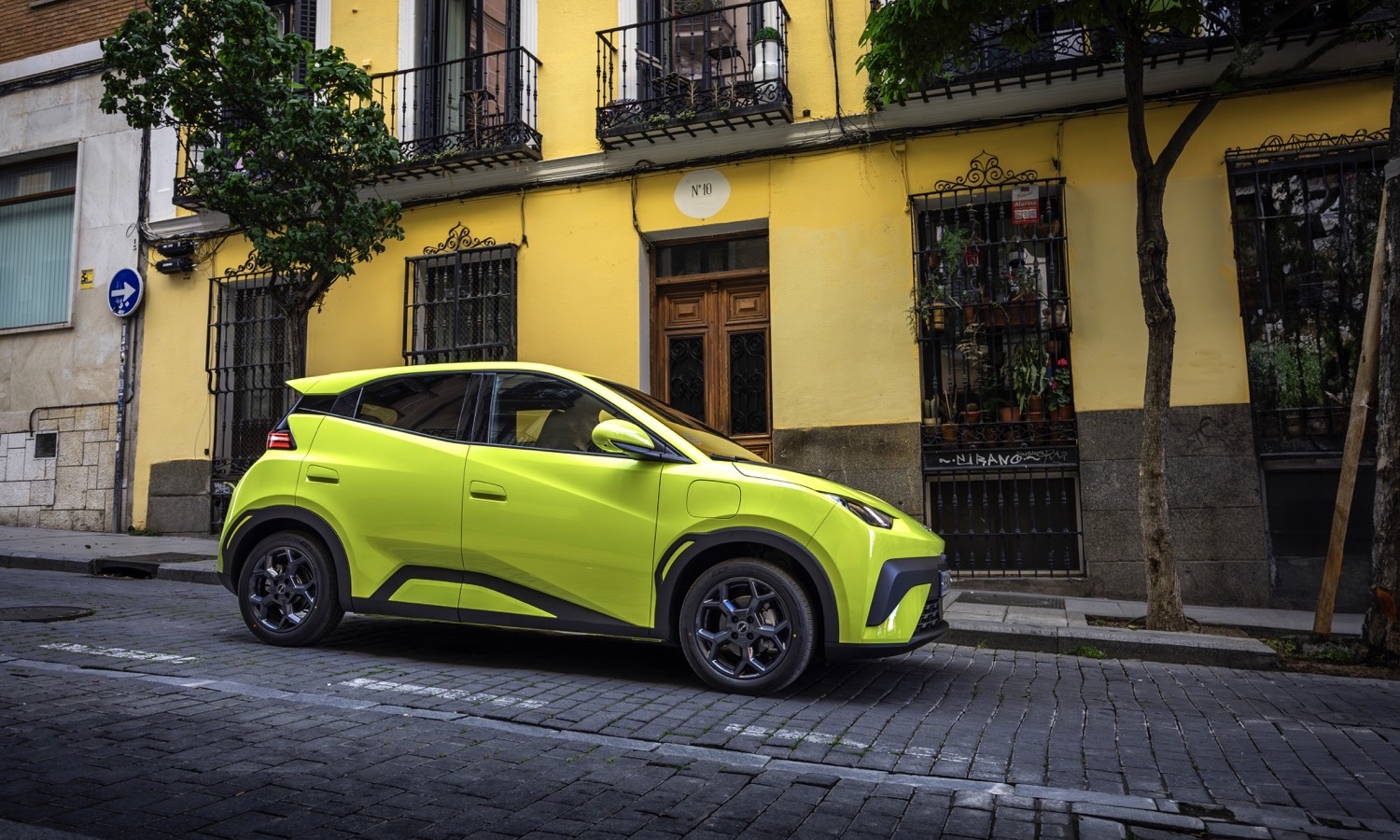
Should BYD win a favorable ruling, the impact would extend far beyond its internal accounting. According to specialized sources such as CarNewsChina , a victory would significantly reduce tariffs on some of its products and open the possibility of selling to the US market from factories outside of China. Among the scenarios being considered is the use of its facilities in Brazil to export vehicles with tariffs below 15%.

Another point is the possible reactivation of the plan to build a plant in Mexico , a project shelved due to the uncertainty generated by US tariff policy. Mexico has established itself as a hub for automobile exports to North America and is already a very important market for BYD, with more than 120.000 vehicles sold in a single year. A more predictable tariff framework would allow the company to use that country as a platform to access the US market more easily.
Potential impact for Europe and Spain…

In Europe, trade defense measures against Chinese electric vehicles have sparked a debate about how to protect industry without stifling competition. While the US has opted for very high tariffs and a discourse of economic security, the European Union is applying a more gradual approach based on anti-subsidy investigations and incentives for local manufacturing. If US courts limit tools like the IEEPA, the idea that barriers must be well-justified and have a limited duration in international trade could gain traction in Brussels.
For Spain, which is seeking to attract investment in battery manufacturing and new electric mobility platforms , an easing of trade tensions would represent a strategic opportunity. The growing presence of Asian brands in Spanish electric vehicle sales means that a more stable environment would encourage investment decisions in assembly plants or logistics centers. Furthermore, if manufacturers like BYD reduce tariff pressure in the US, they could reorganize their European production with greater flexibility and less regulatory risk.
In any case, the legal battle demonstrates that the future of the electric vehicle market depends not only on technology or price, but also on courts and trade regulations. What began as a dispute between major powers has become a test of endurance for the system that regulates global automotive trade . Its outcome will influence the balance between industrial protection and open competition in North America, Europe, and other key markets.
Table of Contents
- 1 A landmark lawsuit against tariffs on Chinese electric vehicles…
- 2 The legal key: the International Emergency Economic Powers Act
- 3 A case framed within years of tariff tension…
- 4 BYD's position: more than cars, an electric ecosystem…
- 5 A precedent that could shake up the global electric car sector…
- 6 Doors ajar to Brazil, Mexico and, by extension, to other markets
- 7 Potential impact for Europe and Spain…