
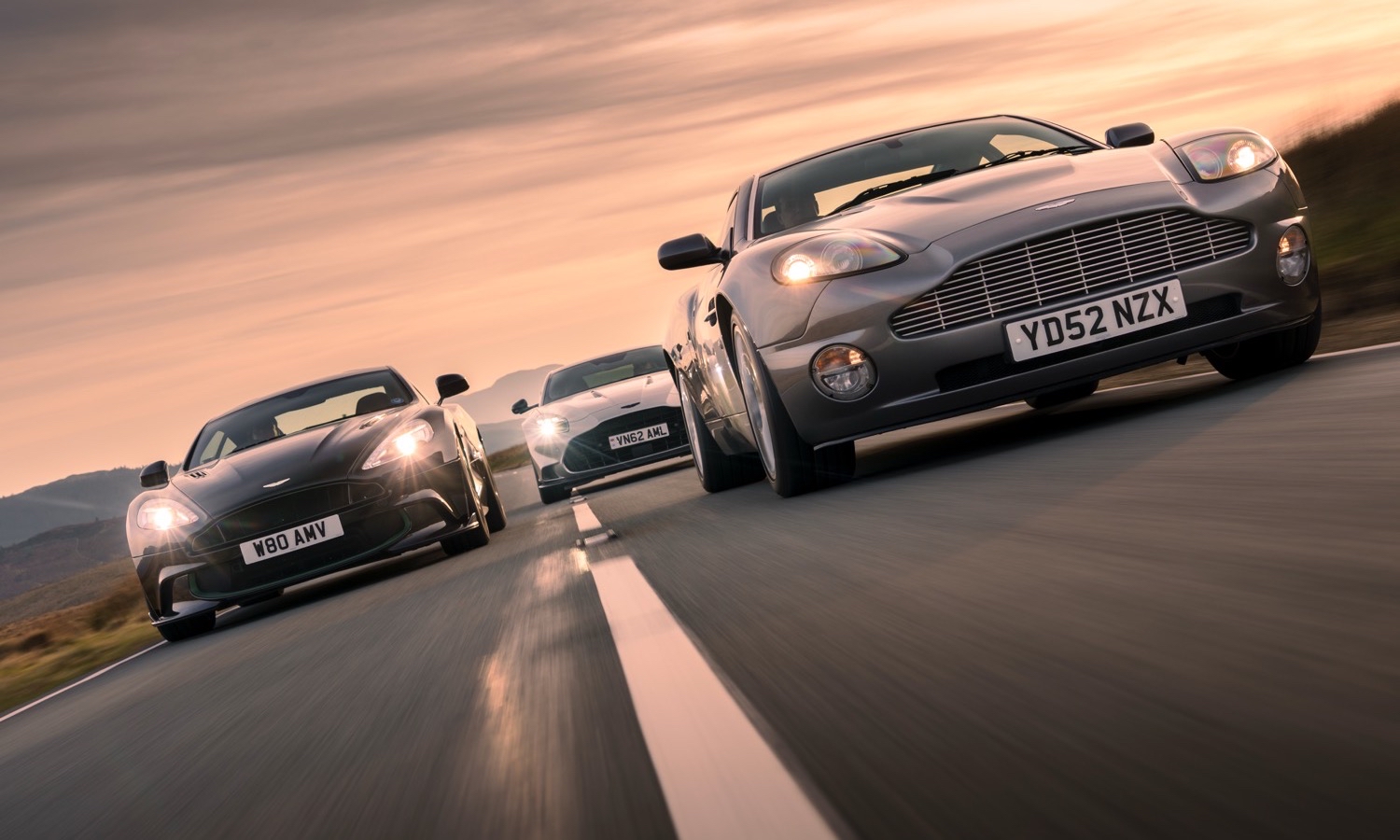
Twenty-five years after its debut in Geneva , the Aston Martin Vanquish continues to occupy a very special place in the world of European grand tourers. Born as the British firm's most advanced front-engined project, this model has gone from being an ambitious and somewhat problematic experiment in its early days to becoming the brand's technical flagship, with a twin-turbo V12 that today resists electrification amidst the sector's ongoing transition.
During this quarter of a century, only around 7.000 units spread across three generations have borne the Vanquish name, enough to solidify its status as one of the most recognizable GTs in Europe. From Newport Pagnell to the current transaxle architecture, the model has refined its performance, sophistication, and usability, but has retained a basic concept: a long, powerful, and assertive coupé, designed both for crossing a country at high speed and for delivering supercar-like performance on the track.
From the Newport Pagnell experiment to the first great technological leap…
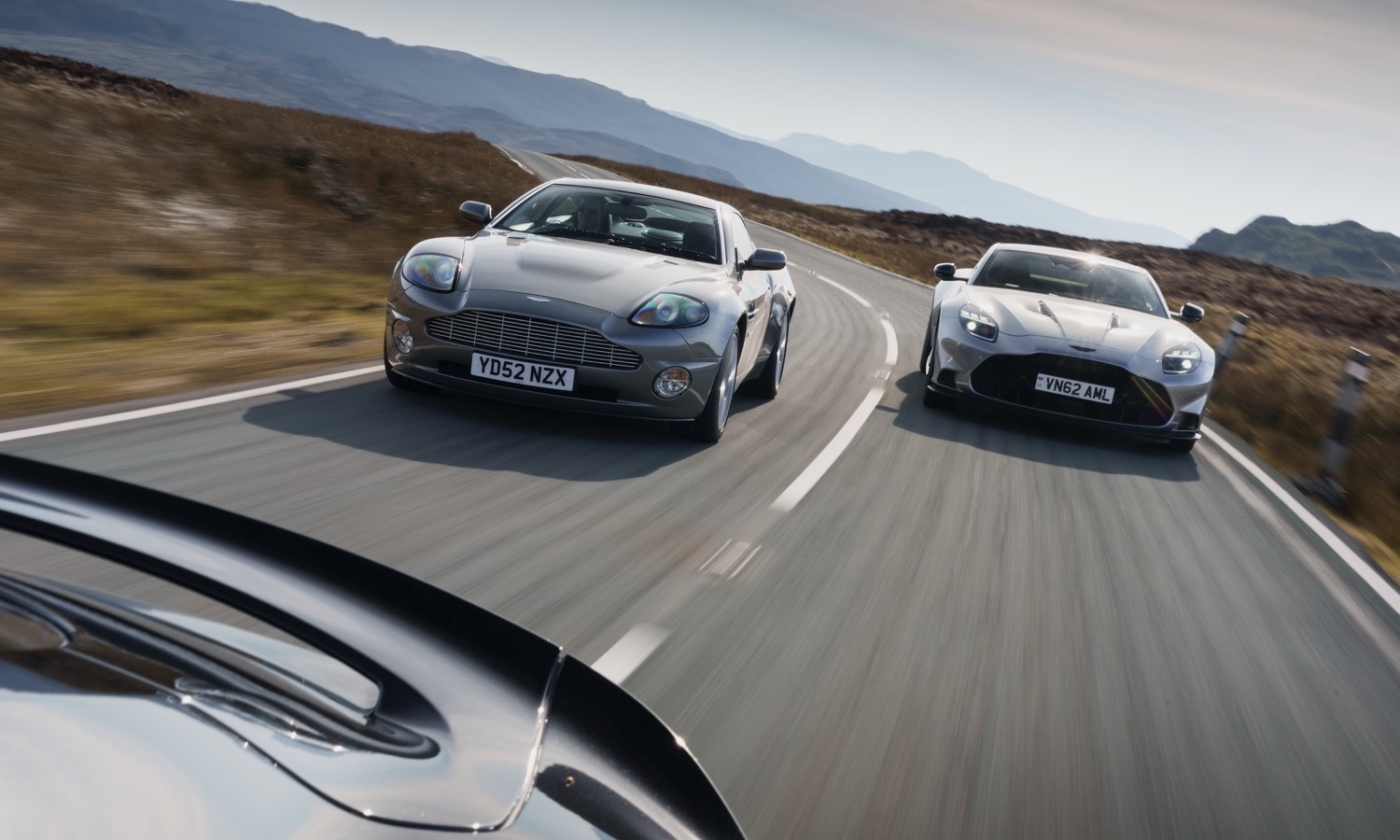
The first generation, launched in 2001, was the last new model manufactured at the historic Newport Pagnell plant before Aston Martin moved production to more industrial facilities. That V12 Vanquish debuted a 6,0-liter engine with 460 hp (520 hp in the later Vanquish S), electronic throttle control, and a Formula 1-inspired automated manual transmission with paddle shifters—technologies that represented an unprecedented leap forward for the brand.
Beyond the engine, the real change lay in the structure: an aluminum monocoque with extruded sections joined by adhesives and rivets , combined with a central tunnel made entirely of carbon fiber and body panels in composite materials. This combination necessitated the development of computer-controlled manufacturing processes, supported by R&D centers in Cupertino (Silicon Valley) and the University of Nottingham—a significant step forward for a company accustomed to almost artisanal methods.
That mix of ambition and complexity came at a price. Internally, it was acknowledged that the first Vanquish arrived on the market not entirely ready ; then-CEO Ulrich Bez recounted that hundreds of components had to be reworked before delivery to customers, and some journalists burned out clutches within minutes of testing it. Even so, between 2001 and 2007, some 2.600 units were assembled, laying the foundation for a model that, with all its flaws, dared to go toe-to-toe with the most serious GTs on the continent.
Second generation: aerospace carbon fiber and a more civilized character
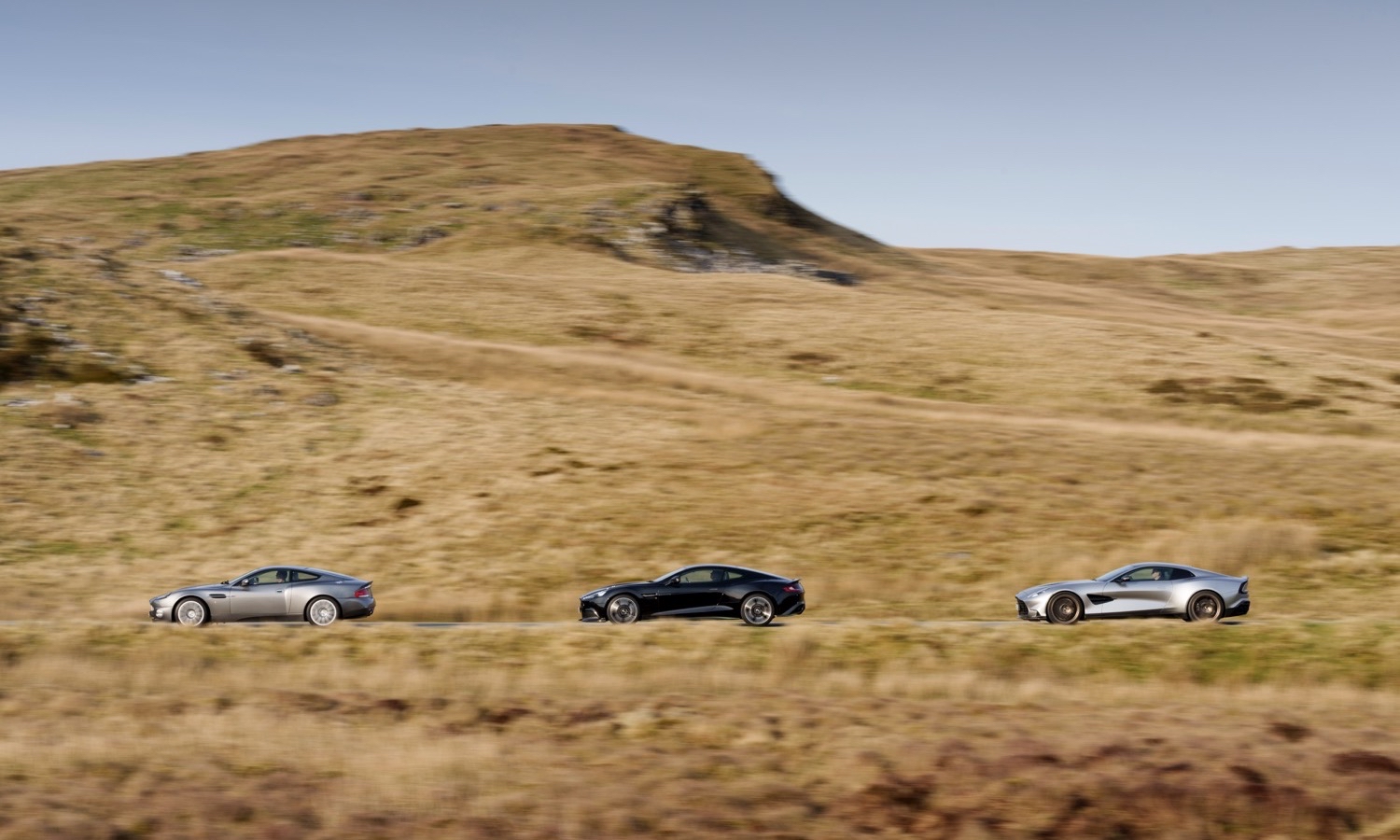
Under the hood, a 6,0-liter V12 still beat, but with significant improvements to the intake and valve train : larger diameter throttle bodies, the company's first twin variable valve timing system, new fuel pumps, and optimized intake boxes. The most advanced versions reached up to 600 hp, with official figures indicating a 0 to 100 km/h time of around 4,1 seconds and speeds exceeding 295 km/h, now equipped with carbon-ceramic brakes to control the vehicle.
In terms of design, this second generation toned down the rawness of the original Vanquish to bring it closer to the classic grand tourer . It was offered in 2+0 or 2+2 configurations, with a trunk capacity of up to 368 liters, making it more practical for both long European journeys and everyday weekend use. The Volante versions and the more powerful S variants further cemented its position at the top of Aston Martin's production sports car range.
Third generation: the most powerful twin-turbo V12 in the brand's history…
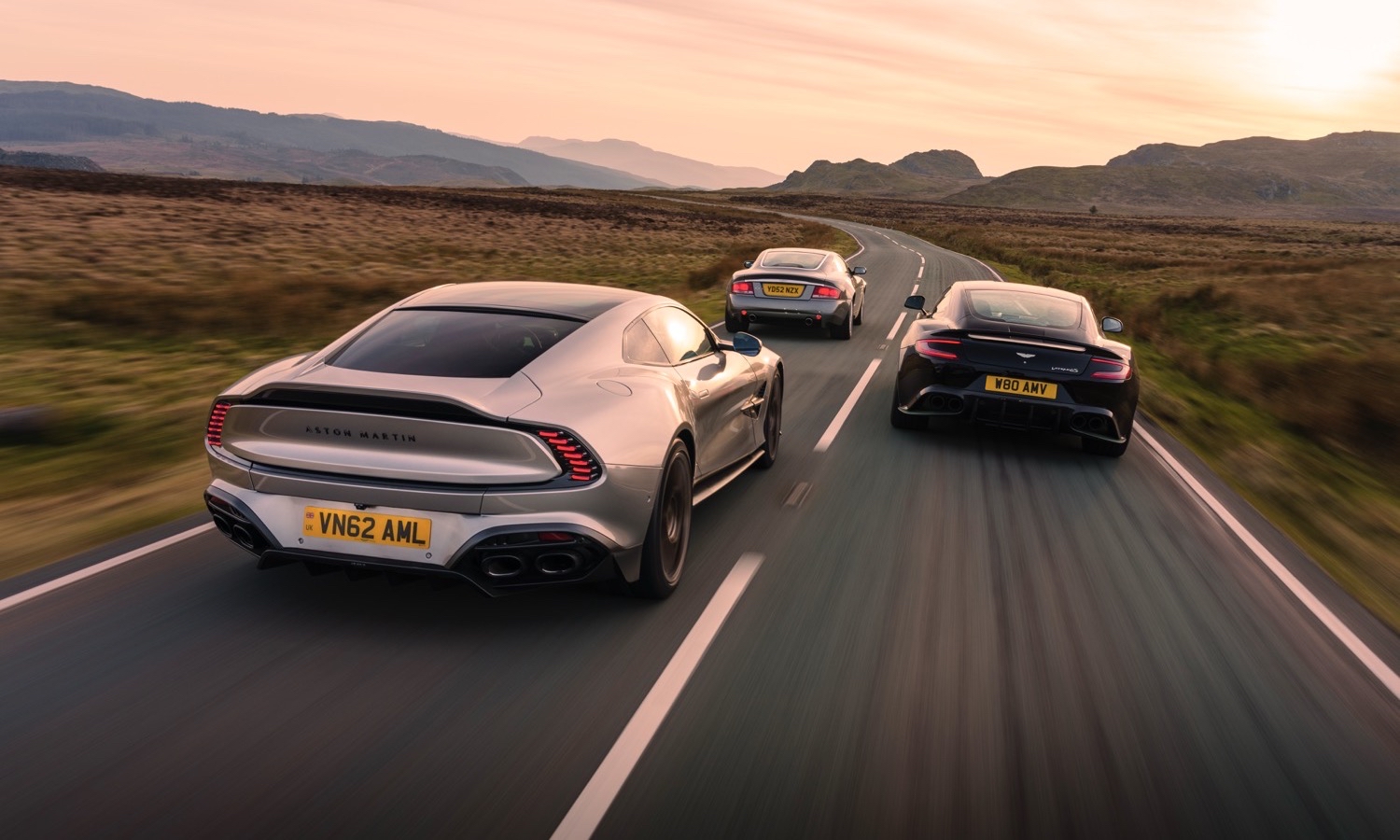
With the third generation, unveiled in 2024, the Aston Martin Vanquish entered a new era in terms of technology and performance . While still based on a front-engined GT, the V12 was now a significantly revised 5,2-liter twin-turbo engine: reinforced block, more robust connecting rods, redesigned cylinder heads, modified camshafts, new intake and exhaust ports, relocated spark plugs, and higher-flow injectors.
All that work translates into 835 hp and 1.000 Nm of torque without any electric assistance , resulting in an unusual 160 hp per liter for a production front-mounted V12. The practical result is a 0 to 100 km/h time of 3,4 seconds and a top speed of around 345 km/h, which at the time of its launch made the Vanquish the fastest production Aston Martin ever. The sprint to 200 km/h is around 9,4 seconds, well ahead of the last naturally aspirated Vanquish (4,1 and 13,3 seconds respectively).
The architecture has also evolved: a bonded aluminum structure with a front engine and eight-speed automatic transmission in a transaxle configuration , double wishbone front suspension and multi-link rear suspension, and Bilstein DTX adaptive dampers. The goal is not only to set fast lap times, but to achieve a balance between stability on the highway and agility on winding roads, something especially valued on fast European highways.
Carbon-ceramic brakes and sharp handling…
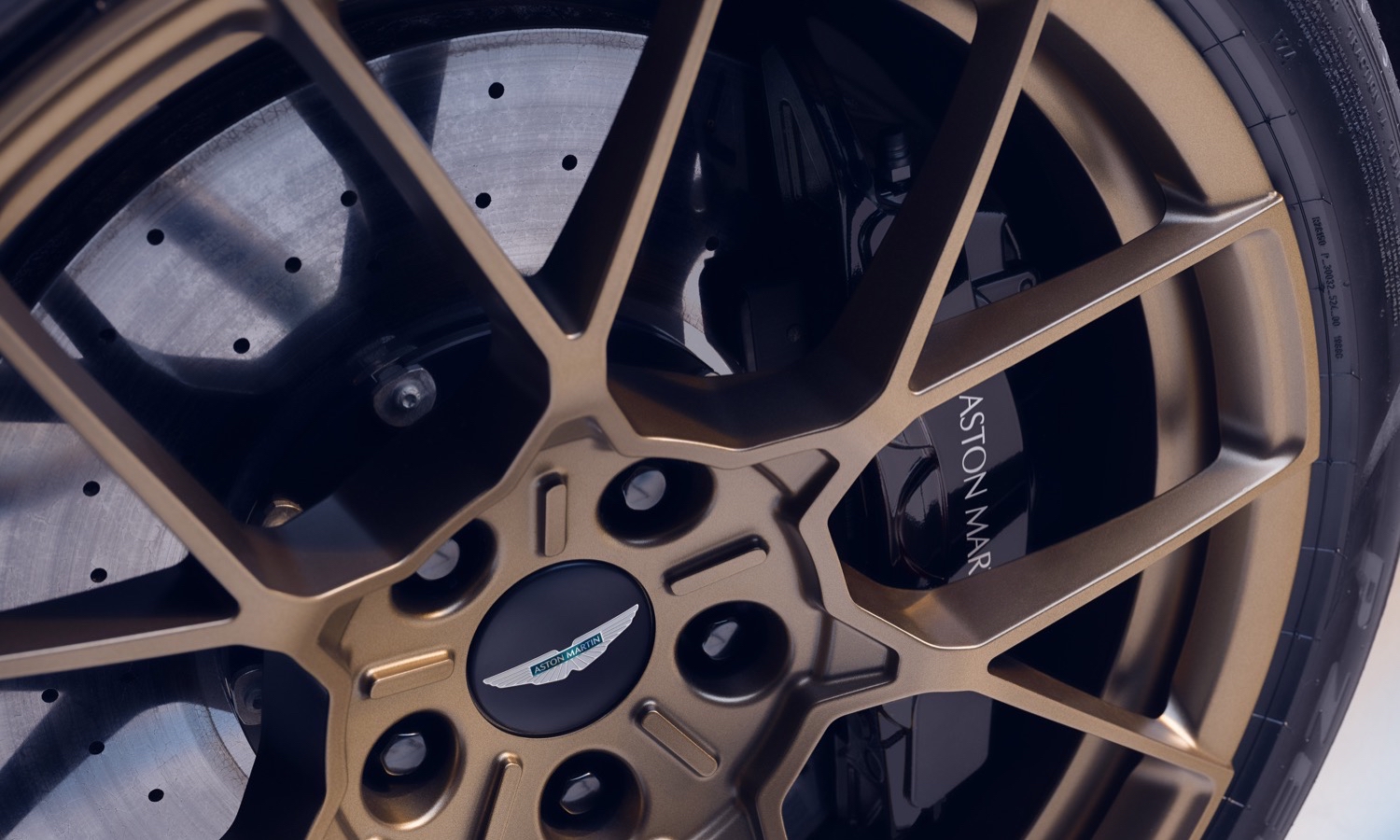
One of the most significant improvements over previous Vanquish models is in braking. The current model comes standard with 410 mm carbon-ceramic discs at the front and 360 mm at the rear , with a system that can withstand temperatures up to 800°C and significantly reduces unsprung weight. Instrumented tests have recorded cold braking distances from 100 km/h of around 30,7 meters, which drop to just 29,9 meters with the system at operating temperature—figures comparable to track-focused sports cars like a Porsche GT3.
From 200 km/h, the improvement is equally evident: the current Vanquish stops in around 123,7 meters , an improvement of more than ten meters over its naturally aspirated predecessor. Much of the credit goes to the new composite brake discs, more efficient cooling, and the specially developed Pirelli P Zero tires, combined with a Launch Control system that maximizes rear-wheel traction.
On the road, this whole package results in a GT that feels significantly sportier than previous generations without sacrificing composure . The increased structural rigidity, the active electronic differential, and the steering calibration allow for fast driving with a very high sense of control. It's not a twitchy car that demands lightning-fast reactions; instead, it rewards a fluid driving style, especially on long bends and free-speed autobahns like some in Germany.
A V12 engine without electrification in the midst of a hybrid offensive…
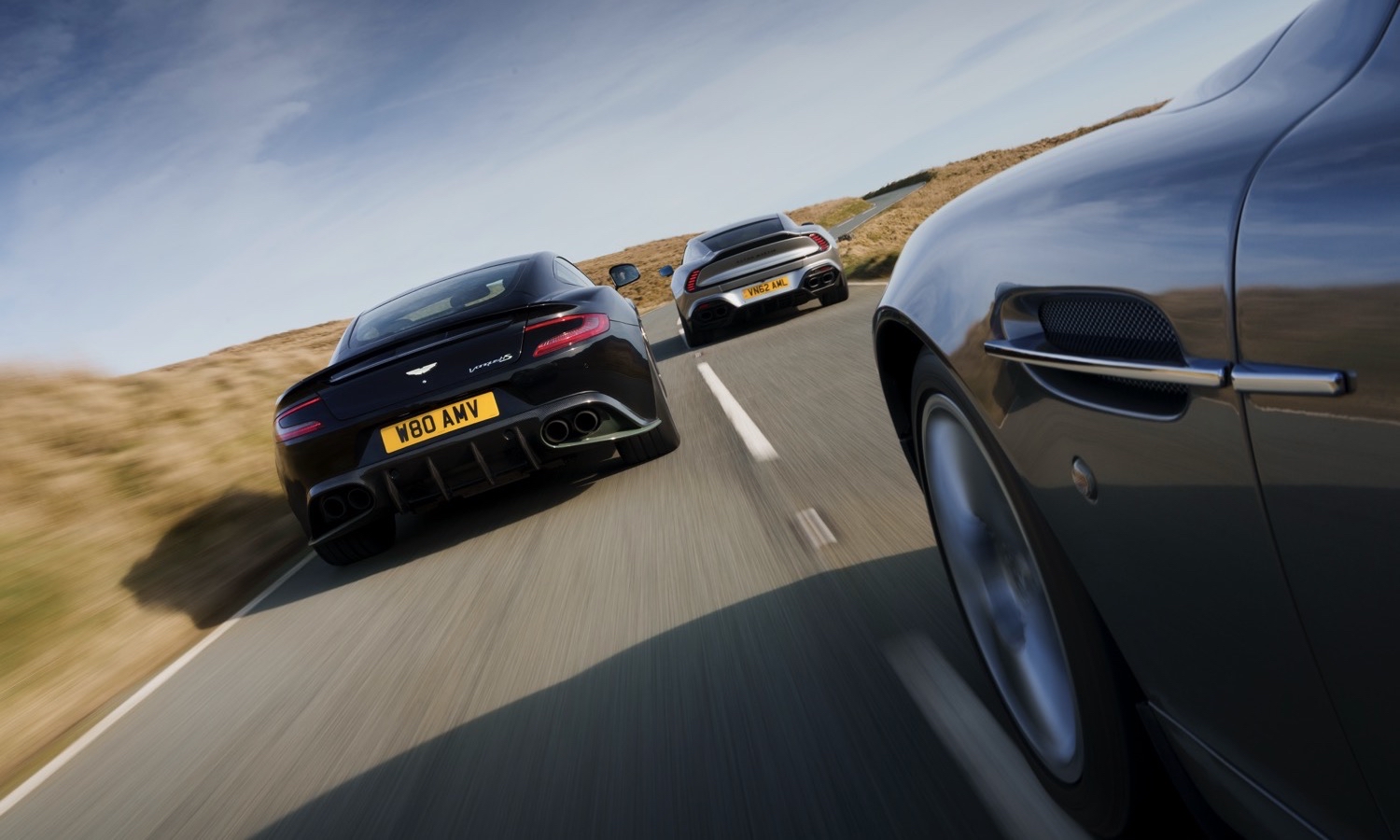
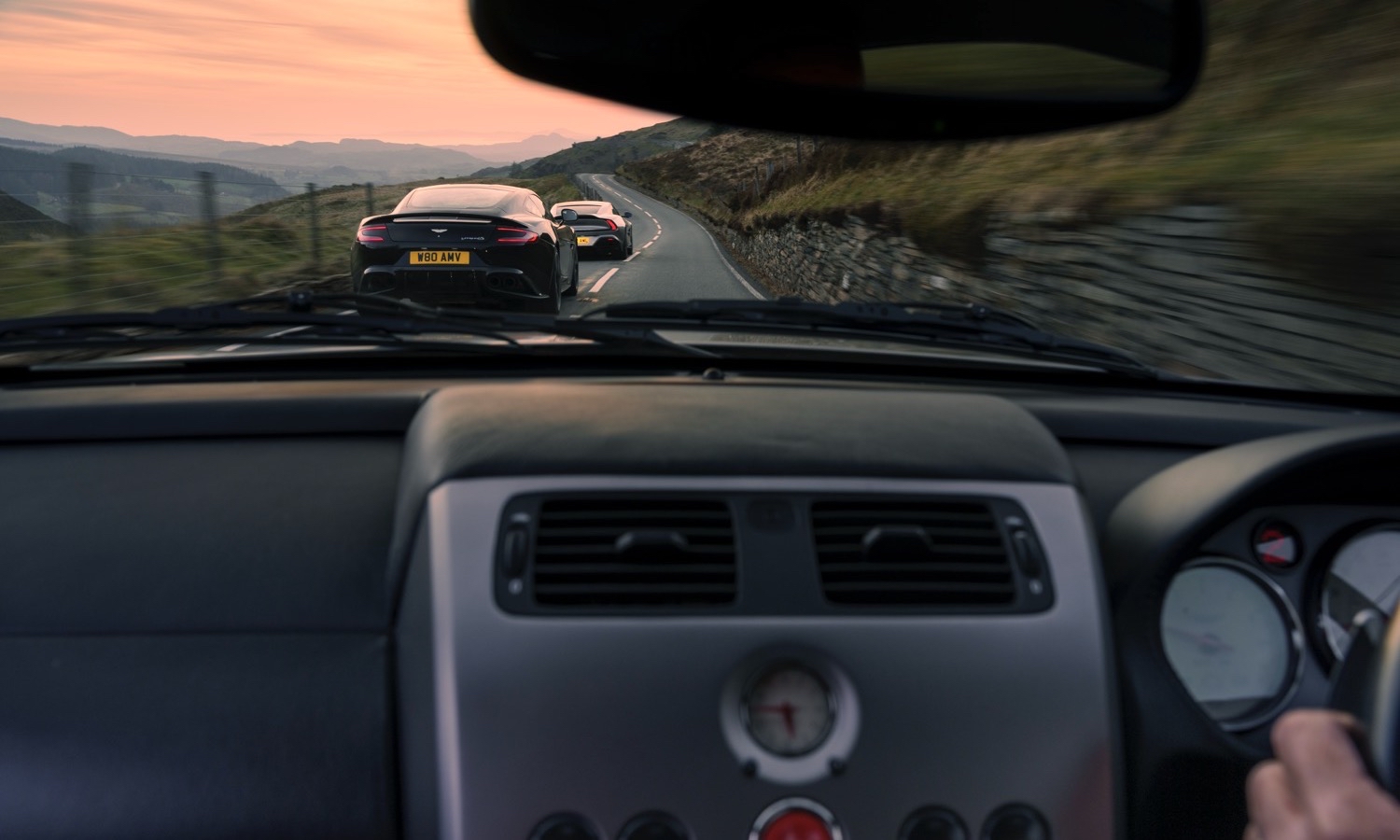
In a European context where emissions regulations are pushing towards hybridization and electric vehicles , Aston Martin's decision to retain a fully internal combustion twin-turbo V12 in the Vanquish is perceived as a risky bet, but also as a way to preserve its identity. The brand justifies this approach by citing the enduring value of the mechanical character and engine sound for collectors and enthusiasts, especially in markets like Europe, which are highly attuned to the tradition of great British GTs.
The engine's behavior reflects this philosophy: at a relaxed pace, the V12 runs at low revs, pulls easily, and allows you to devour kilometers with considerable ease . The gearbox shifts smoothly, the suspension filters out bumps better than in previous generations, and the overall feeling is that of a car that could cross Europe without tiring the driver. When you floor the accelerator, the character changes completely: the response is practically instantaneous despite the turbochargers, the thrust is continuous all the way to the top of the rev range, and the sound goes from a deep, full tone to a higher-pitched scream, especially with the optional titanium exhaust system.
That contrast between calmness and explosive performance is one of the things that keeps the Vanquish appealing against hybrid or electrified rivals . The brand is aware that a V12 with these characteristics has its days numbered given current European legislation, and the current model has a certain "last chance" feel to enjoy a grand tourer with twelve cylinders, rear-wheel drive, and supercar-level performance figures without electric assistance.
Luxurious interior, thoughtful ergonomics, and a very understated "wow" factor…
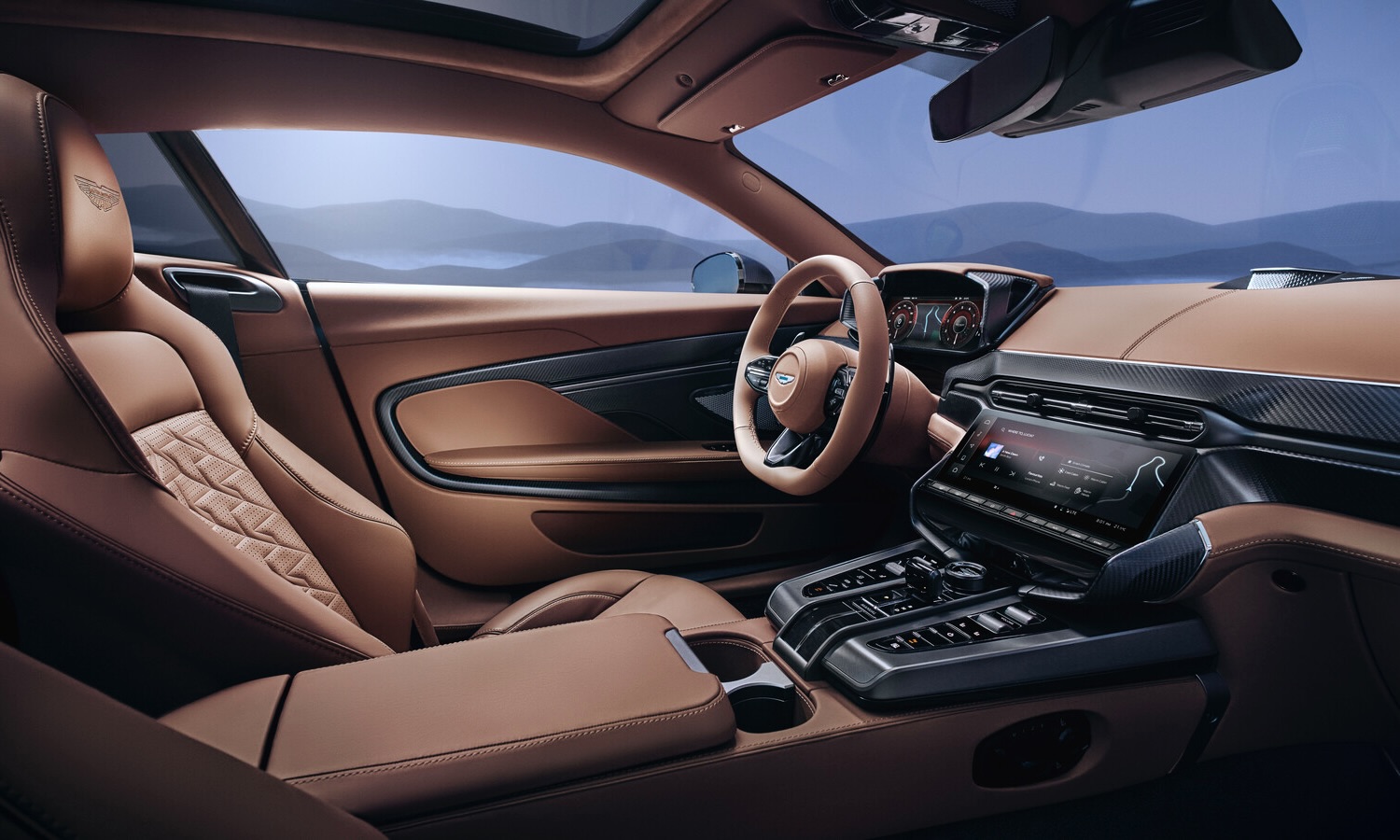
The cabin of the latest-generation Vanquish features high-quality materials, well-placed physical buttons, and a very low driving position , nestled between the center console and the transmission tunnel. The dashboard integrates two digital displays for instrumentation and infotainment, compatible with Apple CarPlay Ultra , without resorting to the excessive use of touchscreens seen in some other manufacturers.
Despite this, some buyers may miss a more groundbreaking interior design that reflects its flagship status . The digital instrument cluster graphics do their job, but they seem relatively conventional in a car of this price range, and the overall ambiance is luxurious but somewhat less theatrical than that of certain Italian or German rivals. In return, it gains in ergonomics and ease of use, which aligns with the model's touring focus in markets like Spain, where GTs are often used for both weekend getaways and daily commutes.
More usability and customization: the 2026-2027 update…
Looking to the short term, Aston Martin has begun outlining a refresh of the Vanquish, already identified as a 2026-2027 model , with a very clear focus: making it more usable without diluting its character. Among the most striking new features is the introduction of an optional 2+2 seating configuration in the current generation, a solution the company already offered in the second iteration, but which now makes sense again by expanding the car's range of uses.
The aim isn't to turn the Vanquish into a family coupe, but rather to allow for a slightly less restrictive use , for example for weekend trips with occasional two rear seats, or for those who need a bit more versatility without giving up the V12. This evolution aligns with the trend among some European customers who are looking for slightly more practical supercars, although performance remains the priority.
Alongside this approach, the brand has enhanced its customization options, including the Vanquish Volante convertible versions . The Q by Aston Martin program allows for experimentation with new combinations of exterior and interior paint, carbon fiber trim in shades of green, blue, or ochre, different wheel designs, brake caliper colors, and upholstery with specific embroidery or exclusive patterns. This strategy responds to a clear demand in Europe: nearly unique vehicles, tailored to each owner's taste.
Source – Aston Martin
Images | Aston Martin

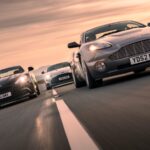

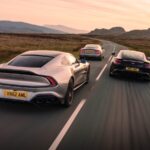



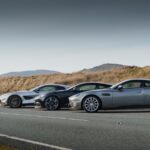

Table of Contents
- 1 From the Newport Pagnell experiment to the first great technological leap…
- 2 Second generation: aerospace carbon fiber and a more civilized character
- 3 Third generation: the most powerful twin-turbo V12 in the brand's history…
- 4 Carbon-ceramic brakes and sharp handling…
- 5 A V12 engine without electrification in the midst of a hybrid offensive…
- 6 Luxurious interior, thoughtful ergonomics, and a very understated "wow" factor…
- 7 More usability and customization: the 2026-2027 update…